
By Joey Roulette
June 2 (Reuters) - Blue Origin will return its New Glenn rocket to flight before the year ends, CEO Dave Limp said late on Monday, days after one of the rockets exploded, damaging the company's
launch pad and tightening a U.S. launch bottleneck for satellite companies.
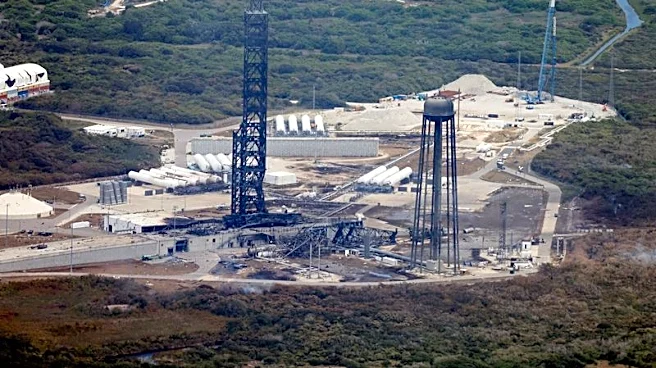
Blue Origin staff has inspected damage to the company's only launch pad, and the company has not said what may have caused the explosion on Thursday.
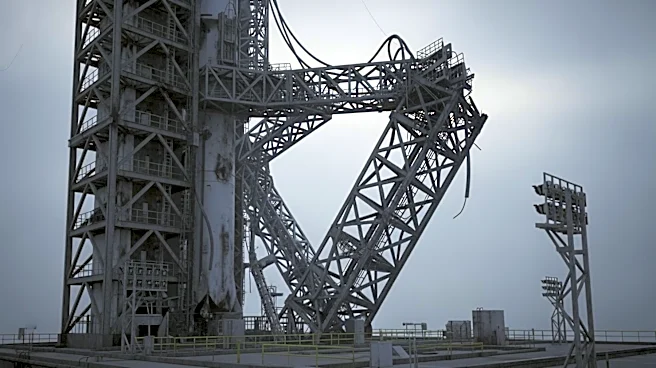
Limp said key fuel tanks at the pad "are all in good shape," calling it "good luck" because replacing those assets if damaged would take a long time. Nearby rocket boosters on deck for future flights "also look good," he said, but the pad's main support tower needs repair.
The New Glenn explosion, though no satellites were onboard and no one was injured, was one of Blue Origin's most dire failures since its founding in 2000, besetting both its centerpiece rocket and the sole launch pad it blasts off from.
A grounding that could last until year end follows a mission failure in April on New Glenn's third flight. Blue Origin has been under pressure to increase New Glenn's flight rate due to mounting competition from Elon Musk's SpaceX, the world's most active launch company.
The New Glenn explosion thundered across the Space Coast of Cape Canaveral, Florida as the company, owned by billionaire Jeff Bezos, was preparing to launch 48 internet satellites for Amazon, Blue Origin's biggest private customer.
Amazon similarly faces competitive pressure to expand its satellite constellation to compete with Musk's Starlink.
Amazon also has launch arrangements with United Launch Alliance, the joint rocket venture of Boeing-Lockheed Martin, and French launcher Arianespace. A ULA Atlas V rocket put 29 Amazon Leo satellites into orbit on Friday.
Limp did not speculate on the possible cause of the New Glenn explosion, which occurred as the company attempted a hot-fire test, test-firing the rocket's engines while fixed to the ground in routine mission preparations.
SpaceX suffered a similar launch pad explosion with its Falcon 9 rocket in 2016 as it was loading fuel for a hot-fire test, and more broadly as the company was trying to increase the rocket's flight rate. SpaceX returned Falcon 9 to flight roughly four months after the explosion.
Blue Origin suffered a failure in 2022 during an uncrewed flight of its now-shelved New Shepard suborbital rocket. After a structural failure of the rocket's engine nozzle mid-flight, the rocket did not return to flight until a year and three months later, following Blue Origin's technical investigation and a review by the U.S. Federal Aviation Administration.
In January, Limp paused the New Shepard program and shifted its staff and resources to New Glenn and the company's moon lander work for NASA, two programs with tight timelines. Blue Origin had planned to launch an early version of its Blue Moon lander on New Glenn this year.
(Reporting by Zaheer Kachwala in Bengaluru; Editing by Sahal Muhammed and David Gregorio)