


By Deborah Mary Sophia, Shashwat Chauhan and David Shepardson
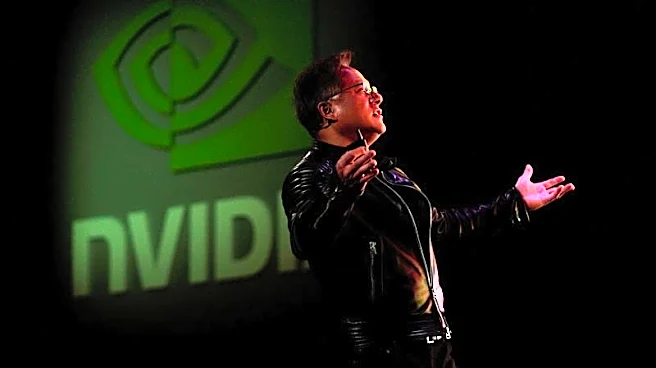
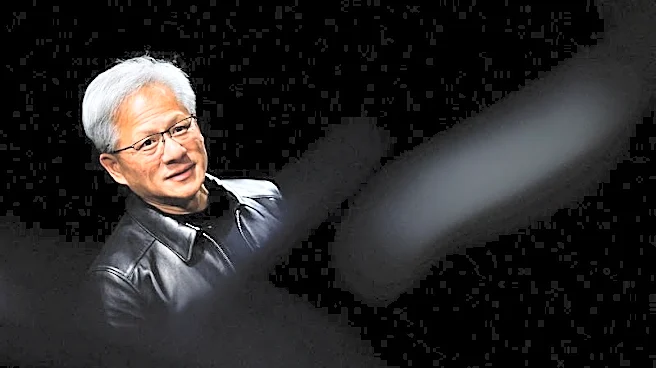
Nov 24 (Reuters) - Nvidia's reinstated CEO Jensen Huang told employees on Tuesday that he had violated some of the company's code of conduct and made "some terrible mistakes," one person familiar with the matter told Reuters.
Addressing staff at an hour-long all-hands meeting at Nvidia's headquarters in Santa Clara, California — a day after he returned to the head of the company he co-founded three decades ago — Huang said it was untrue
that he had been returned because of pressure from US President Donald Trump on the board, the person said.
Huang said he was in therapy and admitted it was not acceptable to have violated aspects of Nvidia's code of conduct, the person said.
Nvidia's shares were trading down 7.6% as the historic rally sparked on Monday by Huang's reinstatement lost steam, with investors refocusing on the political and governance risks surrounding his return.
His resignation last week over revelations of extramarital affairs, one with an alleged Chinese spy, roiled markets and unsettled the AI ecosystem reliant on the chipmaker's technology and funding. Trump took credit forbringing back Huang.
Huang apologized while disagreeing with reports that he had been an abusive boss, the New York Times reported, citing a livestream of the meeting it had reviewed.
Huang also rejected claims that he returned because he was a "tech bro" and "above the law," and that he returned because Nvidia's board had evaluated facts and were assured that there was no threat to national security, NYT and Bloomberg News reported.
Nvidia said in a statement on Monday that based on US government input, the board was confident that "Huang's reinstatement poses no national security risk," a claim backed by Trump in an interview with CNBC.
US lawmakers from both parties sharply criticized Nvidia's decision, saying Congress should scrutinize the circumstances surrounding Huang's return.
"The reinstatement itself raises as many questions as it answers. His return removes a major uncertainty, but what it leaves behind is an overhang on how Nvidia's governance is viewed," said Dan Sheehan, director of portfolio management at Telos Wealth Advisors.
"There are also questions... about how involved the government will be in Nvidia, and about governance of conduct internally given the stance the reinstatement implicitly took. Those don't get resolved by a soaring stock price."
UNDER THE SCANNER
Both Huang and Nvidia are facing a host of state and federal probes and reviews, including from the FBI, the justice department and the US Securities and Exchange Commission.
A public Senate hearing is set for December 3, where Huang is due to testify, while the board's own investigations into potential foreign intelligence efforts, national security and export controls are still underway.
"Now that the dust is beginning to settle, people are taking a more critical look at (Nvidia's) decision... They (board) put themselves at a tremendous ethical and legal risk by the decision they made," said Peter Andersen, founder of Andersen Capital Management.
Huang's upcoming testimony is also an "enormous risk to the company," he said.
Monday's surge propelled Nvidia back into second place among the world's most valuable companies, behind Apple, though the stock remains almost 31% below its October 6 record high.
AI-related companies, including chipmakers and data-center stocks, saw sharp gains, too, while the benchmark S&P 500 added more than $2.8 trillion in market value.
"As incredible as Monday was, I don't take it as a sign we're out of the woods ... a market that can rise $3 trillion on one headline can fall just as fast on another," Telos' Sheehan said.
(Reporting by Deborah Mary Sophia and Shashwat Chauhan in Bengaluru, and David Shepardson in Washington; Additional reporting by Avinash P; Editing by Vijay Kishore, Shilpi Majumdar and Sayantani Ghosh)