






By Ankur Banerjee
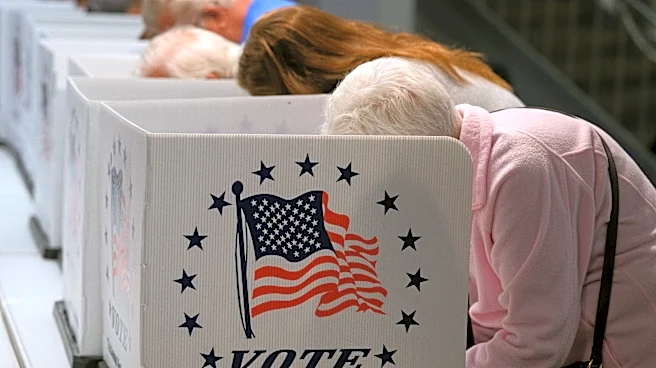
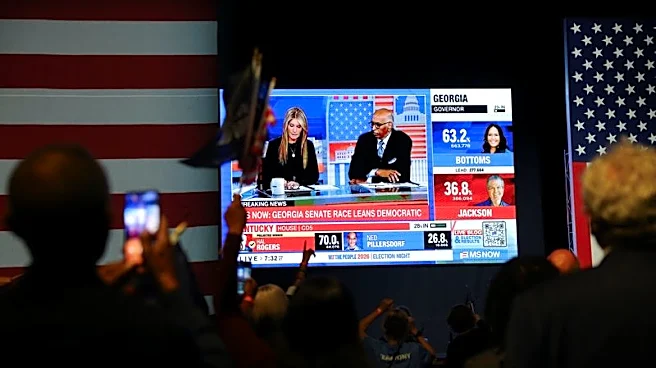
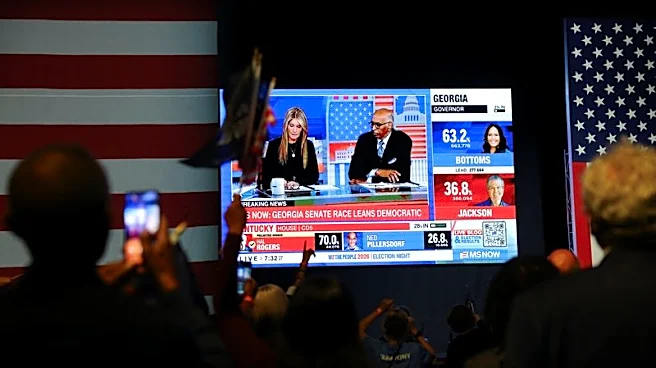
SINGAPORE, Nov 4 (Reuters) - US stock futures slumped, Treasuries rallied and the dollar softened on Wednesday as Democrats notched early Senate wins, raising the prospect of a blue sweep in the US midterm elections in a major setback to President Donald Trump and Republicans.
In North Carolina, former Governor Roy Cooper easily defeated Trump-backed Republican Michael Whatley to flip a Republican-held Senate seat, handing Democrats one of the four net gains they need to secure a majority.
Democrat Jon Ossoff also won re-election in Georgia but it was still too early to determine whether Democrats would be able to replicate those performances in the other critical races that will determine the Senate majority.
US media projected that Democrats were on track to win majority control of the US House of Representatives as investors gird for tougher regulation and oversight in areas such as AI as well as for legislative gridlock that could complicate the fiscal picture.
"Markets appear to be pricing in the possibility of a stronger-than-expected Democratic showing, which could reduce expectations for further fiscal stimulus," said Charu Chanana, chief investment strategist at Saxo in Singapore.
Prediction markets signalled growing expectations of a Democratic sweep of the US Congress, with more than $1.48 billion wagered on the midterm elections in a fresh test for the global markets.
STOCKS WILT AS INVESTORS RUSH FOR SAFETY
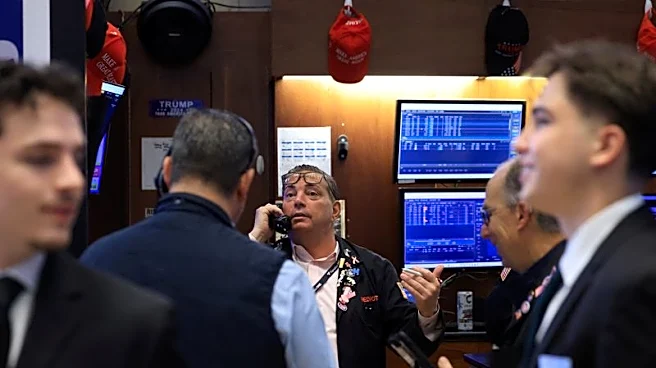
Futures for the S&P 500 slid 1.2% while Nasdaq futures fell more than 2%%. The yield on the benchmark US 10-year Treasury note fell 6 basis points to 4.906%, while the dollar fell sharply against major currencies.
In Asia, stocks reversed earlier gains to trade lower as investors brushed off strong earnings from chipmaker AMD that appeared to ease some concerns over the durability of the AI trade.
MSCI's broadest index of Asia-Pacific shares outside Japan fell 0.5%. South Korea's KOSPI slid 1.6% while Japan's Nikkei fell 3% after returning from a holiday. European futures were down 1.4%.
Tuesday's outcome could hold broad implications for market-sensitive areas including the AI dead-centre buildout, the US fiscal outlook, defence spending and regulation in areas such as healthcare, banking and cryptocurrencies.
Indeed, Chanana said the sharper decline in Nasdaq futures reflects concerns that a shift in political control could bring greater regulatory scrutiny of AI and Big Tech, at a time when investors are already questioning elevated valuations and rising AI spending.
"However, lower Treasury yields could eventually provide some relief, so the initial selloff may not necessarily be sustained," she said.
Kim Seok-hwan, an analyst at Mirae Asset Securities, said a potential victory by Democrat John Talarico in Texas could weigh on chip stocks by fuelling concerns over tighter regulations on AI data-centre construction in one of the United States' fastest-growing data-centre markets.
"If Texas declares a moratorium on data centres, as New York did, projects could face further delays," Kim said. "Today's market reaction is clearly reflecting concerns and uncertainty over these issues."
Election data firm Decision Desk HQ projected Talarico has defeated Republican Ken Paxton.
In currencies, the dollar slid broadly against major peers. The euro rose 0.5% to $1.1249, while sterling firmed 0.37% to $1.3464. That left the dollar index 0.37% lower at 101.34. [FRX/]
In the oil market, prices were choppy on Wednesday after sliding to a four-week low in the previous session as investors weighed talks to end the wars in Ukraine and Iran against worries that recent attacks in both conflicts could further disrupt supplies.
The effective blockade of the critical Strait of Hormuz that links the Gulf to world markets, previously a conduit for 20% of global oil supplies, has redrawn energy flows, stoked inflationary worries and upended the global interest rates outlook.
(Reporting by Ankur Banerjee in Singapore; Editing by Shri Navaratnam and Christopher Cushing)