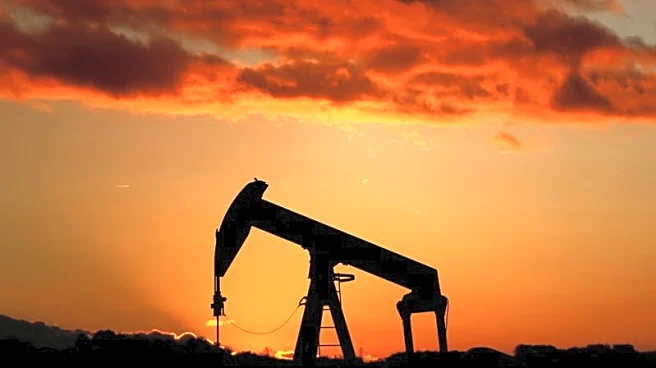


March 17 (Reuters) - U.S. stock index futures slipped on Tuesday as the Middle East conflict pinned oil prices near $100 a barrel, fueling inflation concerns that will be a major point of discussion when the Federal Reserve kicks off its two-day meeting later in the day.
Wall Street was also cooling from a tech-driven rebound in the previous session that saw the benchmark S&P 500 log its biggest one-day jump in over a month, which also featured Nvidia's extensively watched annual developer conference.
Nvidia said the revenue opportunity for its artificial intelligence chips may reach at least $1 trillion through 2027, as the company outlined a strategy to compete more aggressively in the fast-growing market for running AI systems in real time.
Shares of the company were flat in premarket trading after Monday's 1.6% rise, while peers Advanced Micro Devices and Broadcom were marginally lower.
Investors are now drawn to the expanding conflict in the Middle East that is likely to keep the Strait of Hormuz shut, as U.S. President Donald Trump's call to allies to safeguard the passage fell on deaf ears.
Travel stocks Delta and Carnival were down 1%, while energy companies Occidental and EQT were up about 1% each.
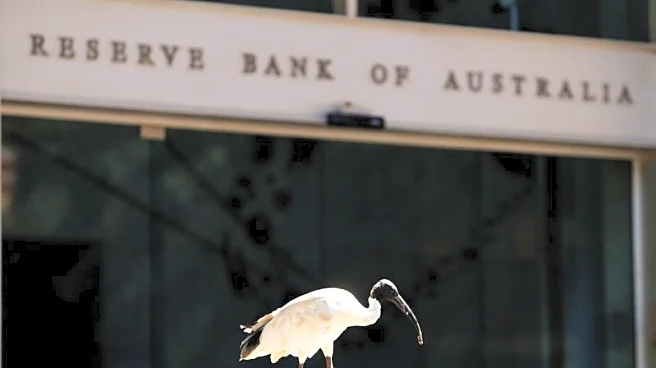
Brokerages lifted their outlooks for energy prices that is likely to dampen economic growth, which was also flagged by the Australian central bank when it hiked interest rates earlier in the day.
The U.S. Fed is likely to leave borrowing costs unchanged at the end of its two-day meeting on Wednesday.
But investors are pricing in a hawkish outlook as short-term Treasury yields edge up and rate futures suggest one 25-basis-point cut towards the end of the year, according to LSEG-compiled data, down from around two before the war.
"While we do not expect central banks to make knee-jerk policy moves, policymakers are likely to stress vigilance over inflation risks amid elevated oil prices and uncertainty over the length of the war," said analysts at UBS on central bank decisions globally this week.
"Comments that are more hawkish than expected could inject further volatility into a market that is vulnerable to shifts in sentiment."
At 05:11 a.m. ET, Dow E-minis were down 104 points, or 0.22%, S&P 500 E-minis were down 20 points, or 0.30%. Nasdaq 100 E-minis were down 95.25 points, or 0.39%.
Futures tracking the rate-sensitive Russell 2000 index lost 0.7%, while Wall Street's fear gauge, the CBOE volatility index edged up 0.57 points to 24.06
Despite the global turmoil in markets due to the war, U.S. stocks have held up better than those in Europe and Asia on expectations that the repercussions on the economy will be less severe.
However, analysts and Goldman Sachs' CEO David Solomon have underscored that investors are yet to fully consider the effects of the war on the global economy.
The conflict has also delayed a planned summit between U.S. and China's leaders on Trump's request, casting a shadow over mutual ties that have been stable since their last meeting in October.
Among other stocks, ride-hailing app Uber added 2.3% after announcing plans to roll out robotaxis in 28 cities starting next year, powered by Nvidia's autonomous driving software.
Plant-based meat maker Beyond Meat fell 6% after delaying its annual report, while its preliminary quarterly revenue missed estimates.
(Reporting by Johann M Cherian in Bengaluru; Editing by Krishna Chandra Eluri)