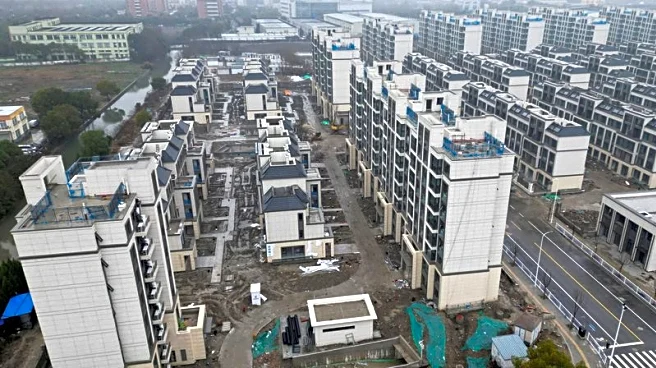




BEIJING/HONGKONG, Feb 2 (Reuters) - China's property market, which at its peak once accounted for a quarter of the world's second-largest economy, has been struggling with a debt crisis since mid-2021 that has seen swathes of developers default on payments.
There have been some upbeat signs for the market this year, but developers and analysts urge caution.
The following is a list of some government measures to help prop up the sector since 2023.
2026
January - Authorities reportedly end the "three red
lines" policy of caps on debt ratios put in place to rein in borrowing - rules which sparked the debt crisis.
Authorities allow banks to grant extensions of up to five years for loans for favoured projects on a so-called whitelist, sources say.
2025
November - China's securities regulator embarks on a pilot programme for commercial real estate investment trust funds (REITs).
August - Shanghai and Beijing scrap all home purchase restrictions for local people in non-central districts. Both cities also ease other restrictions.
2024
October - China targets an expansion of its "project whitelist" to 4 trillion yuan ($575 billion) by year-end.
September - Beijing, Shanghai and Shenzhen lower the minimum downpayment ratio for first-time and second home buyers, and also ease restrictions on home purchases by non-local buyers.
- China's central bank unveils a major stimulus package including a 50 basis point reduction for average interest rates for existing mortgages, and a cut in the minimum downpayment requirement to 15% on all types of homes.
May - The central bank announces a 300 billion yuan relending programme, meant to facilitate 500 billion yuan in loans to firms controlled by local governments to buy empty homes and repurpose them for affordable housing.
The central bank also says it will cut downpayment ratios for first- and second-home buyers to no less than 15% and 25%, respectively. It would also abolish the floor level of interest rates for mortgages for first and second homes at a national level.
More than 50 cities announce a "swap old for new" apartment scheme.
February - The five-year loan prime rate is cut by 25 basis points, its biggest-ever reduction.
January - Authorities embark on "project whitelist", telling city governments they should provide a list of local property projects suitable for financing support.
2023
September - The central bank says it will cut the amount of cash that banks must hold as reserves for the second time this year to boost liquidity in the financial system.
August - China's central bank and financial regulator ease some borrowing rules for homebuyers, including lowering existing mortgage rates for first-home buyers and the downpayment ratio in some cities.
Major Chinese cities say they will allow people to take preferential loans for first-home purchases regardless of their credit record.
China cuts its one-year benchmark lending rate.
July - China's top leaders hold a Politburo meeting and omit the phrase "housing for living, not for speculation" in the official readout.
The cabinet approves guidelines on transforming "urban villages" or underdeveloped areas in megacities.
June - China's central bank cuts its key lending benchmarks for the first time in 10 months.
($1 = 6.9519 Chinese yuan)
(Reporting by Liangping Gao in Beijing and Clare Jim in Hong Kong; Editing by Edwina Gibbs)