




By Hyunjoo Jin and Heekyong Yang
SEOUL, May 13 (Reuters) - Samsung Electronics and its union failed to reach a pay deal on Wednesday, heightening the risk of a long strike that threatens not only chip production and the semiconductor giant's standing, but also the health of the export-reliant South Korean economy.
The impasse followed marathon government-mediated talks on Monday and Tuesday.
Underscoring the angst caused by the potential strike, South Korea called an emergency meeting for related ministers.
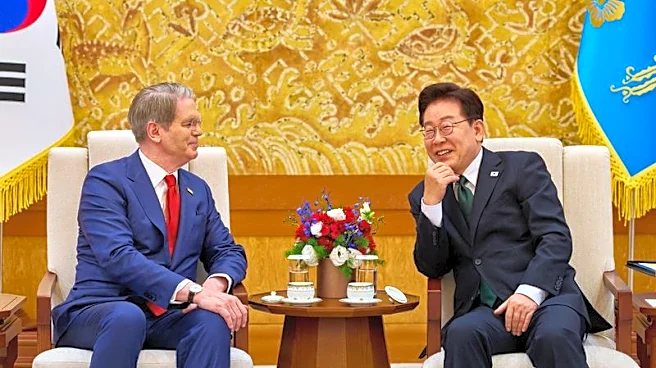
There, Prime Minister Kim Min-seok instructed the government to closely manage the situation "considering the gravity of the impact on the national economy", a statement from his office said.
He also urged "proactive support to ensure dialogue between the union and management can continue so this doesn't lead to a strike under any circumstances," it added.
The economy has become increasingly dependent on booming chip exports. Semiconductors accounted for 37% of the country's exports in April, up from 20% a year earlier, according to government data.
HUGE GAP IN BONUS PAY WITH SK HYNIX
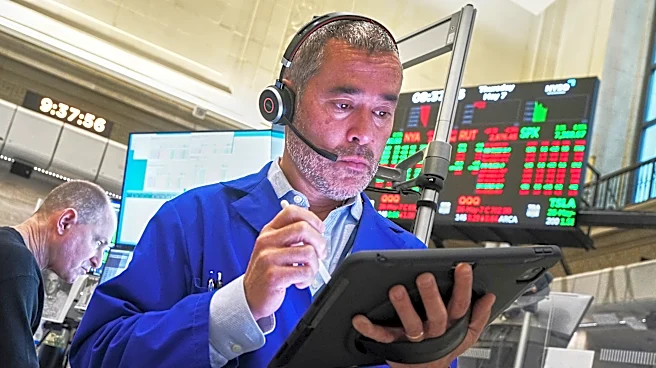
Shares in Samsung, the world's largest memory chip maker and a key provider of artificial intelligence chips, initially tumbled as much as 6%. But they later closed up 1.8% after the news of the ministerial meeting.
Rival SK Hynix shares surged 7.7%, helped by the view that it could profit from Samsung's labour woes as well as growing expectations that it will list in the U.S. later this year.
Furious over what it calls a massive gap in bonus pay with SK Hynix, the company's South Korean union has planned an 18-day strike from May 21 if its demands are not met.
More than 50,000 workers could walk off the job, the union has flagged, a move that would likely delay shipments to customers, push up chip prices further and benefit rivals.
Union representative Choi Seung-ho said Samsung only proposed a "one-off performance payment" for 2026 and rejected the union's demand that it overhaul its pay scheme and make the changes binding beyond this year.
The union has called for the scrapping of a cap on bonus pay currently set at 50% of annual base salary, the allocation of 15% of annual operating profit to bonus pay and more clarity on how bonus pay is calculated.
Choi said the union has no plans to resume talks before the strike date, but would consider "a proper proposal" if the company presents one.
Samsung said it regretted the collapse of talks and will continue to have "sincere dialogue" with the union to avert what it called a worst-case scenario.
"If a fixed proportion of operating profit is allocated to performance bonuses, the company’s capacity for future investment could be constrained during industry downturns," Samsung said in a statement.
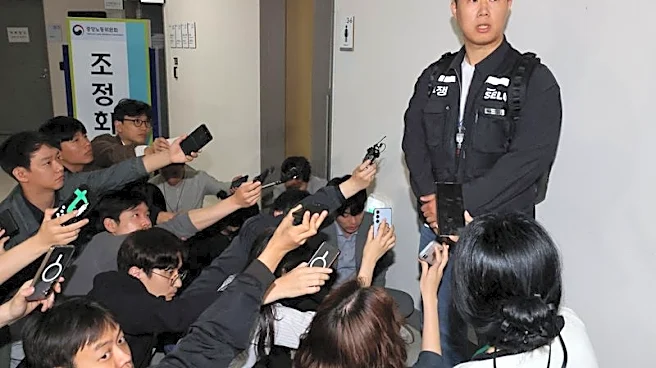
The National Labor Relations Commission, which acted as mediator, said it presented various alternatives but it decided to conclude the discussions "due to the wide gap between the two sides' positions and the union's request to suspend the talks."
SPECULATION OF EMERGENCY ARBITRATION
The standoff has given rise to speculation that the government might have to resort to an emergency arbitration order, which it can do if it deems a dispute is likely to harm the economy or daily life.
If invoked, industrial action is immediately prohibited for 30 days while the National Labor Relations Commission conducts mediation and arbitration.
The law, however, has rarely been used and it would represent an extraordinary step for a union-friendly administration.
Asked about the potential for such an order, Labour Minister Kim Young-hoon said on Wednesday the dispute should be resolved through dialogue. The union said such an order would worsen labour relations.
Last September, SK Hynix, which beat Samsung to the punch in delivering high-bandwidth memory for AI chip units to Nvidia, accepted its union's demand for compensation reform which included scrapping the cap on bonus pay.
That has fuelled Samsung employees' frustration and sparked a surge in union membership. Union members now number more than 90,000, representing more than 70% of Samsung's South Korean workforce.
Their ire has been exacerbated by record profits for Samsung on the back of the AI boom. Last week, Samsung became only the second Asian company after TSMC to have a market value of more than $1 trillion.
(Reporting by Hyunjoo Jin and Heekyong Yang; Additional reporting by Kyu-seok Shim and Jack Kim; Editing by Ed Davies, Edwina Gibbs and Hugh Lawson)