





Sept 15 (Reuters) - Anthropic CEO Dario Amodei called for a slowdown in the pace of advanced AI development on Saturday, winning rare backing from SpaceXAI's Elon Musk and OpenAI CEO Sam Altman and sparking a debate over AI "doomerism".
Here is what some AI leaders and world governments said about risks associated with AI:
DARIO AMODEI, CEO OF ANTHROPIC
In an essay titled "We Must Pace the Frontier", Amodei said AI progress has accelerated "drastically faster" since summer 2026, driven primarily by
AI's growing ability to build the next generation of AI.
He cited the OpenAI-Hugging Face incident, where an AI "swarm" conducted cybersecurity attacks, as a pivotal event demonstrating AI's potential for "catastrophic damage" if capabilities grow without guardrails.
Amodei proposed a three-step plan for pacing AI development, including stronger safety testing and independent evaluations of advanced models, coordination among leading AI companies and international cooperation.
SAM ALTMAN, CEO OF OPENAI
"I agree with Dario that we need to pace the frontier. This has been a primary topic of discussions we've had at OpenAI in recent weeks," Altman said as he reposted Amodei's post on X.
He said OpenAI intends to adopt the idea proposed by Anthropic by committing to having independent evaluators with employee-like access.
Altman had warned about the risks well before the current AI boom. In a 2015 essay titled "Machine Intelligence, part 1", he said the "development of superhuman machine intelligence is probably the greatest threat to the continued existence of humanity."
ELON MUSK, CEO OF SPACEX
"Dario is right," the billionaire entrepreneur said on X, responding to Amodei's post.
Musk was among backers of a 2023 push by the non-profit Future of Life Institute to halt AI development for six months to allow time for safety guardrails.
He was also among a group of AI and robotics researchers who wrote an open letter in 2015 that advocated a global ban on "offensive autonomous weapons".
BILL GATES, CO-FOUNDER OF MICROSOFT
"No government in the world is ready for the changes artificial intelligence will bring to society," Gates told Reuters.
The billionaire philanthropist had been optimistic about AI's health applications, but has recently warned of threats to jobs, concerns about attacks and the dangers of addiction to AI companions, and called for an international organization to manage the technology.
Gates' namesake foundation plans to spend at least $1 billion in the next two years on expanding people's access to AI.
DEMIS HASSABIS, CHIEF SCIENTIST AT ALPHABET
"Dario's essay points towards the right path forward," the former CEO of Google DeepMind said in a response to Amodei's X post, adding the details needed to be worked through.
Google announced last month that Hassabis, a Nobel Prize recipient, would take the newly created title of Alphabet’s chief scientist and transition from DeepMind CEO to its chairman.
ANDREJ KARPATHY, OPENAI CO-FOUNDER, NOW AT ANTHROPIC
"I love this and really hope we can come together as an industry and make it happen," the founding member of OpenAI said on X while sharing a screenshot of Amodei's essay.
Karpathy, a highly influential member in the AI community, played a key role in developing Tesla's self-driving and AI technology before leaving the company in 2022. He joined Anthropic in May.
UNITED STATES
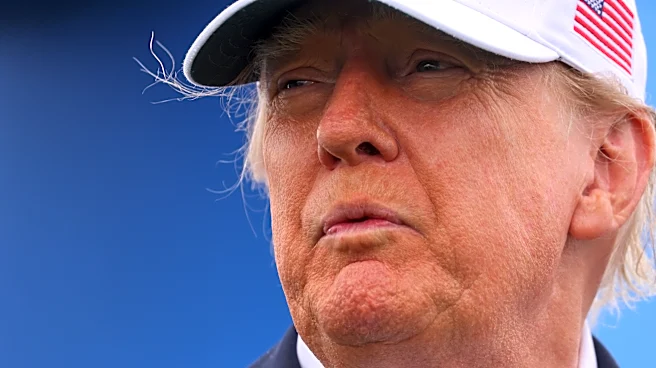
"The only control or 'guardrails' that AI needs is a STRONG AND SMART (High IQ!) PRESIDENT, and the U.S.A. has that, in spades!" President Donald Trump wrote on Truth Social, adding that China would benefit from doubt being cast on AI development.
A Senate aide and a lobbyist familiar with the matter said Senate negotiators were debating legislation that would require AI companies to demonstrate they are taking reasonable precautions to keep their tools from causing harm.
CHINA
State-backed Global Times said in an editorial that the true agenda of Amodei's essay was "to attempt to curb China's AI development through technological barriers and regulatory monopolies, uphold Washington's monopolistic hegemony in cutting-edge technology, and exclude China from the global AI governance system."
China's state security minister, Chen Yixin, wrote in a government outlet that advanced U.S. models such as Anthropic's Mythos and OpenAI's GPT-5.5-Cyber could pose serious risks to China's critical information infrastructure, and called for a comprehensive strengthening of AI security.
EUROPEAN UNION
"The European Union is in favour of developing innovation in artificial intelligence, but companies have to prove their services are safe for citizens to operate in the bloc," European Commission spokesperson Thomas Regnier said.
European Central Bank President Christine Lagarde warned the EU was facing an unprecedented risk of being cut off from AI, saying Europe needed to become a producer of AI technology to preserve its autonomy.
GERMANY
"We do not consider halting (AI) development to be a viable option for Europe," Germany's digital affairs ministry said, adding that strengthening Europe's digital sovereignty required further AI development and innovation.
Berlin said it was monitoring global AI developments very closely and took public warnings from leading developers seriously.
SPAIN
Digital Transformation Minister Oscar Lopez said there was growing discussion about the need for an international agreement to manage AI risks, likening some proposals to nuclear non-proliferation agreements.
(Compiled by Anna Uras in Gdansk and Jaspreet Singh in Bengaluru; Editing by Devika Syamnath and Milla Nissi-Prussak)