

By Abigail Summerville and Juveria Tabassum
Feb 12 (Reuters) - Kraft Heinz's new CEO Steve Cahillane was faced with a difficult choice. Either continue the time-consuming process of separating into two companies or revive the company's struggling brands during a time of weak consumer sentiment. He couldn't do both.
He chose the latter - believing that the underinvestment that had starved the likes of Oscar Mayer and Kraft Mac & Cheese brands could not be fixed during a separation that is projected
to take several months.
"Separations are always best done when the business is healthy, when it's stable, and when it's growing," he told Reuters, after the company's Wednesday announcement to hit the "pause" button on the separation, first announced in September.
"It became very compelling that we ought to pause the separation and focus all of our attention, because our attention is finite, focus all of that attention (on) turning the business back to growth."
The announcement surprised many. Industry sources noted the separation had likely already cost a considerable amount of time. Some analysts questioned whether the decision meant that core parts of the business were in worse shape than imagined, and that a spinout would doom its slower-growing businesses to a downward spiral.
"Investors will view this negatively because it indicates that the businesses are not in strong enough condition to operate on a standalone basis, and it is uncertain when they will," said TD Cowen analyst Robert Moskow.
But investors had not responded positively to the original separation plan, which was to divide the company into a North American grocery business and a global taste elevation business. Investors, including Berkshire Hathaway, were not receptive and some were confused by the parameters, such as putting Kraft Mac & Cheese on the taste elevation side with ketchup and mayonnaise.
Last month, a regulatory filing revealed that Berkshire may shed its 27.5% stake in Kraft Heinz and exit a more than decade-old investment that did not work out for Warren Buffett.
The stock is down 13% since the split announcement, compared with a 7.5% gain in the S&P 500. It was down 1.3% at $24.66 per share on Thursday.
SALES STRUGGLES
With great fanfare, Buffett's Berkshire Hathaway and 3G Capital merged the two food companies in 2015. But the architects of the merger slashed costs and marketing to boost margins, thinking shoppers would continue to buy their products anyway. However, starving the food brands of investment and attention backfired.
While EBITDA margins popped to the high-20% area at first, sales started to struggle. An earnings boost from consumers eating at home during the pandemic waned, with net sales falling 3% and 3.5% in 2024 and 2025, respectively. The stock has fallen almost 70% since the merger.
The company was considered slow to grasp the changing tastes of Americans, as younger brands take market share from legacy food conglomerates, accentuating the need for constant reinvestment. The growth in weight-loss drug usage adds to the challenges.
"There was a feeling that there was something called 'forever brands'. Brands were just so strong, they didn't need investment,” said Cahillane, who started the job on January 1. “I've never believed that. Brands in the consumer space need investments, or they will wither."
MARGIN IMPLICATIONS
Cahillane has overseen a food company turnaround before: He led Kellogg from 2017 to 2023, navigating it through its separation into Kellanova and WK Kellogg. He then led Kellanova until its 2025 acquisition by Mars. He said he spotted early opportunities to turn Kraft around, too, with the help of $600 million earmarked for marketing, sales and R&D.
"There are still margin implications," said Charles Rinehart, chief investment officer at Johnson Investment Counsel. "A lower margin base may ultimately be acceptable to investors if it leads to greater confidence in the sustainability of future growth."
The brands that might need the most attention are in the slower-growth U.S. grocery division - including Oscar Mayer, Kraft Singles, Lunchables and Maxwell House. Kraft had unsuccessfully tried to sell off hot dogs and cold cuts business Oscar Mayer and Maxwell, according to sources familiar with the matter. The company did not comment on the divestiture attempts.
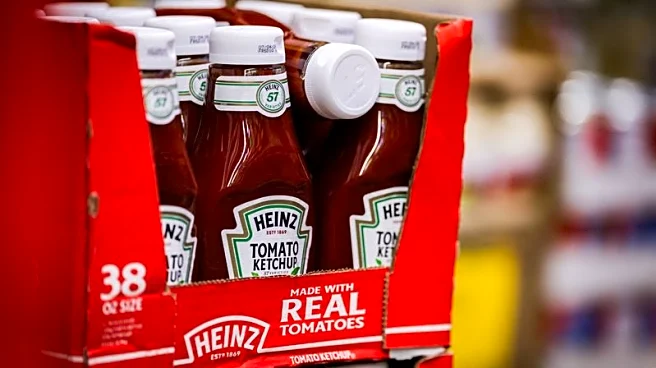
“You can expect Heinz, Kraft, Philadelphia (cream cheese), Mac & Cheese, some of our big players, to be beneficiaries. But those who come with the best ideas across our portfolio, they'll be funded,” Cahillane said.
(Reporting by Abigail Summerville in New York and Juveria Tabassum in Bengaluru; editing by David Gaffen and Nick Zieminski)