








Sept 30 (Reuters) - Conagra Brands posted a volume-led decline in first-quarter organic net sales on Wednesday, with high inflation and price-sensitive consumers hampering new CEO John Brase's efforts to turn around the packaged foods maker.
Conagra had halved its annual dividend in July and said it was reviewing its non-core assets, with Brase, who took over in June, stating that brands that were not playing a great strategic role could be divested and others added.
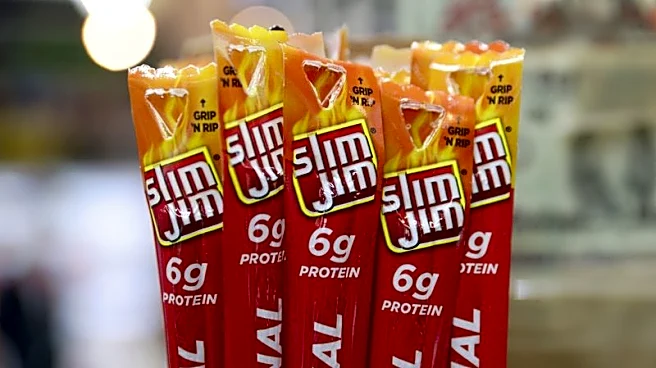
The Slim Jim meat sticks maker,
whose shares slipped around 4.5% in premarket trading, reaffirmed its fiscal 2027 guidance for an organic net sales decline of 1% to 3% from a year earlier, after beating Wall Street estimates for first-quarter profit and sales, according to data compiled by LSEG.
"While there is more work to be done, we remain on track to deliver the year," said Brase.
Persistent inflation — especially in gas prices — and higher borrowing costs have pressured household budgets, prompting consumers to trade down to cheaper private-label alternatives, while the rapid adoption of GLP-1 weight-loss drugs is forcing packaged food makers to reformulate products to meet demand for healthier food.
"We continue to expect full-year volume declines of mid-single digits factoring in greater-than-historical volume elasticities, particularly within our frozen business," CFO Dave Marberger said in pre-recorded remarks, suggesting that consumers were particularly sensitive to higher prices.
Pricing and product mix contributed 1% to total organic net sales, with volumes down 2.1%, Conagra said.
The drop in sales volumes, inflation pressures and unfavorable operating leverage contributed to a 3.9% drop in adjusted gross profit to $619 million in the first quarter, a fall that was slightly offset by $4 million in tariff refunds.
Quarterly net sales in the refrigerated and frozen segment fell 2.1% from a year earlier, while volumes decreased 1% and prices fell 1.5%.
"The core challenge remains unchanged: six consecutive years of volume declines, a portfolio that management acknowledges is too large and too complex, and a consumer environment that is unforgiving of pricing missteps," said RBC analysts in a note.
The company's total quarterly net sales came in at $2.60 billion, narrowly beating estimates of $2.59 billion.
Quarterly adjusted earnings per share stood at 41 cents, compared with analysts' estimates of 28 cents.
(Reporting by Koyena Das in Bengaluru and Alexander Marrow in London; Editing by Jonathan Ananda)