


By Sheila Dang, Marianna Parraga and Deisy Buitrago
CARACAS/HOUSTON, April 13 (Reuters) - Chevron signed two agreements on Monday to expand operations at Venezuela's vast Orinoco Belt, including an asset swap adding an extra heavy crude area to its main project while returning an offshore gas and a crude area, executives and officials said at an event.
The agreements are among the first big expansion deals https://www.reuters.com/business/energy/chevron-shell-closing-first-big-oil-production-deals-venezuela-since-us-captured-2026-03-10/
since the U.S. launched a $100 billion reconstruction plan for Venezuela's energy sector after capturing President Nicolas Maduro nL1N3Y4092, and a sweeping reform of the country's main oil law was approved in January, encouraging foreign investment.
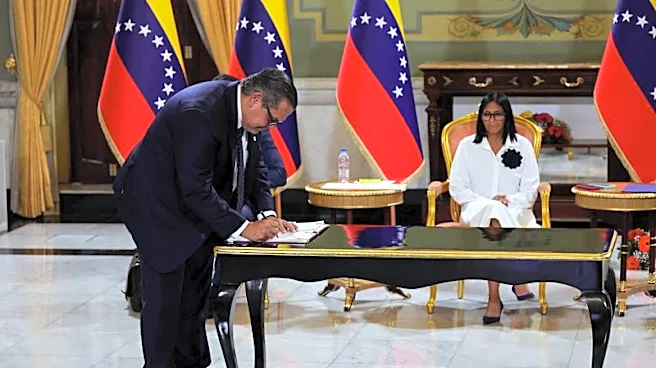
The pacts, which would allow the U.S. major to boost crude output and participation at coveted regions in the OPEC country, were signed by company executives led by Javier La Rosa, head of Chevron's Base Assets and Emerging Countries, and officials from state-owned company PDVSA in the presence of acting President Delcy Rodriguez.
The deals include the increase of Chevron's stake at one of its joint ventures with PDVSA in the Orinoco, Petroindependencia, to 49% from a previous 35.8%.
The company also agreed to relinquish the Loran offshore gas field and its stake at a small field in western Venezuela, while receiving a new oil area, Ayacucho 8, as part of its existing Petropiar project also in the Orinoco.
Chevron's asset swap with PDVSA and its subsidiaries is "a mutually beneficial agreement, which will consolidate all parties' focus on strategic assets in the country," the company said in a release after the event.
Chevron executives said in January the firm could increase output in Venezuela by about 50% in the next two years within its existing footprint. The company's joint ventures with PDVSA are producing 260,000 barrels per day of crude, about a fourth of the country's total output.
(Reporting by Sheila Dang, Marianna Parraga, Deisy Buitrago and Curtis Williams; Editing by Julia Symmes Cobb, Paul Simao, Rod Nickel)