

By Courtney Rozen and David Lawder
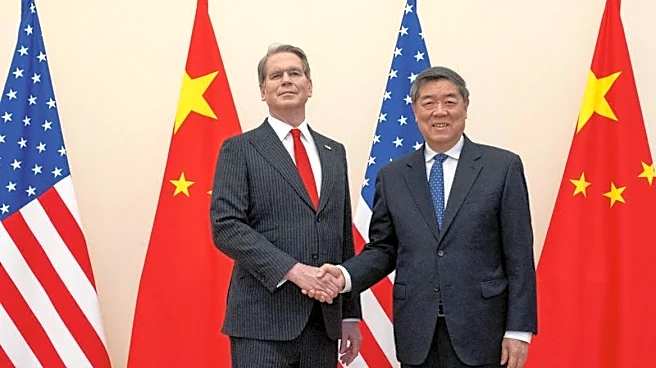
WASHINGTON, Sept 18 (Reuters) - US Treasury Secretary Scott Bessent plans to discuss AI, trade, rare earths and economic issues when he meets with Chinese Vice Premier He Lifeng in New York City this weekend, according to a source familiar with his plans.
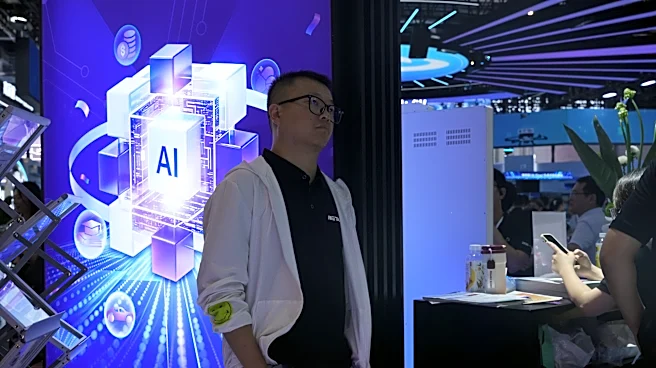
The discussions are significant because the US and China are the two major forces driving development of advanced AI tools and the global adoption of the technology. Rare earths play a crucial role in the manufacturing
of technology.
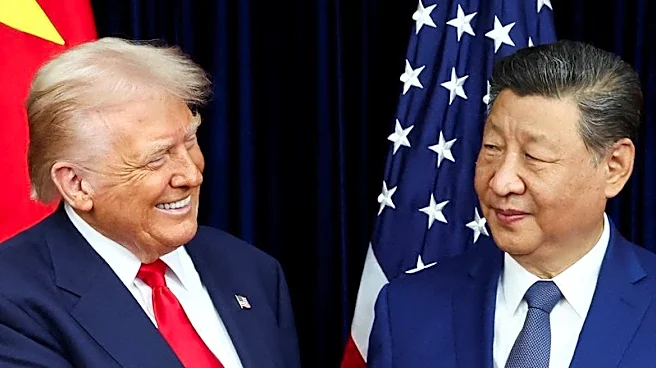
Bessent, US Trade Representative Jamieson Greer and He will meet on Sunday in New York ahead of a summit between US President Donald Trump and Chinese President Xi Jinping on September 24 in Washington, Greer's office said in a statement.
"The Trump Administration will continue to pursue balanced trade with China by monitoring the implementation of recent commitments, optimizing trade in non-sensitive goods, and improving market access for American farmers, manufacturers, and workers," Greer said in the statement.
Bessent said in a separate statement that he expects the discussions to cover "both open- and closed-weight models." Open-weight models are AI systems with publicly accessible core elements. Users can download and fine-tune them for specific tasks.
Chinese open-weight models are becoming more popular with US companies because they can be cheaper than closed-weight AI tools such as those developed by Anthropic, OpenAI and other US companies.
Chinese AI models have even been used by the US government. Reuters reported on Thursday that a US government website employed an AI model from a Chinese company to allow users to search proposed federal regulations even though the FBI accused the model's developer, Alibaba, of "malicious" copying of Anthropic's technology.
"The United States remains the leader in AI. And we are open to discussions on avoiding shared risks and avoiding bifurcation of our two systems," Bessent said in his statement regarding the China talks.
Bessent has called for the US and China to agree on AI "guardrails" aimed at keeping powerful models out of the hands of malign non-state actors.
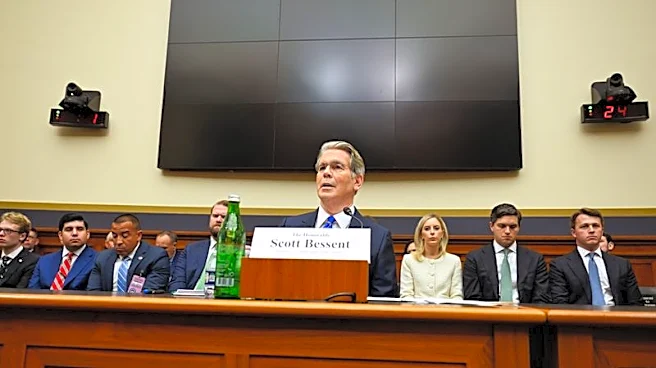
Questioned on AI safety at a House of Representatives Financial Services Committee hearing on Tuesday, Bessent said it was up to US AI firms to decide whether to slow their development, but argued they should be held liable for what they build and generate as a safety measure.
BROAD RANGE OF DISCUSSIONS
Details about the meetings in New York, which are expected to explore possible areas for Trump and Xi to agree on, have been scant. The source said that the Sunday meetings could extend to Monday on a "working" level, and that the agenda would stay flexible to allow for broad discussion.
Other key topics for Bessent and He to discuss are expected to include potential extension of a tariff truce that expires on November 10, and improving flows of Chinese-produced rare-earth magnets and critical minerals that China severely curtailed last year as tariffs on both sides escalated.
Under that truce, China promised to restore the flow of critical minerals to US and global users. However, a senior US official told reporters on Friday that China's performance on that "has not been up to par" and would be a topic for discussion ahead of the Trump-Xi summit.
The Trump administration also wants to see China take stronger action to curb the flow of fentanyl precursor chemicals into the US, the official said.
The US-China truce also capped tariffs imposed during Trump's second term in office at about 20%. The Supreme Court later struck down Trump's tariffs invoked under a national emergencies law, including duties related to fentanyl trafficking. Trump's administration has been rebuilding them under new authorities. The US has restored a 12.5% tariff on Chinese goods over forced labor allegations and is finalizing a separate tariff investigation aimed at curbing excess industrial capacity that it says is rampant in China.
At a Trump-Xi meeting in May, China pledged to increase purchases of US agriculture products and at least 200 Boeing aircraft, but details on those transactions have yet to emerge.
With only short preparation time, expectations for Bessent and He to arrange major new deals from the Trump-Xi summit are low, said Wendy Cutler, policy director for the Asia Society in Washington, adding that both sides have an interest in keeping trade tensions from flaring up again.
"If anything, it's an exercise in kind of managing the relationship and ensuring that the elements in the truce are actually being lived up to," Cutler said.
Also in May, the US and China agreed to launch discussions to reduce tariffs for non-strategic goods under a so-called "Board of Trade" mechanism along with a similar forum to deal with specific investment issues.
While the Trump administration has tightened restrictions on American companies investing in some industries in China, Reuters reported on Friday that it is working on rules that would likely allow US pharmaceutical firms to invest in promising Chinese drugs and strike licensing deals for them.
China's Ministry of Commerce said on Saturday that He would also lead a delegation of Chinese companies to the US to hold economic and trade consultations ahead of the summit.
The business delegation, which mirrors a group of American CEOs that Trump brought to Beijing May, comes as Trump expresses openness to Chinese automakers building US factories. US auto industry groups on Friday urged Trump to maintain an effective ban on Chinese vehicle sales in the US on national security grounds.
(Reporting by Courtney Rozen and David Lawder; additional reporting by Steve Holland and Humeyra Pamuk; Editing by Paul Simao, Will Dunham and Andrea Ricci)