





By David Milliken
LONDON, Nov 10 (Reuters) - The Federal Reserve ought to raise short-term borrowing costs next month even if government data shows inflation cooled last month, Fed Governor Christopher Waller said on Tuesday, and should consider an upsized half-point rate hike if the inflation picture worsens.
"While I am hoping for an improvement over September, even if this occurs, I would still support a 25 basis point increase in the FOMC’s policy rate at our December meeting," Waller said in remarks
prepared for delivery in London, referring to October reading of the US consumer price index, expected at 8:30 a.m. EST (1330 GMT).
Core CPI, which excludes volatile food and energy prices, likely increased a moderate 0.2% last month from September, economists polled by Reuters say.
If core consumer prices rise 0.3% or more from September, "a stronger policy move may be needed," Waller said. "In that case, I believe a 50 basis point hike in the policy rate should be considered at the December meeting."
Anything less, he said, risks hurting the Fed's inflation-fighting credibility, given inflation that's too high and appears to be broadening out.
Waller, whose unvarnished assessments of what the Fed may need to do offer a sharp contrast with Fed Chair Kevin Warsh's resistance to giving any rate-path guidance whatsoever, said he backed the central bank's decision last month to skip a rate hike in part because policymakers had all but promised to deliver further policy tightening.
Financial markets reflect those expectations, with futures that settle to the Fed's policy rate as of Monday's close pricing in about an 85% chance of a rate hike at the Fed's December 8-9 meeting to a new target range of 4.00%-4.25%, and a better-than-even chance of another rate hike as soon as in March.
"If, however, the hikes are not carried out, markets will reduce expectations of rate hikes and rates will immediately fall, which would loosen monetary policy in an undesirable way," Waller said. "So, while the precise timing of the hikes doesn’t matter, ensuring that the promised hikes are implemented in a reasonable period of time does."
Waller did not mention last week's midterms, which gave Democrats majorities in both the Senate and the House and elected a number of Democratic governors who ran on promises of reining in data-center expansion.
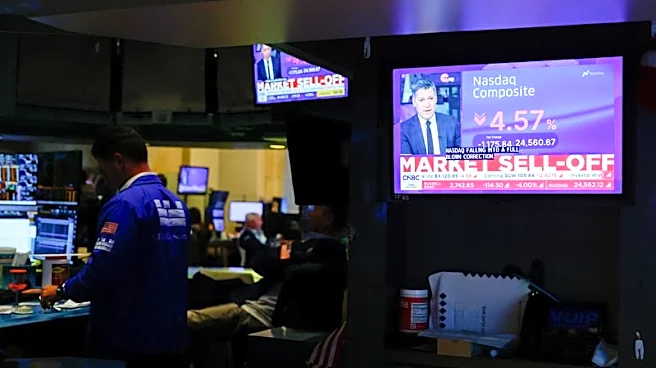
The change in political control has driven stock and bond market volatility as investors reprice expectations for artificial intelligence, demand for which drove a double-digit increase in business investment last quarter even as a booming stock market bolstered consumer spending. US GDP grew at a 3.4% annualized rate last quarter.
"I expect GDP growth is backing off a bit in the current quarter, as consumer spending slows to levels that I think are more consistent with household income and wealth, but output will continue to grow at a solid pace," Waller said.
The labor market, while perhaps not as healthy and dynamic as a 4.1% unemployment rate might suggest, is nevertheless "solid," he said, with worker demand and supply in rough balance.
Inflation, by contrast, is too high and "the focus of my attention," Waller said.
The Fed targets 2% year-over-year inflation, as measured by the personal consumption expenditures index, but September's reading was 3.7%, and core PCE inflation, which Fed policymakers use to gauge the underlying trend, rose 3.1% from a year earlier.
More than 70% of the components of core PCE services inflation rose 3% or more in September, Waller said.
"Later today, I will be looking to see whether this breadth of elevated inflation continues, including whether high-tech goods prices related to the AI buildout continue to rise at the very high rate of recent months," he said. He will also be looking at whether higher energy prices are passing through to goods and services, he said.
Recent Fed staff analyses suggest that producer prices could continue to rise and that energy shocks may now deliver a more persistent push upward to prices than they did in the pre-pandemic period, he said.
"Their analysis suggests that, especially if oil prices were to remain elevated, these pressures could be larger than previously though and persist well into 2027," Waller said.
(Writing by Ann Saphir; editing by Lincoln Feast)