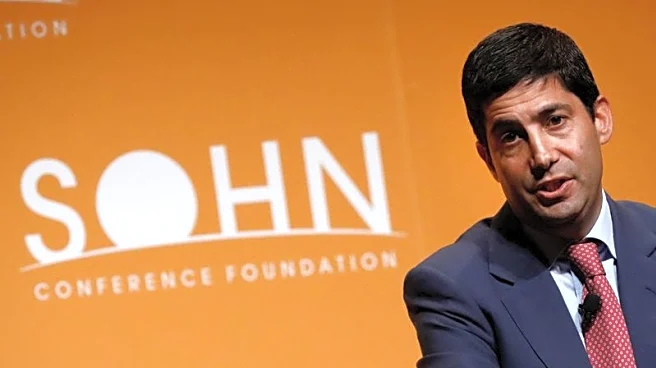

WASHINGTON, Jan 30 (Reuters) - U.S. President Donald Trump on Friday said he will nominate former Federal Reserve governor Kevin Warsh to return as Fed Chair in May, as the president continues his campaign
for lower U.S. interest rates.
Here are five key things to know about Warsh:
YOUNGEST-EVER FED GOVERNOR, CRISIS-TESTED
Warsh, 55, joined the Fed Board of Governors in 2006 at age 35 as its youngest member after serving on former president George W. Bush's National Economic Council. He remained at the Fed until 2011, playing a key role during the 2008-2009 global financial crisis to help then-chair Ben Bernanke engineer bailouts of failing financial institutions and financial market backstops. With his connections on Wall Street, he earned a reputation as the Fed's financial market "whisperer."
Warsh repeatedly warned that government rescues would jack up inflation, a threat that did not materialize. In fact, economists later said larger fiscal stimulus outlays after the crisis could have fueled a stronger recovery sooner.
Trump, always concerned with the appearance of his officials, especially on TV, on Friday called Warsh "central casting" for a Fed chair.
MARRIED TO A BEAUTY BRAND HEIRESS, HELPS PUPS
Warsh's wife is cosmetics heiress Jane Lauder, whose net worth is estimated at $2.7 billion by Forbes. She previously served in various management roles at the family company founded by her grandmother, Estee Lauder, running the firm's Clinique brand but stepping down as executive vice president in 2024.
Jane Lauder and Warsh invest time and money into improving pet wellness and longevity. In October, Lauder’s investment firm, TAW Ventures -- named for their pet goldendoodle dog, Thaddeus Alistair Warsh -- led a 2.5 million-pound ($3.4 million) funding round for the British fresh dog food brand Marleybones, which offers meals named Boss Beef, Chic Chicken, Lush Lamb and Sassy Salmon.
SURROUNDED BY BILLIONAIRES
Warsh, a graduate of Stanford University and Harvard Law School, started his career in the 1990s working in mergers and acquisitions at Morgan Stanley. After leaving the Fed in 2011, he joined Stanford University's conservative Hoover Institution and has lectured at the Stanford Graduate School of Business.
Around the same time, he also began working for billionaire Stanley Druckenmiller as a partner at the investor's Duquesne Family Office, helping to manage his fortune estimated at as much as $11 billion. Druckenmiller in the 1990s worked alongside Scott Bessent, now U.S. Treasury Secretary, to make a profit of over $1 billion for investor George Soros by betting against the British pound.
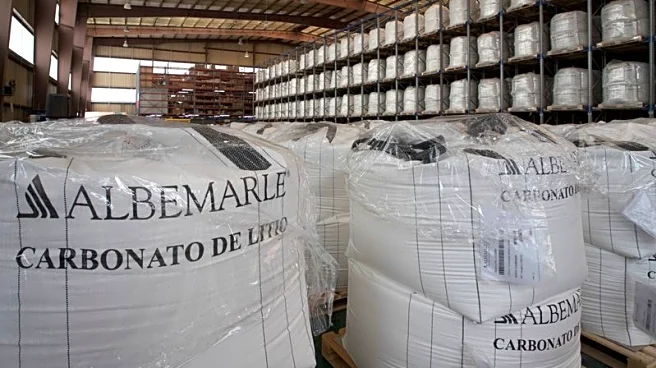
Warsh's father-in-law, billionaire Ron Lauder, is a former classmate and longtime backer of Trump who is reportedly part of a U.S.-linked investor group that won backing to develop Ukraine's lithium deposits. He also has interests in Greenland. Former U.S. national security adviser John Bolton has said it was Lauder who first sparked Trump's interest in Greenland, a drive for U.S. control that has created major tensions with Europe in recent weeks.
HAWK OR DOVE? THE ANSWER IS BOTH--SORT OF
Warsh has publicly agreed with Trump that the Fed should sharply lower interest rates, arguing that productivity gains, particularly from AI, will help keep prices in check and that the central bank does not have to make a "cruel choice" to sacrifice the job market for lower inflation.
But during his five-year term as a Fed governor, Warsh earned a reputation as an inflation hawk and a critic of the Fed's large-scale bond holdings, used to help lower mortgage and other long-term interest rates, as a permanent tool of monetary policy. The Fed, after two years of shrinking its bond holdings, has begun adding to them again, and it's unclear if he would push to stop that process.
WANTS FED TO STAY INDEPENDENT, BUT REFORM
Warsh has long criticized the Fed for overstepping its dual mandates of price stability and maximum employment, which has jeopardized its claim to independence. In April last year he criticized the Fed's reliance on backward-looking data to guide policy decisions and said that he sees little utility in the forward guidance on rates that became embedded in the Fed's communications policy since the financial crisis.
Last May, as speculation rose about his front-runner status, Warsh said that expansion of the Fed's balance sheet was working at cross-purposes with the Fed's main policy rate tool, adding: "If the printing press could be quiet, we could have lower policy rates."
(Reporting by David Lawder, Andrea Shalal and Daniel Burns; Editing by Anna Driver)