
By Shariq Khan, David French and Amanda Stephenson
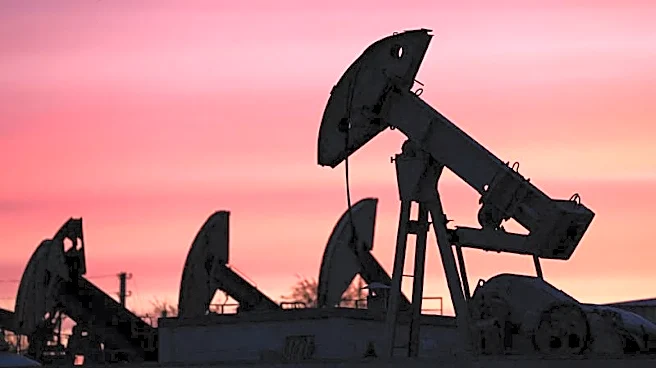
NEW YORK/CALGARY, April 29 (Reuters) - Canada's oil and gas producers are drawing renewed interest from global energy majors as the Middle East conflict
has heightened the country's attractiveness to the world's biggest operators, with Shell's $16.4 billion agreement to buy ARC Resources the clearest sign of the shift.
TotalEnergies and ConocoPhillips are among the companies taking a fresh look at Canadian competitors, alongside Equinor and BP. Companies have asked investment bankers in recent weeks to draw up lists of logical acquisition targets, according to interviews with a dozen people familiar with the discussions.
The renewed interest reverses a decade-long trend, where foreign companies partially or fully divested from Canada's fossil fuel sector. The country's leadership has turned more supportive of oil and gas since Prime Minister Mark Carney took office as the Iran war has investors seeking safer environments. It has completed new export routes for both crude and natural gas that could spur further development, and has vast undeveloped resources that could supply its growing exports.
The Shell deal for ARC is the first concrete proof of that broader reappraisal. The European major announced plans on Monday to purchase ARC, the largest natural gas producer focused solely on Canada's Montney shale region, in what would be one of the largest-ever foreign purchases of a Canadian energy company.
"The fact they (Shell) are buying in Canada is an indication that we have tremendous, world quality resources," said Mike Verney, executive vice president at Calgary-based energy consultancy McDaniel & Associates, adding that foreign interest was "validating."
There is no guarantee that Total or any other company will follow Shell with an acquisition any time soon, given the recent market volatility, the sources said. Most of the people Reuters spoke with asked not to be identified because the talks are private.
TotalEnergies and Equinor did not immediately respond to requests for comment. BP and ConocoPhillips declined to comment.
EXODUS AND RETURN
For years, Canada's limited pipeline and export capacity made it less appealing for investment when compared to U.S. shale, as well as renewable energy and other growth areas. Many of the world's biggest energy companies specifically left the Alberta oil sands - Canada's largest oil-producing region - driven by investor angst over the environmental impact of producing the heavy, tarry oil.
That concentrated the country's energy sector in domestic hands, with Canadian ownership in the oil sands growing to approximately 89% in 2025 from 69% in 2016, according to a Bank of Montreal analysis.
Now, domestic politics and global conflict have turned in Canada's favor. The turmoil around the shuttered Strait of Hormuz has elevated the world's fourth-largest oil producer as a safer bet for international oil companies. Carney has also taken a friendlier stance toward oil and gas development than his predecessor Justin Trudeau, pledging to help grow the industry and rolling back some climate rules.
"When you want energy and you look at the world and what could go wrong, Canada has a lot of things going for it," said Jose Valera, a partner at law firm Mayer Brown.
.
THE SHOPPING LIST
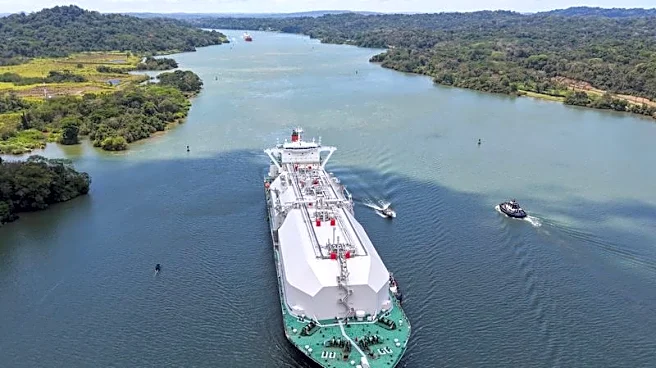
One of the biggest draws is Canada's emerging liquefied natural gas export capacity from the Pacific coast, which offers direct shipping access to Asia.
Last year, Total acquired a stake in the proposed Ksi Lisims LNG project on British Columbia's northwest coast, which if greenlit could become Canada's second-largest LNG export terminal. Shell and its partners began producing from LNG Canada last June and a decision on whether to advance the project's second phase is expected soon.
Involvement in such projects is spurring investors to look at upstream assets supplying those facilities, particularly the potential that exists in the Montney, a massive shale play spanning northeast British Columbia and northwest Alberta, two of the people said. The area is dominated by ARC, Tourmaline Oil, and other domestic producers, but remains relatively underdeveloped compared with U.S. basins such as the Permian.
The country is the world's fifth-largest natural gas producer. The Montney produces about 10 billion cubic feet per day, about 50% of Canada's total production. The Permian, by contrast, produces about 25 bcfd, according to U.S. data.
Higher crude prices are giving majors additional financial firepower for acquisitions. But the pool of takeover targets is limited with ARC off the market.
Canada's largest natural gas producer Tourmaline Oil is a potential target, three of the people said. The C$18 billion ($13.2 billion) company's shares have been flat over the past year, and is led by 68-year-old Chief Executive Mike Rose. A sale could help solve succession questions, some sources added.
Tourmaline declined to comment.
Majors could also roll up smaller producers, including private equity-backed operators.
($1 = 1.3676 Canadian dollars)
(Reporting by Shariq Khan and David French in New York and Amanda Stephenson in Calgary; Additional Reporting by Andres Gonzalez and Stephanie Kelly in London, America Hernandez in Paris, and Nerijus Adomaitis in Oslo; editing by David Gaffen)