
By Nicholas P. Brown
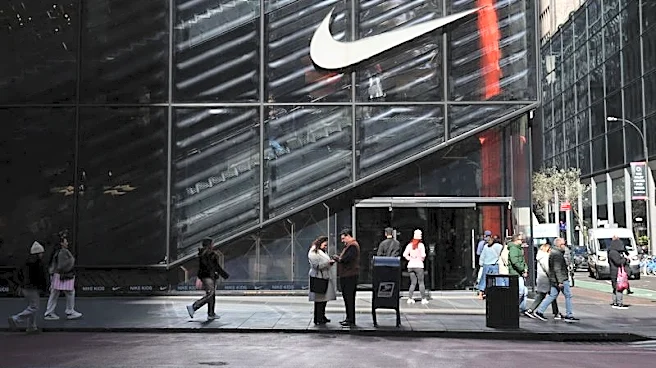
NEW YORK, May 5 (Reuters) - Eighteen months into CEO Elliott Hill’s attempts to revive Nike, the sportswear giant is losing market share, and Wall Street is signaling growing impatience with its struggle to clear inventory and churn out must-have sneakers.
Nike's share of the global sports footwear market fell 3 percentage points in 2025, to 22.9%, according to Euromonitor International data obtained by Reuters, the third straight year of declines.
In the latest blow, a runner wearing
new, ultra-light shoes from German arch rival Adidas last week shattered the two-hour marathon barrier, leaving Nike behind in the innovation race. Adidas' market share rose to 12.2% last year from 11.7% in 2024.
Meanwhile, bets against Nike’s stock have surged, reflecting growing skepticism about how long a turnaround could take.
Data from S&P Global Market Intelligence show that 4.67% of Nike's outstanding shares were on loan — a proxy for short selling — as of May 1. That's more than 11 times the 0.41% of shares on loan when Hill took the reins in October 2024. And it dwarfs the on-loan figures for smaller competitors that have gained market share in recent years - like On Running (1.68%) and Hoka owner Deckers (0.52%).
When Hill took the helm of the brand long known for setting industry standards, he said a turnaround would take time, but promised to restore Nike's one-time dominance and pricing power. Last month, as operating margins continued to fall, Hill admitted the turnaround was taking longer than he would have liked. Investors agree: Nike's stock closed at $43.09 on Monday, its lowest since 2014.
“We have been talking about the same problems since (Hill) came in, so it seems like there should have been more progress by now,” said Morningstar analyst David Swartz.
Inventory piled up in recent years as demand for Nike’s classic lines, including Dunk and Air Jordan, cooled amid rising competition from newer players like On and Deckers, and the company was slow to pivot to new styles.
A Nike spokesperson said Hill’s first months as CEO were spent diagnosing problems and that the company only began executing its new core-sports strategy late last year. "That is the appropriate clock for evaluating progress, not a single 18-month window," the spokesperson said in a statement to Reuters.
UNSOLD INVENTORY, DEEPER MARKDOWNS
Under Hill's aegis, Nike launched the Vomero 18 running shoe in 2025, which the company said hit $100 million in sales in three months. But for a company once defined by frequent hits, isolated wins are not enough to reassure investors.
Nike is rolling out new versions of its carbon-plated Alphafly running shoe this year, and broadening the availability of Nike Mind, a shoe Nike says can activate sensory areas of the brain.
“They're the biggest dog in the fight, so I feel like they should be able to hit everybody else pretty hard,” said Sarah Henry, a portfolio manager at Logan Capital Management, who is holding off on buying Nike shares amid its struggles.
Hill has reshuffled leadership, increased brand marketing and vowed to use targeted discounts to work through excess inventory. But profits have been slow to rebound.
While fewer items are discounted on Nike’s website compared with late 2024, average markdowns are deeper, keeping pressure on margins, according to retail analytics firm M Science. About 37% of products were on sale at the end of February, the firm found, the most recent month for which data was available.
Regulatory filings show that inventory as a share of revenue - 16.1% last quarter - is roughly flat versus when Hill took over.
The Nike spokesperson stressed that the company is culling obsolete inventory at retailers that sell its merchandise through “a mix of discounts and returns,” a move that could potentially skew data on promotions.
HOW LONG DOES HILL HAVE?
Consumer and retail CEOs have faced short leashes recently. With thin operating margins - less than 6% for Nike last quarter - pricing and inventory mistakes quickly hit earnings, leaving executives vulnerable to pressure from activists.
Investors remain behind Hill, albeit with growing restlessness. “I think for the things he can control, it’s going in the right direction,” said Simon Jaeger, portfolio manager at Flossbach von Storch, which holds Nike stock.
Jaeger attributed Nike’s slowness in part to external factors like tariffs and rising energy costs, and noted bright spots like double-digit sales growth last quarter in Nike's North American running and soccer categories.
Jaeger warned such progress must extend to other categories this year, though, or “I would not be happy.”
(Reporting by Nicholas P. BrownEditing by Nick Zieminski)