



By Amanda Cooper and Tommy Reggiori Wilkes
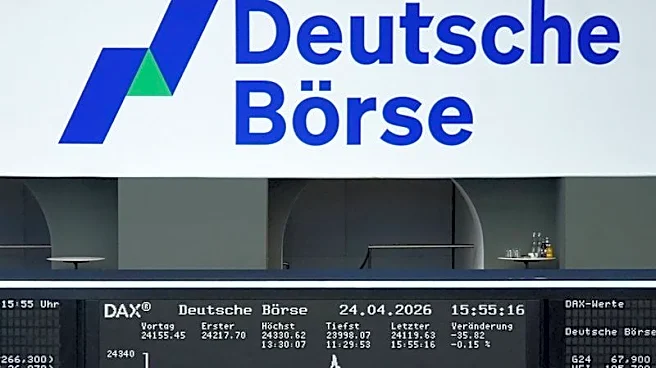
LONDON, April 24 (Reuters) - Trading stocks round-the-clock, seven days a week could damage markets by fragmenting liquidity, German exchange operator Deutsche Boerse CEO Stephan Leithner warned, as Wall Street takes steps to shift towards trading 24/7.
Exchanges are grappling with the growth of cryptocurrencies and other assets that are not restricted by traditional opening hours and technology that has raised expectations, particularly among retail traders,
of being able to trade anytime, anywhere.
Nasdaq submitted paperwork to U.S. regulators in December to extend trading to 23 hours on weekdays, while CME is launching 24/7 trading of crypto futures and options.
But many banks and asset managers are opposed.
"We need to really stay focused to not fragment liquidity, also from a timing perspective," Leithner told Reuters, adding that big investors wanted buying and selling concentrated at particular times, boosting the efficient operation of markets.
Deutsche Boerse, which reports its first-quarter results next week, operates the Frankfurt bourse, the Eurex derivatives venue and 360T for foreign exchange, among others.
"Even if it is technically something we can do, we should keep it targeted to investors that are interested," he said, referring to Deutsche Boerse's XETRA Retail platform that allows trading until 10 p.m. in Europe.
"Can you imagine the biggest asset managers come in on a Sunday evening in August to trade? Why would they do that? For their trades, they need big liquidity, they need accumulated liquidity," Leithner added.
'BRING BACK THE LIQUIDITY'
European policymakers and financial leaders are increasingly concerned the region's financial markets are punching below their weight, damaging Europe's economic and financial strength.
The finance ministers of the 'E-6' group of euro zone countries wrote to the European Commission in March calling on the EU to increase the transparency of equity trading venues.
Leithner called the intervention crucial, since European trading spanned 500 trading venues but only 35 of them are exchanges as activity had shifted into so-called dark pools.
The share of global trading in equities on Europe's public markets has fallen to below 30% from around 55% two decades ago, while the U.S. share remains around 50%, Leithner said.
"We need to bring back the liquidity from the others to the transparent venues. That consolidation, does this need M&A? No, this will organically happen with the right regulatory framework," he added.
Other European exchanges, including LSEG, are also still reviewing options on all-day trading.
"We regularly look across all of our trading platforms and markets to ensure they best serve the needs of companies and investors. Any changes to trading hours would be made in response to customer demand and following full consultation with market participants," LSEG said in a statement.
Reuters provides news for LSEG's news and data terminal, Workspace, and other products.
(Additional reporting by Elisa Martinuzzi and Samuel Indyk; Editing by Alexander Smith)