



By Juveria Tabassum and Nicholas P. Brown
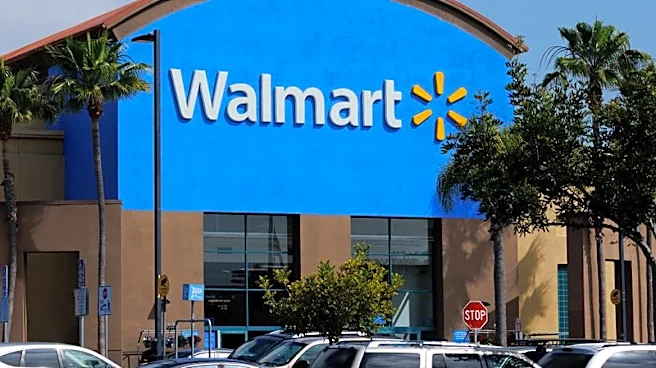
Aug 20 (Reuters) - Walmart on Thursday reported its slowest quarterly comparable sales growth in six years and warned shoppers were likely being squeezed by high gasoline prices, stoking concerns that pressure on U.S. consumers is mounting.
The retailer raised its annual sales and profit forecasts and said aggressive price cuts would boost demand later this year, but investors were unconvinced.
Shares fell as much as 10% to a nine-month low of $102.85 — its
biggest single-day drop since May 2022 — and were on track for a nearly $90 billion loss in market value if losses hold.
The retailer, the world's biggest by revenue, is known for its low prices on grocery and essentials, which has helped Walmart stay well ahead of competition. But price rollbacks on 11,000 products, announced on Wednesday, will be fueled in part by $2.9 billion in tariff refunds - a one-time boon, and a strategy also being deployed by rivals including Target.
"For the consumer economy, this is like Nvidia posting a slowdown," said Brian Jacobsen, chief economic strategist at Annex Wealth Management. "Walmart has been winning the trade-down trade, but that tailwind may be fading."
There are other signs pointing to softening demand. U.S. retail sales fell unexpectedly in July, while gasoline prices have remained elevated for months. President Donald Trump last week warned consumers that fuel prices could remain high as the war in Iran drags on.
Shares of retailers including grocers Kroger and Albertsons fell after Walmart's results.
Walmart now expects an additional $2 billion in fuel costs above prior forecasts.
"When fuel prices increase and get above $4, perhaps there's a psychological impact to that ... consumers are making trade-offs," CFO John David Rainey said on a call with analysts.
Store traffic growth slowed to 1.5% in the latest three months from 3% in the first quarter.
PRICE WAR BET
Walmart executives urged patience, arguing that benefits from lower prices, particularly in grocery and general merchandise, will take time to materialize.
Rainey said Wall Street should view the company's second- and third-quarter results as a single unit, while CEO John Furner said an increase in unit sales would translate to share gains over time.
Economic low points are the moments Walmart's business model is designed to win, and some analysts and investors believe the retailer is still best positioned to win a price war.
"The company’s main bullet in the arsenal is to be the lowest cost provider," and price rollbacks should keep consumers gravitating toward it, said Sarah Henry, managing partner at Walmart shareholder Logan Capital Management.
Walmart has other levers to pull to keep prices low, including relying on its high-margin Walmart Connect advertising business, whose sales jumped 43% year-over-year. Membership revenue grew 17%.
Comparable sales grew just 2.6%, short of analysts' expectations of a 3.8% increase, according to data compiled by LSEG. But the growth figure was 3.4% excluding its pharmacy business, which took a hit from lower prices negotiated under the Inflation Reduction Act's Maximum Fair Price program.
Walmart shares have more than doubled since the start of 2024, spurring debate about whether it is now overvalued.
“This print should flame the debate," said UBS analyst Michael Lasser, “but we remain bullish.”
E-commerce was a strength, with sales growing 24%, and the company said it has doubled the number of units delivered in under 30 minutes versus a year ago.
RARE MISS
The report marks a rare stumble for the retailer, which has a reputation for consistently exceeding sales expectations and raising forecasts. It was the first time in at least five years Walmart's same-store sales fell short of analysts expectations.
Average ticket, or spending per transaction, grew 1.1%, versus a 3.1% rise a year earlier.
Walmart now expects fiscal 2027 net sales to grow between 4% and 5%, up from its earlier target of growth between 3.5% and 4.5%. It expects annual adjusted earnings per share of between $2.80 and $2.87, compared with its earlier target of between $2.75 and $2.85.
It expects third-quarter adjusted earnings per share of between 62 cents and 64 cents, below estimates of 68 cents.
(Reporting by Juveria Tabassum in Bengaluru and Nicholas P. Brown in New York; Editing by Anil D'Silva, Sayantani Ghosh and Deepa Babington)