






By Jiaxing Li and Harry Robertson
HONG KONG/LONDON, Sept 25 (Reuters) - The dollar fell on Friday but was on track for its second consecutive weekly gain on rising rate hike bets, while the yen rallied after Japan said Tokyo and Washington remain committed to the stance behind July's joint intervention.
The euro rose 0.2% to $1.141 as energy prices fell, moderating wagers on Federal Reserve rate increases, but was on track for a third weekly decline after touching a two-month low on Thursday.
Sterling
rose 0.3% to $1.326, boosted by hawkish comments from Bank of England Governor Andrew Bailey. Yet it remained close to a three-month low and was set for its second straight weekly 1% fall.
Markets have aggressively repriced the US interest rate trajectory after the Federal Reserve tightened policy last week. Robust economic data, fresh energy supply concerns and a chorus of hawkish Fed speakers have further strengthened that conviction.
A bond selloff, which sent long-dated US Treasury yields to their highest in more than 20 years, also gave the greenback a leg up.
The dollar index, which measures the US currency against a basket of peers, climbed to a two-month high on Thursday and was set for its first back-to-back weekly increase since June.
However, it gave back some of its recent gains and fell 0.3% on Friday to 100.96.
"Whilst the dollar should get a bid from higher yields, there are still ongoing, lingering concerns around the US fiscal position, the unpredictability of US policy making," said Khoon Goh, head of Asia research at ANZ.
"I think that's why the dollar has really struggled to continue to rally, even though yields continue to increase."
Oil prices eased on Friday on signs of easing supply disruptions and hopes of progress in talks between the US and Iran. Yet crude remained close to a one-week high as a Houthi missile attack on Saudi Arabia kept Middle East tensions high.
YEN STRENGTHENS AS JAPAN STEPS UP INTERVENTION WARNINGS
The Japanese yen bounced 0.8% from three-week lows to fetch 157.65 per dollar.
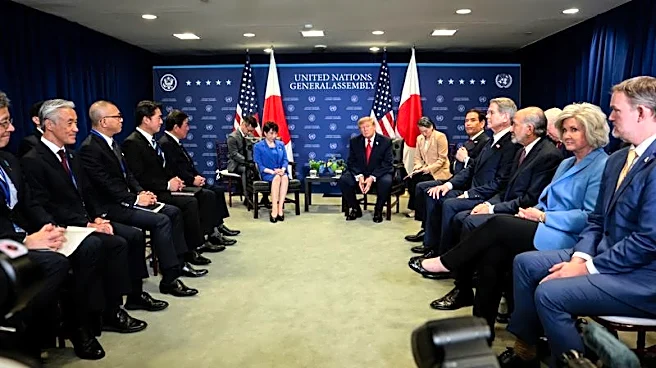
The currency rose after Japan's Finance Minister Satsuki Katayama said US President Donald Trump raised concern about yen weakness during a summit with Japanese Prime Minister Sanae Takaichi earlier this week.
Katayama said this reaffirmed the shared US-Japan stance behind July's joint intervention, adding she and Treasury Secretary Scott Bessent would stay in close contact as policymakers stepped up warnings over renewed yen weakness.
"Katayama’s comment ... clearly underlines the ongoing efforts in Tokyo to portray the efforts to stem yen weakness as a continued joint strategy," said senior MUFG currency strategist Derek Halpenny.
"That certainly reinforces the possibility that additional intervention could again include the US."
Still, the yen was on track for a second weekly fall, after markets judged the Bank of Japan's rate hike last week to a 31-year high and its latest guidance as insufficiently hawkish.
Elsewhere, the offshore yuan was flat at 6.721 per dollar, as a Trump-Xi summit in Washington showed no signs of breakthroughs at a closed-door meeting on thorny issues such as AI, trade, Taiwan and the Iran war.
The Australian dollar rose 0.3% to $0.703. The Reserve Bank of Australia is expected to raise interest rates by 25 basis points to a nearly 15-year high of 4.60% next week.
(Reporting by Jiaxing Li in Hong Kong and Harry Robertson in London; Editing by Shri Navaratnam, Kevin Buckland, Ros Russell)