
CAMACARI, Feb 5 (Reuters) - Chinese automaker BYD is aiming to produce and source 50% of its vehicle components locally at its new Brazilian factory by the end of 2026, the company’s top executive in the country told Reuters, amid concerns about the EV giant undercutting the local industry.
Senior Vice President Alexandre Baldy said in an interview this week at the plant in Bahia state that BYD is transitioning to a local supply chain as quickly as possible, with the aim of becoming Brazil's top carmaker
in sales volumes by 2030.
BYD's targeted deadline for 50% local components in its Brazilian-made cars is Jan. 1, 2027, he said. This includes both in-house production and components from local suppliers, such as tires.
"We got here at a very fast speed — the pace that we need to maintain to reach this goal," said Baldy, at the Camacari factory producing electric and hybrid vehicles for Brazil, BYD's biggest market outside of China.
Since October, BYD has produced about 25,000 cars at the industrial complex that occupies an area of more than 4 million square meters, left by Ford Motor Co when it gave up manufacturing in Brazil.
Camacari, an industrial hub outside the state capital Salvador, renamed a nearby avenue from Henry Ford to BYD.
FROM IMPORTS TO EXPORTS
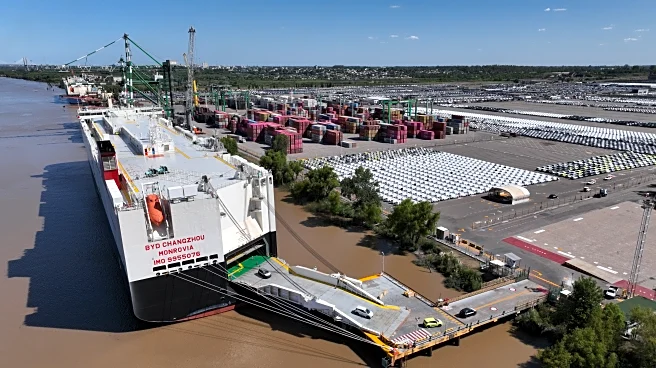
Rising local content will satisfy regulatory requirements and allow the carmaker, which has flooded the regional market with Chinese electric vehicles in recent years, to begin exporting from its Brazilian plant to neighbors in the Mercosur trade bloc as soon as this year, Baldy said.
While local industry and labor groups complain that BYD has relied heavily on imports and temporarily low tariffs, Baldy said the carmaker is racing ahead with local production lines that will eventually generate 20,000 jobs in Brazil.
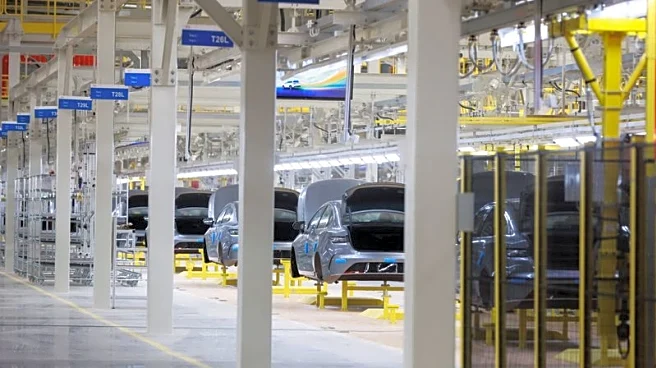
The Camacari factory now assembles cars from imported "semi-knocked down" (SKD) units, benefitting from an import tax exemption that just expired.
BYD will request an additional quota extending the exemption through the middle of this year, Baldy said. But he insisted that the SKD approach is "a transitional regime," adding: "cars must be produced with local components to be economically and financially viable."
BYD's local stamping, welding and painting facilities are nearing completion, Baldy said. That ongoing expansion is part of BYD's first investment phase in Brazil, totaling 5.5 billion reais ($1.1 billion), which aims to scale the plant's capacity to 300,000 vehicles per year - from an estimated 150,000 by the end of 2026.
LABOR CASE SETTLED
Already, the Camacari complex employs around 5,000 people, including roughly 2,300 BYD employees and 2,500 workers with construction companies and service providers.
Adson Santana, a BYD assembly manager at the plant, said he became emotional the day he returned to the site where he had previously worked for Ford, before the American car company closed in 2021 and laid off thousands of workers.
BYD's arrival in Bahia was marred last year by a labor investigation targeting the construction of its plant. Late last year, prosecutors said BYD and its contractors had settled the case, agreeing to pay 40 million reais in damages.
Baldy said the compliance agreement was only signed by the contractors and not BYD.
($1 = 5.25 reais)
(Reporting by Luciana MagalhaesEditing by Brad Haynes and Aurora Ellis)