



July 22 (Reuters) - Tesla reported negative free cash flow in the second quarter for the first time in more than two years as the Elon Musk-led EV maker accelerated spending on AI infrastructure, battery capacity, robotaxis and next-generation manufacturing.
Tesla reported negative free cash flow of $1.1 billion, compared with analysts' expectation for cash burn of $3.3 billion, according to data compiled by LSEG.
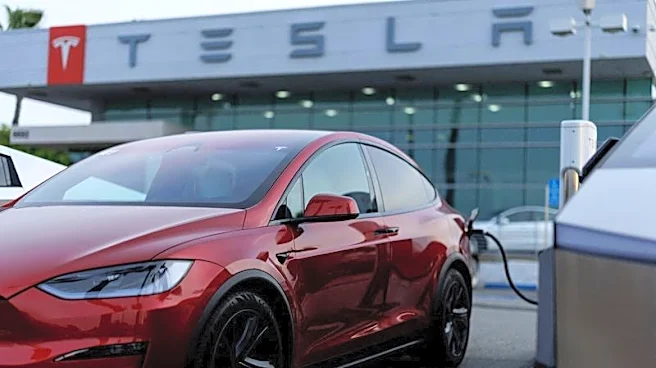
Tesla delivered 480,126 vehicles in the second quarter, above Wall Street expectations
and up from 384,122 vehicles a year earlier. The company produced 451,758 vehicles, meaning deliveries outpaced production by more than 28,000 vehicles during the quarter, reversing the inventory build seen earlier in the year.
Tesla also deployed 13.5 GWh of energy storage products in the quarter, up from 8.8 GWh in the first quarter and 9.6 GWh a year earlier.
Its core automotive business remains under scrutiny as competitors introduce newer models, often at lower price points, while the company continues to rely heavily on its Model 3 compact sedans and Model Y SUVs for volume.
Tesla has tried to stimulate demand through lower-priced trims, including stripped down, affordable versions of the Model 3 and Model Y late last year, and the launch this month of a six-seater variant of the Model Y in the United States, where demand has been hit by the removal of key tax credits last year.
Wall Street expects Tesla to deliver about 1.7 million vehicles in 2026, according to Visible Alpha data. That would imply growth from last year's levels, but analysts remain divided over whether the second-quarter rebound reflects sustainable demand or timing effects after a weak first quarter.
Analysts say sustaining the momentum could be difficult, with third-quarter growth set to face a high bar after a strong performance in the same period last year.
Investors have increasingly turned their attention to Musk's push into self-driving technology and robotics, seeking clearer evidence that Tesla's autonomy narrative is shifting from promise to commercial reality.
Tesla's energy generation and storage unit has emerged as a key counterweight to the auto business, helped by demand for grid-scale batteries that support renewable energy, data centers and electricity-network stability.
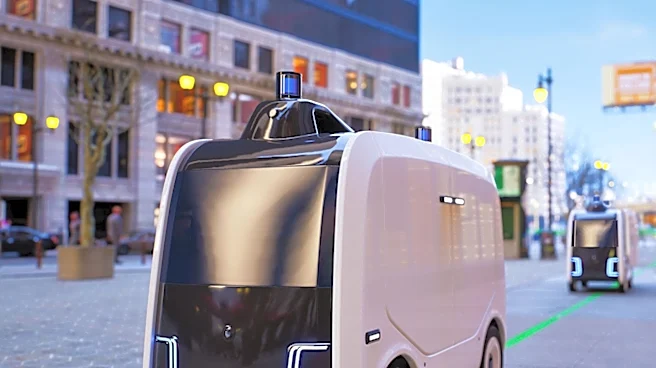
Tesla has said it expanded its unsupervised robotaxi service in Austin and launched unsupervised rides in Dallas and Houston in April. The company also operates a robotaxi service in Miami, expanded the service to Orlando and Tampa. Tesla has previously identified Phoenix and Las Vegas among future expansion markets.
The company received approval in April to deploy its advanced driver assistance software - called Full Self-Driving Supervised - in the Netherlands. Some other European countries have also allowed the technology following the Dutch approval.
A key vote to decide on Europe-wide approval for the technology is expected later this year. Tesla is also pushing for approval in China.
Tesla's shares have fallen more than 15% this year. At about $1.4 trillion, it remains the world's most valuable automaker by a wide margin, reflecting investor expectations that self-driving software, energy storage, robotaxis and humanoid robots could eventually deliver higher-margin growth than vehicle sales.
(Reporting by Akash Sriram in Bengaluru and Abhirup Roy in San Francisco; Editing by Pooja Desai)