






By Natalia Siniawski, Diego Oré and Kylie Madry
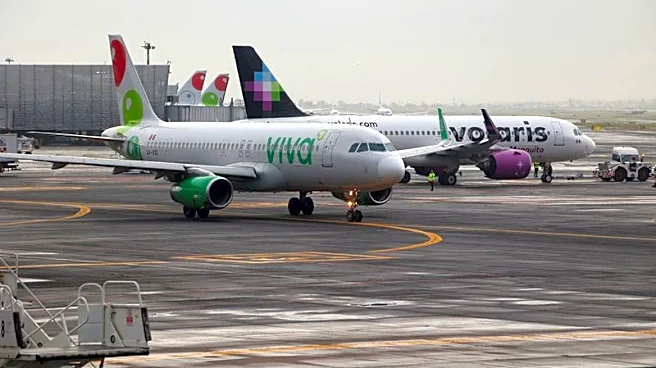
MEXICO CITY, Oct 13 (Reuters) - Mexico's antitrust authority is set to approve the planned merger between low-cost carriers Volaris and Viva Aerobus before the end of this year, according to six sources familiar with the matter, likely creating the nation's largest airline group with few operational limitations.
The antitrust body is expected to require the new company, Grupo Mas Vuelos, to keep fares low and avoid widespread layoffs, according to three
of the sources, who requested anonymity as they were not permitted to speak publicly on the matter.
The group will also be required to largely maintain the carriers' current routes due to a lack of alternatives from competitors, the sources said, even as concerns persist that Mas Vuelos will dominate the market.
Viva, in a written response to Reuters, said it remained attentive to the progress of the evaluation process and that it would continue to cooperate with authorities. Volaris also said it was cooperating and that it remained "confident in the strategic merits of the transaction."
The antitrust body, CNA, did not immediately respond to a request for comment.
The deal, announced late last year, is a merger of equals, and both airlines have said they will maintain their brand identities following the tie-up.
The two carriers account for around three-quarters of the domestic flights in Mexico, and under a fifth of the nation's international flights. They, however, have faced financial troubles in the years following the COVID-19 pandemic, particularly with planes grounded due to required engine inspections and high jet fuel prices.
Airlines in Mexico did not receive government support during the pandemic, and neither Volaris nor Viva underwent a restructuring process as competitor Aeromexico did.
One source familiar with Volaris' operations said the carrier needed the tie-up, and that its CEO, Enrique Beltranena, was key in getting the deal across the line with Viva. Mas Vuelos' leadership will come from both airlines, but Viva Chairman Roberto Alcantara will head the new group.
FEWER RIVALS ALOFT
Volaris and Viva have gobbled up domestic market share in recent years, surpassing Aeromexico. The country's flagship airline still holds a slight lead among Mexican carriers on international routes.
The two low-cost airlines operate 85 of the same routes, according to data analyzed by Reuters, and after the merger, Mas Vuelos will be the sole operator of 55 of them. The overlap is particularly high on flights in and out of Guadalajara and Monterrey.
Most of the sources, who are part of the current discussions, said that the airlines were cutting the frequency of some flights ahead of the antitrust approval.
"The only condition you could (realistically) impose is to free up space for a third party on highly concentrated routes," at airports in Mexico City, Guadalajara and Monterrey, said Javier Nunez, a competition expert and former antitrust commissioner.
Authorities looked at modifying the group's allowed number of flights in and out of major airports, three sources said. Regulators ultimately plan to leave it unchanged, two of the sources added.
The regulator is still hammering out details on how it will determine and enforce which routes the new group would need to keep flying, the same sources said.
To counter market concentration, Mas Vuelos will be required to maintain its low-cost model, three sources said. Under the conditions, a certain percentage of fares will have to remain within the same range as those of similar operators in the region, according to one source.
The CNA weighed putting restrictions on Alcantara's IAMSA transportation group, which is Viva's top shareholder and operates the airline's connecting shuttle service as well as major bus lines, three of the sources said. The deal will likely go through without major concessions from IAMSA, according to one of them.
HIGH-STAKES APPROVAL
Nunez said the case would be an important early test for the CNA, which replaced a previous antitrust body last year, given the size of the transaction and the aviation sector's visibility.
A similar deal, in which airline Mexicana bid to take over Aeromexico in 2007, was blocked due to antitrust concerns. Mexicana went under in 2010 before being revived by the state in 2023.
Two of the sources cited pressure from Mexico's government to push the deal through, as the airlines are the largest operators out of government-run Felipe Angeles International Airport on the outskirts of Mexico City. That airport has yet to pick up considerable traffic compared to a more centrally located hub.
One source said the airlines had committed to increasing flights at Felipe Angeles, and at the state-run Tulum airport, despite low traffic.
Mexico's presidency did not immediately respond to a request for comment.
The deal has already cleared antitrust hurdles in Colombia and the US. Aeromexico has repeatedly expressed its opposition to the deal, according to a person familiar with the carrier's thinking, and is concerned about how effective regulatory concessions will be in limiting Mas Vuelos' market share.
Aeromexico did not respond to a request for comment.
(Reporting by Natalia Siniawski, Diego Oré and Kylie Madry; Editing by Paul Simao)