
By Ankur Banerjee and Samuel Shen
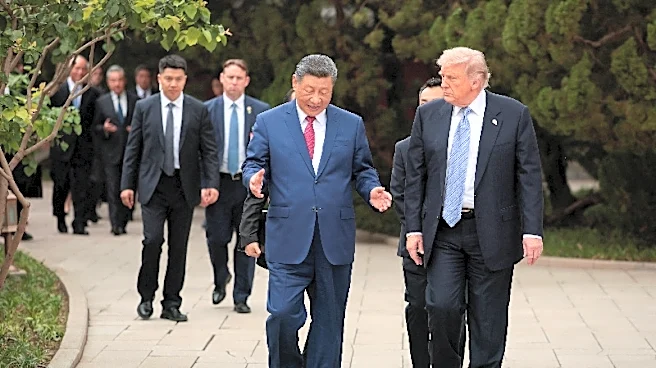
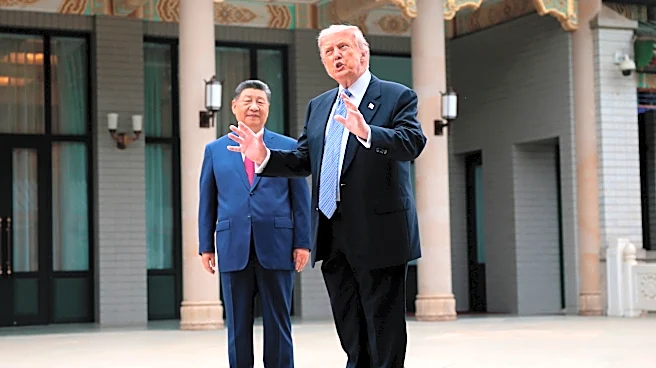
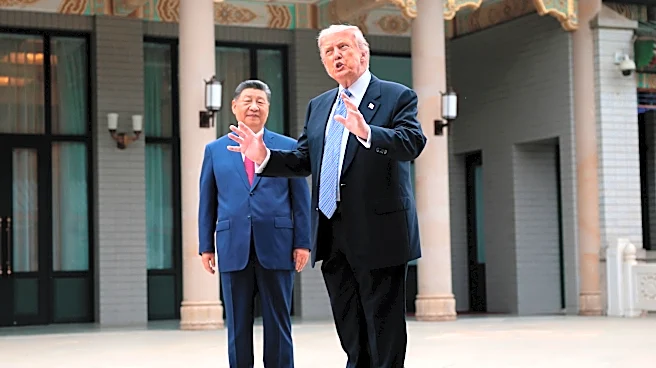
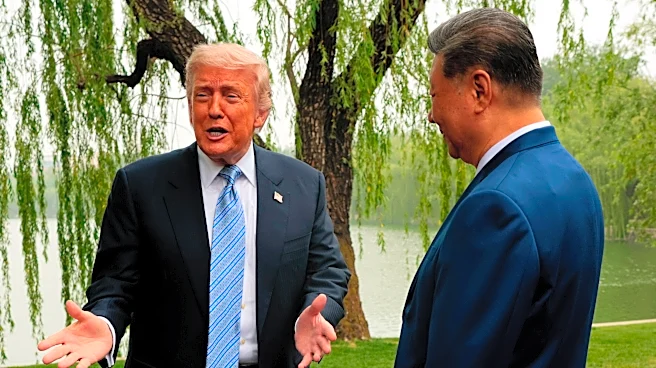
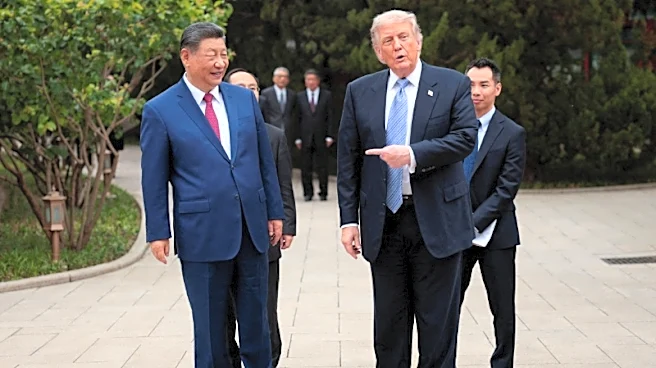
SINGAPORE, May 18 (Reuters) - The focus on "strategic stability" during a summit between U.S. President Donald Trump and China's Xi Jinping will ease Sino-American geopolitical
risks for Chinese markets, but little progress on trade and the Iran war will keep investor enthusiasm in check.
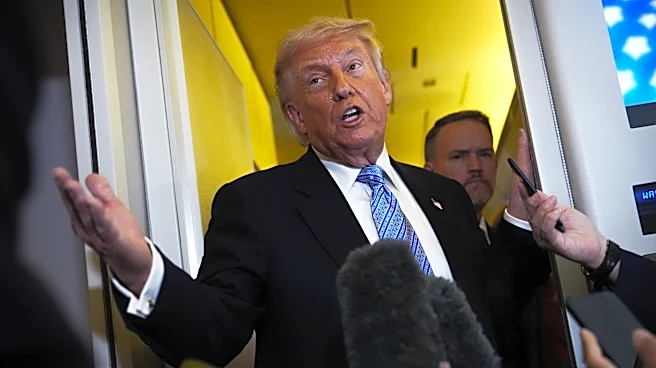
Trump's first visit to Beijing since 2017 ended on Friday with no major breakthroughs on trade or tangible help from Beijing to end the more than two-month-old U.S.-Israeli war on Iran that has roiled the global markets.
While investors had limited expectations from the summit, they had hoped the talks could provide a pathway for a resolution to the war, which has sent energy prices surging amid rocky negotiations between Washington and Tehran.
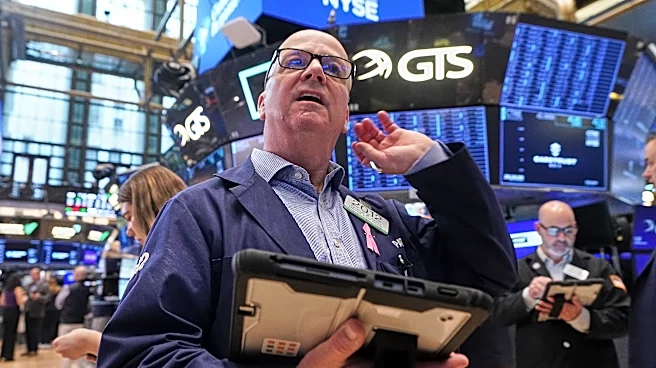
The Chinese yuan on Monday slipped to a near two-week low against the dollar, as investor focus shifted from the summit to a global bond selloff triggered by inflationary worries and fresh signs of Middle East tensions.
China stocks were largely flat on Monday after sliding more than 1% on Friday, as a risk-off mood descended upon global markets.
William Bratton, BNP Paribas' head of cash equity research for Asia-Pacific, said while the summit was unlikely to result in immediate wins for equity investors, the longer-term outcomes were positive in terms of reducing the geopolitical risk.
"This should, in turn, alter investor risk perceptions and may encourage U.S. capital to revisit the relative attractiveness of Chinese investment opportunities," he said.
"We have, after all, seen U.S. investors turn incrementally more positive on Chinese equities year-to-date and we expect this to continue as the U.S.-China bilateral stabilises or, perhaps more accurately, becomes more predictable."
The subdued market reaction to the summit on Monday also came after data showed China's growth lost momentum in April, with industrial output and retail sales both sharply missing expectations.
Capital Economics analysts said that the glass-half-full interpretation is that although there were no breakthroughs, the summit helped to cement the trade truce, reducing the near-term risk of a renewed escalation.
"The fact that Trump has invited Xi to visit the U.S. in September also increases the odds that the two sides will play nice over the coming months," they said in a note.
'TIGHTLY MANAGED RIVALS'
Investors had hoped the talks could help pave the way for a peace deal in the Middle East. But with China, which is the biggest buyer of Iranian oil, offering no clear indication that it would weigh in on the conflict, markets are wary of renewed turmoil.
The geopolitical differences between the two countries have been laid bare, analysts said, by the contrasting positions of Washington and Beijing on the Iran war and the Strait of Hormuz, through which about a fifth of the world's oil and liquefied natural gas normally passes.
Trump said Xi had agreed Tehran must reopen the critical waterway while Xi did not comment on his discussions with Trump about Iran. China's Ministry of Foreign Affairs called it a conflict "which should never have happened, has no reason to continue."
Charu Chanana, chief investment strategist at Saxo, said without clear follow-through on trade, Taiwan, or the Iran conflict, the meeting risks being seen as a non-event: useful for sentiment, but not enough to change the market backdrop.
"That is where the risk still sits," Chanana said. "Investors may be underpricing the chance that the Iran conflict keeps oil prices elevated, inflation expectations sticky and bond yields higher for longer."
Separately, Taiwan will remain a significant factor in U.S.-China relations, analysts said, after Xi told Trump that mishandling the island could lead to conflict between the two powers.
Sam Jochim, an economist at Swiss private bank EFG International, said whether Trump signs off on a $14 billion arms sale to Taiwan will be of importance.
"Such a move would have the potential to destabilise his relationship with Xi," he said.
Trump himself sowed some uncertainty after saying on Friday he had not decided whether to proceed with a major weapons sale to Taiwan.
A trade truce struck between U.S. and China after a series of tit-for-tat escalations is due to expire later this year and the lack of clarity around tariffs during the summit has weighed on investor sentiment.
Even the deal touted as the biggest single deliverable from the talks disappointed investors - Boeing stock fell after Trump on Thursday said China would buy 200 of the company's jets, a number that was far fewer than analysts had expected.
Despite the limited progress on the trade front, Ting Lu, chief China economist at Nomura, called the two-day summit an exercise in "economic and political risk containment," noting it delivered short-term stabilization for both leaders.
"For the remainder of 2026, the G2 powers have decided that if they must be rivals, they will at least be predictable, transactional, and tightly managed rivals," Lu said, referring to a term Trump used for the duo in October.
(Reporting by Ankur Banerjee and Rae Wee in Singapore, Summer Zhen and Jiaxing Li in Hong Kong, Samuel Shen and Winnie Zhou in Shanghai; Editing by Sumeet Chatterjee and Thomas Derpinghaus)