
By Luciana Magalhaes and Helen Reid
Natal, Brazil, Feb 4 (Reuters) - In 2023, as Shein was taking Brazil by storm with trendy styles, low prices, and endorsements from megastars like Anitta, the company
made an audacious pledge to turn the country into a manufacturing hub for all of Latin America.
The China-founded fast-fashion retailer promised to invest $150 million in partnerships to make clothing in 2,000 local factories, creating 100,000 fashion manufacturing jobs in Brazil by 2026.
Shein got off to a fast start, announcing partnerships with 336 Brazilian factories by the end of 2023. Since then progress has stalled as Shein demanded that local suppliers lower prices and deliver orders faster than they could manage, according to a dozen former manufacturers in its supply chain, industry officials and union leaders.
"Working in Brazil is different from working in China. Brazil has very different regulatory frameworks and standards," said Fernando Pimentel, managing director of the Brazilian Association of Textile and Apparel Industry, which represents more than 25,000 companies across Brazil. "I regret it didn’t work out."
Shein struggled with transportation and logistics challenges in Latin America’s biggest economy, a vast country of more than 200 million people, due to the rural locations of some of its partners' plants, as well as strict labor regulations, including controls on working hours and high taxes, the people said.
Two executives familiar with Shein's strategy in Brazil, who asked not to be named, confirmed that local production had fallen short of the company's original goals, without providing figures.
In a written statement, Shein conceded that the initiative did not go as planned. "Production in Brazil required time to mature, and soon differences in business and industrial infrastructure became apparent," the company said. "As such, progress has been slower and more challenging."
Going forward, Shein said it is taking a more "selective" approach to deepen partnerships with "the most capable factories."
Shein declined to say how many local suppliers it currently has but added that its online marketplace in Brazil "supports more than 45,000 local entrepreneurs and sellers, reinforcing Brazil as one of the company's most dynamic markets worldwide."
In recent years, China's Xi Jinping and Brazil's President Luiz Inácio Lula da Silva have deepened economic ties as both countries work to reduce reliance on the U.S.
Shein started selling in Brazil in 2020, followed by a wave of Chinese consumer brands: electric vehicle maker BYD began selling passenger cars in Brazil in 2022; online retailer Temu entered the market in 2024; and Meituan announced its Brazil entry in 2025, pledging US$1 billion in investment over five years as it prepared to roll out its food-delivery service.
Shein’s setbacks in Brazil - Shein’s largest market after the U.S. - highlight the hurdles the company faces in expanding its low‑cost, rapid‑production model beyond China as it seeks a stock market listing in Hong Kong later this year.
Reuters interviews with manufacturing groups, unions, and associations in all 12 states where those factories once operated found just one producer still making clothes for Shein, GB Manufacturing, based in the southeastern state of Espirito Santo.
Owner Marco Britto said he values that Shein pays within 30 days, compared with up to 90 for other clients, and finds dealing with the company straightforward.
"They are far less bureaucratic, it's easy to work with Shein," he said, adding that two other local producers were also supplying Shein. Those firms declined to be interviewed and Reuters could not determine if they produce for Shein.
Shein declined to comment on its partnership with Britto or any of its former suppliers.
‘I CAN’T ACCOMMODATE YOUR BUSINESS MODEL’
Shein’s push to localize production in Brazil gained urgency in 2024, when Brazilian officials, alarmed by a surge of ultra‑cheap clothing imports, imposed a 20% duty on online purchases valued under $50 that were previously duty-free, a levy dubbed the "little blouse tax" by consumers.
"The aim was promoting fair competition," said Uallace Moreira, Brazil’s secretary of industrial development in an interview, and to level the playing field between Brazilian and Chinese firms.
Six factory owners interviewed by Reuters said they ended their partnerships after Shein demanded steep price cuts and tighter deadlines they deemed impossible to meet.
"To get to the price they wanted, we would have to work with a different type of fabric," said Januncio Nobrega de Azevedo, owner of Nobre Confecções, a 59-employee company that was part of an apparel consortium in northeast Brazil fulfilling Shein's orders in the second half of 2023.
After producing for Shein for just six months, he was left with excess material that he had to offload in the local market for an undisclosed amount.
"I told them, 'Look, unfortunately I can't accommodate your business model,’” he said.
Shein declined to comment on the issues raised by Azevedo.
Shein’s supply chain bucks the traditional fast-fashion model in which retailers typically place orders with suppliers in Asia months ahead, and import the clothes in bulk by container ships to their stores and warehouses.
Shein’s vast network of roughly 7,000 factories in China, mostly in the southern province of Guangdong, produces small initial orders and rapidly ramps production up or down based on demand - enabling the platform to offer a seemingly endless array of clothes in different sizes and colors.
Its manufacturing hub in Guangzhou can churn out huge quantities of cheap clothing thanks to large numbers of specialized workers, low-cost polyester fabric made in China, and the close proximity of factories making zippers, buttons and other trims.
Shoppers’ online orders are packaged individually in China and sent by air directly to them, saving on costs both because many countries give low-value parcels duty-free access, and because sorting and packing orders in warehouses in Europe or the U.S. is much more expensive.
But the model has proven difficult to replicate outside China, which has a highly integrated and efficient supply chain keeping costs low.
In an interview with several Brazilian news outlets early last year, Felipe Feistler, Shein's general manager in Brazil, acknowledged challenges in applying its production method to the country.
"To grow, factories need to change how they operate, and not all of them can or want to do that," he said. "The marketplace, however, already has an established infrastructure and sellers adapt faster."
Shein Latin America Chairman Marcelo Claure did not respond to a request for comment.
SMALL FACTORIES FACE PRICE PRESSURE
Four of the six former suppliers interviewed by Reuters across Brazil operate in small towns where garment production is an economic mainstay, making them eager to work with the fast‑fashion giant.
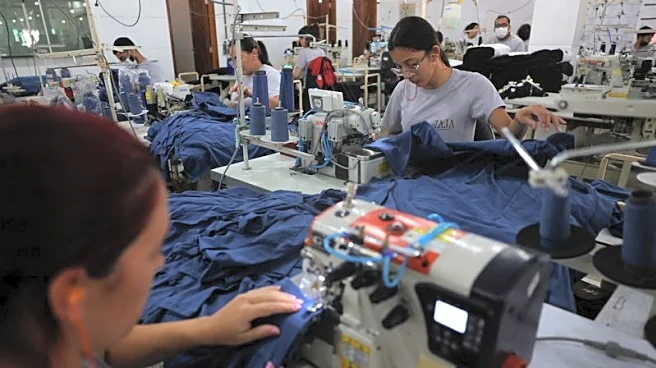
"We had very high hopes," said José Medeiros de Araujo, owner of Zaja, a small garment factory in Cerro Cora, a northeastern Brazilian town of just over 11,000 residents.
Araujo, whose 128‑employee factory produces clothing for major Brazilian retailers and its own brand, considered adding 50 jobs to fulfill Shein orders.
After he produced an initial order for Shein in mid-2023, Araujo said the retailer suddenly demanded faster delivery times, reduced its total number of orders, and demanded price cuts of as much as 30%.
In one case, Araujo said Shein asked him to lower the wholesale price of a skirt to 38 Brazilian reais ($7.07) from 50 reais ($9.31), and of a jacket to 45 reais from an original price of 65 reais.
"The plan was to grow," he said. "But, for us, here in the Northeast it wasn't viable." He did not disclose his profit margins on the products sold to Shein.
Shein declined to comment on its work with Araujo.
LOGISTICS, LABOR CHALLENGES
Shein's revenues in Brazil have grown fast, and the country became Shein's second-biggest market after the U.S. in 2025, accounting for $3.5 billion, or 7% of its estimated global sales of $48.6 billion, according to Coresight Research. As a private company, Shein does not disclose its financials and declined to say whether the estimate was accurate.
Markets like Brazil and Europe have become much more important to Shein over the past year as U.S. tariffs on imports from China have made its business there significantly more costly.
Shein is facing similar headwinds in the European Union and UK, which are both planning to end their customs duty waivers on low-value parcels in 2026 and 2028 respectively.
João D'Arru, head of the clothing industry union in Brazil's Pernambuco state, said Shein executives visited in late 2024 to assess its apparel sector, a key pillar of the local economy dominated by small and mid-sized firms.
Following the visit, Shein invited a group of local manufacturers to tour its Chinese factories, covering their travel tickets, to show them how the company’s production works in China, D’Arru said.
Among those who traveled was José Gomes Filho, a garment producer from Pernambuco, who spent five days visiting factories in Guangzhou and Hangzhou.
"Shein treated the delegation well and showed keen interest in establishing production in Brazil," Gomes Filho said.
Even so, he did not sign a contract because the lowest price he could offer exceeded what Shein was willing to pay, he said, declining to disclose figures.
(Reporting by Luciana Novaes Magalhaes in Natal and Helen Reid in London. Editing by Lisa Jucca, Brad Haynes and Michael Learmonth)