






By Toby Sterling and Nathan Vifflin
AMSTERDAM, Oct 15 (Reuters) - In April, computer chip equipment maker ASML's CEO Christophe Fouquet told shareholders that Europe's most valuable company would avoid becoming the chip industry's bottleneck "by all possible means".
Six months later, Fouquet acknowledged ASML's supply of chip-printing tools used to make the advanced logic and memory chips powering the AI boom will fall short of demand in both 2027 and 2028.
For customers, investors and ASML, whose shares
have risen nearly 70% this year, the focus is shifting to whether the company can increase capacity fast enough to profit from the huge demand. At the same time, market jitters are increasing over the durability of the AI boom and forecasts that stretch years into the future.
"ASML itself is now the bottleneck," said Han Dieperink, chief investment officer at wealth management firm Aureus, which holds ASML shares, adding that management was openly acknowledging that planned 30% capacity additions in 2027 and in 2028 will not be enough.
Dieperink said discussions about future orders were already extending into 2029 and 2030, which he viewed as evidence that demand could continue to outstrip supply well beyond the current cycle.
THE VALUATION DEBATE
ASML's plans to address the backlog include shortening assembly times, upgrading machines already operating in the field and introducing faster models. It had planned to raise annual capacity to 110 of its $200 million EUV lithography machines by 2028, but is now looking at adding perhaps a dozen more.
It is also expanding manufacturing capacity in Eindhoven, although the first phase is not expected to come online until 2029.
Fouquet reassured investors on one point on Wednesday: ASML's own supply chain, including key optical systems supplier Zeiss, is not the limiting factor.
Investors say uncertainties increase after 2028 and the company's valuation reflects that. Since June, even as financial analysts ratcheted up earnings estimates, ASML's stock price drifted lower on a relative basis to its future earnings.
Mark Sloan, portfolio manager at Stonehage Fleming, whose Global Best Ideas fund has a 3.5% position in ASML, said a decline in the company's valuation to about 30 times forward earnings from more than 45 times in June had made the stock attractive given its growth prospects and market dominance.
"We are watching AI adoption and innovation, along with capital spending plans at key customers closely," he said. "We believe supply rather than demand is likely to remain ASML's key constraint."
ASML has said it will also benefit from price increases in 2027 and 2028.
AI SELLOFF FEARS
Not all investors are convinced. Sceptics question whether the surge in spending on AI infrastructure will ultimately generate returns that justify the billions of dollars being invested today.
Chip stocks have also come under pressure from concerns that higher interest rates could make financing large AI and data-centre projects more difficult. The cost of insuring against defaults in the US technology sector hit record highs on Thursday.
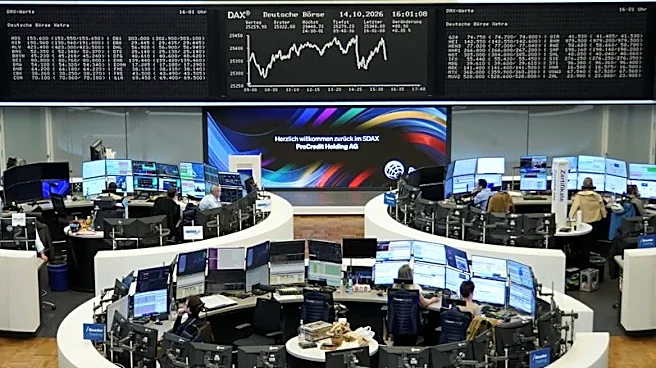
Jefferies analyst Janardan Menon said concerns about financing AI investment, along with constraints on data-centre expansion such as power availability, could weigh on ASML. Its shares fell 5% on Thursday as part of a broader market selloff.
"The primary factor driving this derating is scepticism about very high 2028 and 2029 expectations," said Menon, adding ASML's price-to-earnings ratio could fall into the low 20s during a downturn.
WE DON'T WANT TO SAY 'WE'RE SOLD OUT'
ASML's customers continue to jockey for access to its unrivaled high-end chipmaking tools. The company is now demanding sizeable down payments on orders, which CFO Roger Dassen said are "enough to hurt" if customers later try to cancel.
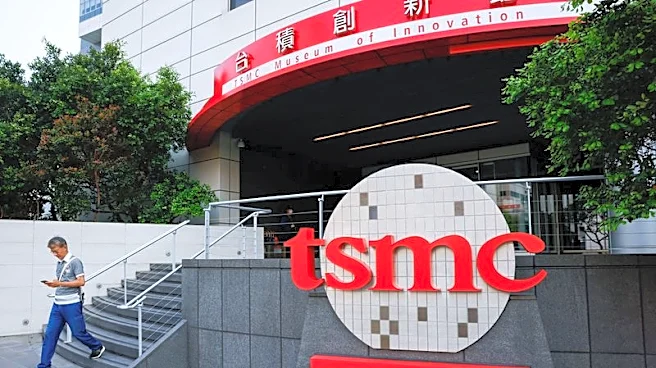
Top customer TSMC, which makes chips for Nvidia and Apple, said in July it did not expect equipment supply to constrain its expansion plans. It maintained 2026 capital spending plans of $60 billion to $64 billion on Thursday.
Samsung, SK Hynix and Micron have also been booking ASML capacity amid strong demand for AI memory chips.
Potential new customers could add further pressure. Elon Musk's proposed TeraFab project, which has yet to produce its first chip, could emerge as a significant buyer of advanced tools, while US restrictions on China remain a risk for sales of ASML's mid-range DUV tools. China is expected to account for about 20% of ASML's sales this year.
Despite strong demand, ASML is holding off on accepting orders for 2029 and 2030 while it assesses both customers' readiness and its own ability to meet future demand.
"We don't want now to accept orders from customer A, B, and C and then to tell customer D, who hasn't given orders yet for 2029 and 2030, sorry, we're sold out," Dassen told analysts on the post-earnings call.
(Reporting by Toby Sterling in Amsterdam, Nathan Vifflin in Gdansk. Editing by Adam Jourdan and Mark Potter)