





A New Tide of Responsibility
The allure of river cruising has always been its intimate scale and slow pace, allowing travellers to connect deeply with the landscapes they pass through. As environmental consciousness grows, both passengers and regulators are demanding that this connection
extends to protecting the very rivers and communities these vessels visit. Unlike massive ocean liners, river ships have a smaller footprint by nature, carrying fewer guests and using less powerful engines. This inherent advantage has made them ideal pioneers for testing and adopting the next generation of green marine technology, from advanced propulsion systems to comprehensive onboard waste management.
Harnessing Sun and Battery Power
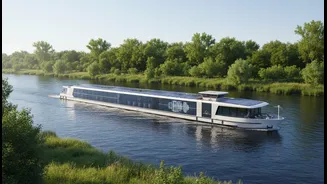
At the forefront of this green transformation are hybrid and fully electric power systems. Many new and retrofitted river vessels now feature large battery packs, allowing them to operate on stored electric power. This enables ships to glide silently and with zero emissions through ecologically sensitive areas and historic city centres, drastically reducing local air and noise pollution. These batteries are often supplemented by solar panels on the ship's rooftop, which generate auxiliary power for lighting, air conditioning, and other onboard needs, further reducing reliance on diesel engines. For example, the A-ROSA Sena, which sails on the Rhine, uses a hybrid propulsion system with a battery that allows it to switch to fully electric power when entering or leaving ports.
The Rise of Hybrid Engines
While fully electric journeys are the ultimate goal, hybrid propulsion is the crucial stepping stone making a significant impact today. These systems pair traditional diesel engines with electric motors and batteries. The engines can run at their most efficient speed to charge the batteries, which then power the ship during low-speed manoeuvres or while docked. This not only cuts fuel consumption and emissions by up to 20% or more but also reduces engine vibration, leading to a smoother, quieter ride for guests. Many new vessels, such as those launched by Amadeus River Cruises, now come standard with these cutting-edge hybrid systems and other eco-friendly technologies.
Smarter, Greener Operations
Renewable energy integration extends beyond just how the ship moves. Modern fleet designs incorporate a holistic approach to sustainability. This includes advanced wastewater treatment systems that purify water to near-drinking standards before it's returned to the river, and the use of shore power connections that allow ships to turn off their engines completely while in port. Furthermore, waste heat recovery systems capture excess heat from the engines to warm water for showers and pools, while intelligent, AI-driven navigation helps plot the most fuel-efficient routes. Many lines have also drastically cut down on single-use plastics and prioritise sourcing food from local suppliers along the route to reduce transport emissions.
The Voyage Ahead
The journey toward fully sustainable river cruising is ongoing. Challenges like the high cost of new technology and the need for more shoreside charging infrastructure remain. However, the industry is innovating at a rapid pace. Some operators are already experimenting with alternative fuels like hydrogen and advanced biofuels. Viking, for instance, is set to launch the world's first hydrogen-powered cruise ship in late 2026, a technology that could eventually be scaled for river vessels. These advancements signal a future where the luxury of a river cruise and the preservation of the world's beautiful waterways are no longer at odds, but are part of the same thoughtful journey.