


By Gwladys Fouche
ARENDAL, Norway, Aug 13 (Reuters) - Norway's $2.3 trillion sovereign wealth fund is raising concerns about what it sees as a steady erosion of shareholder rights across major markets, warning that regulations increasingly favour company founders and insiders over independent investors.
Investing the Norwegian state's revenues from oil and gas production, the fund owns on average 1.5% of all listed companies globally, making it the world's largest single stock market investor.
It has
on several occasions set the pace on issues in the field of environmental, social and corporate governance (ESG).
Fund officials are concerned about what they say is a general erosion of the rights of independent shareholders such as the fund, from the existence of different classes of voting shares to how they can gather information from companies.
"We are concerned about shareholder rights generally. We are concerned because we're seeing it's been diminished in many markets, not just the U.S., but also in the UK, in Europe, in Hong Kong even," said Carine Smith Ihenacho, the fund's chief governance and compliance officer.
Among the chief concerns was allowing for dual-share classes, which typically give more voting power to founders and insiders, while independent investors can own standard shares with less voting power.
"We're also seeing that it's changing the reporting requirements, making it more voluntary, and also in certain places, restricting access to sue the companies and the boards," she said in an interview.
"We have seen it spreading and we're concerned that it may spread further."
EXCHANGES COMPETE FOR BUSINESS
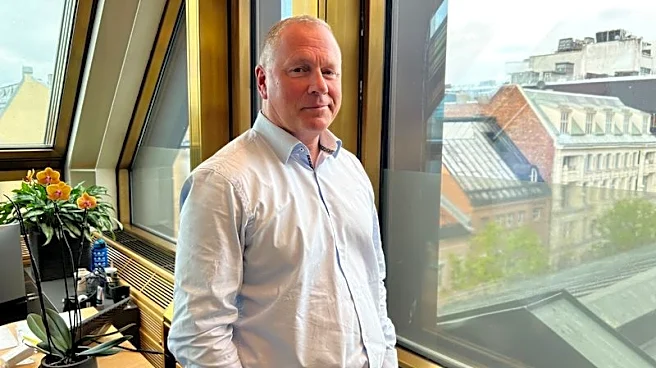
One of the reasons behind the trend was more competition between stock exchanges, fund CEO Nicolai Tangen said in the joint interview.
"There is strong competition to get these new IPOs, and therefore they permit more deviations from normality than we have seen before," he said.
One recent IPO was for Elon Musk's SpaceX, which the fund took part in.
On Tuesday the fund announced for the first time it held a 0.05% stake in the company, worth $1.22 billion as of June 30, in line with its weighting in the fund's benchmark index, but modest when compared with the fund's other tech holdings.
Musk holds over 80% of voting rights and combines the roles of chair, chief executive officer and chief technology officer, raising questions about the company's governance and the rights of independent shareholders such as the fund.
Fund officials declined to answer any questions regarding SpaceX's governance. Speaking generally, Smith Ihenacho said the conditions around the voting rights of company founders were important.
"We also say if you do have different voting rights, maybe (for) a founder, you need certain guardrails," she said.
"So we are also watching those guardrails around the different share voting structures."
To counter the trend, the fund was advocating on the issue to stock exchanges, regulators and companies, Smith Ihenacho said.
(Reporting by Gwladys Fouche in ArendalEditing by Keith Weir)