




By Kevin Yao, Casey Hall and Ellen Zhang
Nov 6 (Reuters) - Chen Lifeng, who runs a Chinese company exporting dresses to Europe, says the yuan's recent strength has made his products too expensive and all but swallowed his profit margins.
"It has hurt our ability to take orders. We barely have any profit left," said Chen, the owner of Ningbo Tengsheng Garments in eastern Zhejiang province. "If it keeps rising, we won't be able to stay in business."
His concerns underscore a dilemma for Beijing. While
European leaders and IMF officials argue the yuan remains undervalued and unfairly benefits exporters, Chinese policymakers worry that a rapid rise squeezes thin exporter margins, threatens jobs and weakens one of the few reliable drivers of economic growth as domestic demand remains soft.
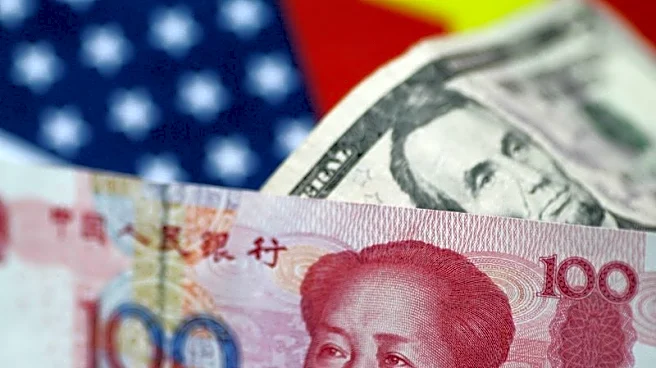
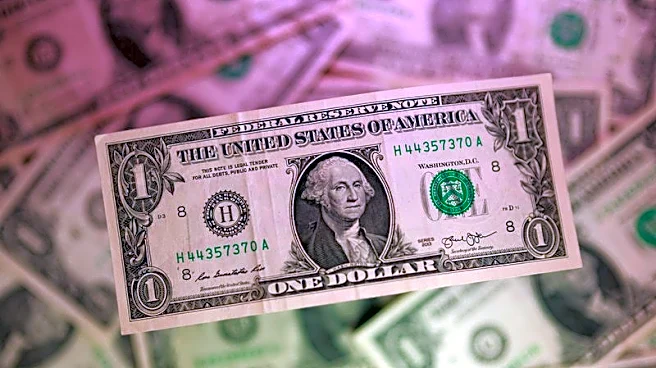
China's central bank says record trade surpluses are due more to industrial upgrading than the yuan, which has risen nearly 5% against the dollar and about 9% against the euro this year.
Most analysts Reuters spoke to expect incremental steps to slow the yuan's gains, though few foresee a radical change in currency policy, increasing the risk of more friction with trading partners pressing for a stronger currency.
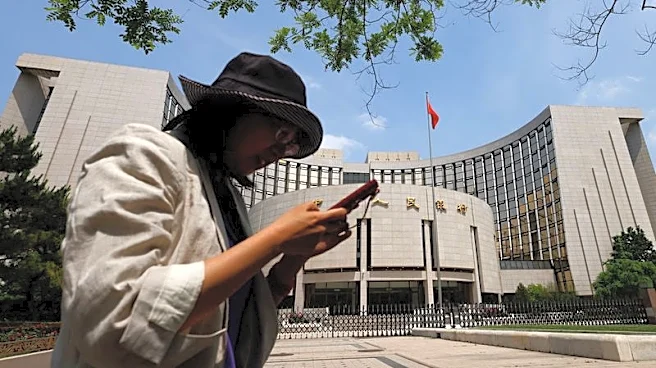
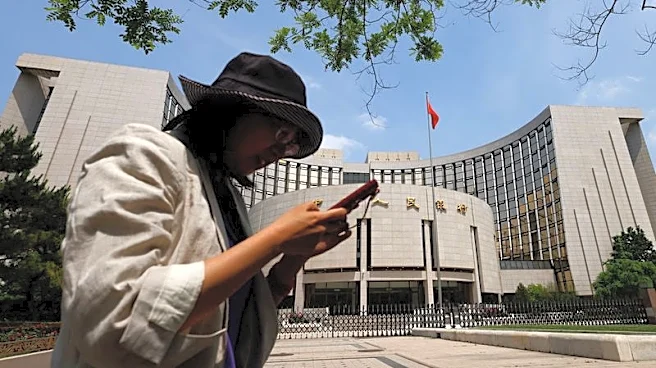
On Tuesday, the People's Bank of China said it would raise the foreign currency amount that financial institutions must keep as reserves, signalling its unease with the yuan's rapid strengthening.
The PBOC could raise these reserves further, as they remain 3 percentage points below their 2021 peak. Other tools include informally asking banks to steer the yuan lower, setting weaker daily fixings, relaxing rules for overseas investments, or introducing premiums on forward dollar-buying contracts.
"There remains room for further adjustments if necessary," CMB analyst Ding Muqiao said.
Shrinking exporter margins are also why Beijing is likely to resist Europe's calls for currency diplomacy akin to the 1985 Plaza Accord between the US, Japan, Germany and France, which drove the dollar sharply lower.
Chinese scholars have long described that agreement as an act of US coercion, blaming it for Japan's decades of stagnation, though the other signatories did not suffer the same fate.
"Chinese policymakers are very familiar with the shocks and consequences that Japan experienced following the Plaza Accord," said Zhu Ning, chair professor of finance at the Shanghai Advanced Institute of Finance.
'NOWHERE TO HIDE'
Zhu said yuan appreciation disproportionately hurts lower value-added exporters, from textiles to home appliances, which are more labour intensive than the AI-related manufacturers that have recently led trade growth.
Goldman Sachs expects the currency to strengthen to 6.40 per dollar over the next 12 months from about 6.70 currently.
"These exporters may have to downsize and lay off their employees, hurting domestic consumption," Zhu said.
But higher value-added sectors also operate on thin margins, as weak domestic demand pushes producers to chase market share abroad at the expense of profits.
A Reuters analysis of 5,209 Chinese-listed companies with a market value of at least $100 million found their median net margin in the first half of the year at 4.9%, compared with 8.9% for 9,733 global competitors.
A separate Natixis study found margins in electric vehicles, batteries, solar and wind equipment and semiconductors, sectors Beijing views as strategic industries of the future, were just 2%. Analysts said the figures were flattered by low interest rates and driven more by cost-cutting than revenue growth.
"The industries meant to carry China's next growth model depend on the central bank for their financial health as much as the industries they were meant to replace," they wrote in a note.
Standard Bank estimates every 1% appreciation in the yuan's real effective exchange rate (REER), an inflation-adjusted measure of its value against trading-partner currencies, cuts average export margins by about 30 basis points.
A rapid yuan rise would immediately damage exporters and growth, and "China's policymakers are too cautious to gamble on that", said Christopher Beddor, deputy China research director at Gavekal Dragonomics.
Chen Xiujun, chairman of Fujian Hoshing Plastic in the southeastern city of Fuzhou, said "overcapacity and vicious competition" domestically press his firm to seek clients abroad, where it is being hit by a firming yuan.
"There's nowhere to hide," Chen said.
Hu Yuanfang, who co-runs Hangzhou Zhenyu Metal Furniture with her husband, said further appreciation could pressure her to raise prices, which she hopes to avoid as it might hurt sales.
"Customers may only accept, say, a 2% increase. Then we need to negotiate ways to bridge the gap," Hu said, adding this might include absorbing some losses and switching to cheaper materials or packaging, among other options.
'SQUEEZED TO THE BONE'
The IMF said in July the yuan REER was undervalued by 17.3%-25.3% while German Chancellor Friedrich Merz put it at 25%-30%. Although the yuan has firmed since then, Bank for International Settlements data shows the REER was still about 14% below its March 2022 peak in September.
The decline coincides with what Western policymakers call 'China Shock 2.0' - a wave of increasingly sophisticated Chinese exports they say threatens domestic industries and jobs.
The PBOC says Beijing has never sought competitive devaluation, the yuan is largely market-driven and fairly valued under other models.
The debate has intensified among economists studying China's imbalances.
Former IMF officials Gita Gopinath and Pierre-Olivier Gourinchas and London Business School professor Helene Rey argue the exchange rate is more symptom than cause, and yuan appreciation without stronger domestic demand could deepen deflationary pressures.
Brad Setser of the Council on Foreign Relations argues Beijing manages the yuan to support exporters and that a stronger currency boosts household purchasing power.
The owner of a sanitaryware factory in Wenzhou said manufacturers are under financial strain on several fronts.
"The stronger yuan, coupled with tighter tax, social-security and labour-law compliance requirements, is steadily eroding what little profit we have left," said Qiu, who asked to be identified only by his surname due to legal sensitivities.
"Margins have already been squeezed to the bone."
(Additional reporting by Gaurav Dogra in Bengaluru and Winni Zhou in Shanghai; Editing by Marius Zaharia and Jacqueline Wong)