







By Marleen Kaesebier
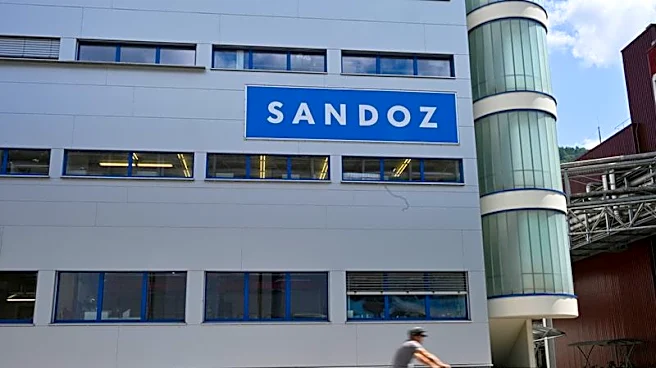
ZURICH, Oct 28 (Reuters) - Swiss generic drugmaker Sandoz lowered its full-year sales growth guidance after short-term biosimilar-supply constraints weighed on third-quarter results, sending shares down as much as 8% on Wednesday.
The company now expects net sales to grow by 5-6% at constant exchange rates, from mid-to-high single digit growth expected previously. However, it lifted its core earnings margin forecasts, seeing its EBITDA margin reaching 23%-23.5% in 2026 compared
with the previously forecast increase of around 100 basis points from the 21.7% recorded in 2025.
Third-quarter net sales and particularly Sandoz's biosimilars unit fell short of expectations.
Biosimilars are biological drugs based on existing medicines for which patents have expired. Like generics, they are usually sold at much cheaper prices than patented drugs, as they do not have to factor in significant research and development costs.
The segment generated $998 million, a 17% jump at constant exchange rates compared with the same period last year, but below the $1.02 billion analysts had forecast in a Vara Research-compiled consensus.
At its capital markets day in September, Sandoz had outlined steep mid-term growth, aiming to more than double annual net sales by 2035 and increase its biosimilars portfolio to 100 drugs by 2040 from 13.
While the company expanded in the European market, Sandoz said market conditions in Germany had proved more challenging than anticipated and that North America led the quarter's sales.
After US President Donald Trump threatened the generic industry with steep tariffs starting August 2028 unless drugmakers manufacture medicines domestically, Chief Executive Richard Saynor said he has continued discussions and enjoyed great access to the administration.
CHINESE COMPETITION
Sandoz in March filed an anti-dumping complaint with the European Commission against imports of Chinese amoxicillin APIs, the active pharmaceutical ingredients in the type of penicillin made by Sandoz, accusing makers of market distortion.
"We're encouraged that another company has joined that claim," Saynor told Reuters. "We're clearly not the only company that's feeling this," he added, without naming the other company.
However, Europe's medicine regulator (EMA) now looks likely to take penicillin, specifically amoxicillin, the type Sandoz produces, off its critical medicines list, Saynor said. The EMA did not respond to a request for comment.
"If Europe does make this decision, then I think that then gives us the right to reconsider our position in terms of being fully vertically integrated in Europe," Saynor said.
(Reporting by Marleen Kaesebier in Zurich; Editing by Christian Schmollinger, Tomasz Janowski and Keith Weir)