
By Richa Naidu
LONDON, May 19 (Reuters) - Swiss watchmaker Swatch and luxury partner Audemars Piguet are betting big on a Gen Z "product drop" culture - buzzy, often limited launches that have helped spur sales from Labubu dolls and Nike trainers to Popeyes chicken.
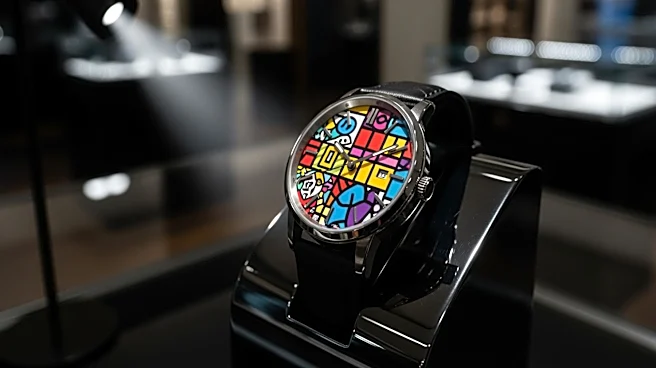
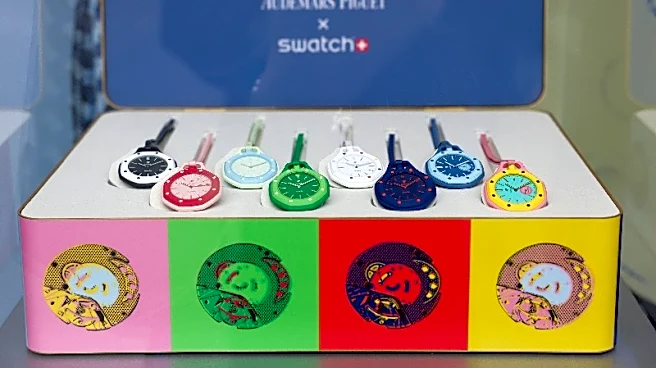
The maker of popular colourful watches has stirred debate - and seen some punches thrown - with a product launch of its Royal Pop pocket watch collection with Audemars Piguet, which forced it to close some stores and limit queues.
In Milan
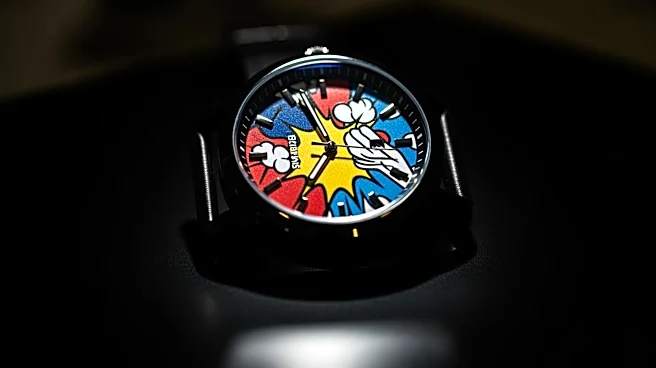
shoppers outside a Swatch store ended up in a scuffle, video verified by Reuters showed, to get their hands on the Pop Art style watches blending the retro look of Swatch and elements of the far pricier Audemars Piguet.
Marketing experts and analysts said that, fisticuffs aside, the ploy could pay off for Swatch, which is facing investor pressure over its strategy.
"From a marketing perspective this is absolute gold for Swatch," said Roman Pavlyuchenko, assistant professor of marketing at the University of Bath in England, adding the furore could create a "halo effect" for the brand.
Other companies have done similar in the past, sometimes with some controversy. Nike and Adidas trainer launches have led to police being deployed, while in 2019, U.S. fast food chain Popeyes launched a fried chicken sandwich so coveted that it led to violent confrontation and a fatal stabbing.
Despite that incident, the sandwiches drove a 38% increase in Popeyes' fourth-quarter same-store sales in 2019 and Apex Marketing Group estimated Popeyes got $65 million in free media exposure as a result of the so-called "Chicken Sandwich Wars".
Similarly, a cult-like craze for Labubu monster-elf plush toys last year prompted distributor Pop Mart to pause all in-store sales in Britain. Still, the Beijing-based company said its 2025 revenue rose 185% from a year earlier.
"I mean, how many Labubus are there, right? And everyone's trying to collect them," said Simon Lazarus, head of PR and content at online luxury watch platform Chrono Hunter, adding that Swatch-Audemars Piguet were creating a viral moment.
"It's whether they take that as a positive or a negative... but it allows people to have a little piece of Audemars Piguet."
The Royal Bank of Canada estimated that Swatch's Royal Pop sales could give a 3% uplift to revenue this year, though UBS said this wouldn't offset its broader structural challenges.
'LITERALLY MAKING SOCIAL MEDIA EXPLODE'
A Swatch spokesperson said the Royal Pop collaboration "is literally making social media explode".
"Challenges arose on launch day because the queues of interested customers were exceptionally long, and the organization of some shopping malls was not sufficient to handle this level of turnout," the spokesperson said.
Guido van Garderen, senior marketing professor at the London School of Economics, said there was an element of herd mentality and people didn't want to miss out on the 335-pound ($449) watches - expensive but far cheaper than an Audemars Piguet.
"We know from behavioral science that it is difficult to walk away from a queue," he said.
Swatch posted on Sunday asking people to "not rush to our stores in large numbers to acquire this product" and reassured them that the watches would be on sale for months.
The "drop culture" of releasing limited-edition products in small quantities emerged as a retail strategy for underground streetwear and sneaker brands in the 1990s. Platforms like TikTok and Instagram have subsequently come along and amplified trends and encouraged rapid rushes for collectibles.
Swatch had marketed the tie-up - linking its pop culture with Audemars Piguet's 150-year history - as rule-breaking and "positive provocation". Audemars Piguet hailed how it could reach younger generations, while admitting that it divided opinion.
"That is exactly where relevance is reborn: when watchmaking provokes discussion, curiosity, desire, and even disagreement," CEO Ilaria Resta wrote on LinkedIn before the launch.
($1 = 0.7467 pounds)
(Reporting by Richa Naidu; Additional reporting by Alessandro Parodi; Editing by Adam Jourdan and Hugh Lawson)