
By Nora Buli
OSLO, Oct 12 (Reuters) - European households and industries face at least another year of high gas prices, even if the Iran war is resolved and winter proves mild, as the continent will need
to restock gas storage reserves depleted to record lows.
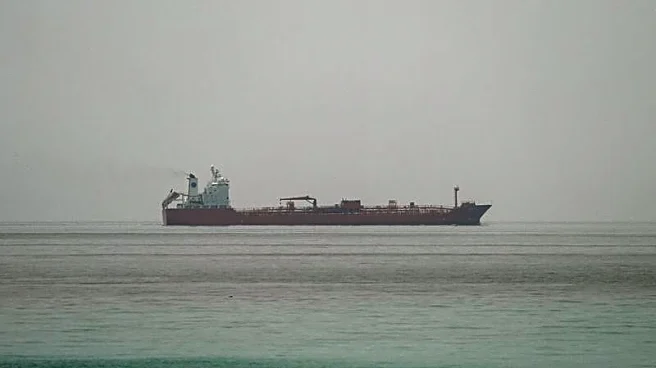
European benchmark gas prices have jumped more than 150% this year as shipping disruptions through the Strait of Hormuz trapped almost 20% of global liquefied natural gas exports from Qatar and the United Arab Emirates, most of which are destined for Asia.
While some countries, including the US, Canada and Nigeria, have increased exports, the loss of Middle Eastern LNG has intensified competition for spot cargoes that would otherwise have been available to Europe and hampered efforts to refill storage over the summer.
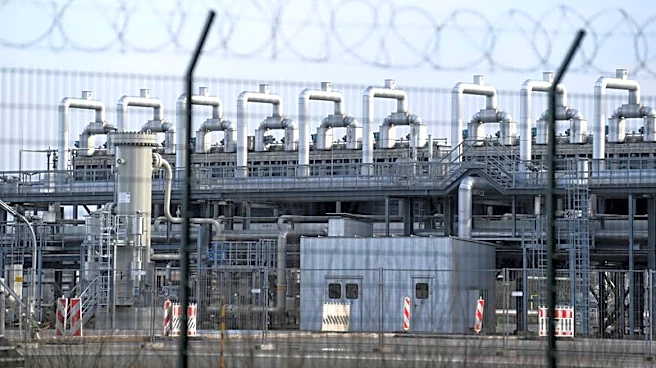
Analysts and industry forecasters expect European gas storage to be 75-78% full by November 1, widely regarded as the end of the restocking season after which dependence on reserves to meet winter demand grows.
This is about 10 percentage points below the five-year average and starting from a lower base.
Even with average winter weather, northwest European reserves could fall to around 20% by the start of April, and combined with a prolonged closure of the Strait of Hormuz, this could increase pressure to restock in 2027, said LSEG analyst Yuriy Onyshkiv.
"It's not just this coming winter that we are tight, but we risk being tight the next summer," he said.
RISK OF FURTHER SHARP PRICE SPIKES
Moutaz Altaghlibi, senior energy economist at ABN Amro, said that while the region is not facing an outright supply shortage, it lacks a sufficient operational buffer.
Typically, storage provides 25-30% of winter gas consumed in the EU, leaving the bloc heavily dependent on pipeline supplies and LNG, particularly from Norway and the US.
Any supply disruption could drive further price spikes, while ongoing competition from Asia for LNG cargoes is likely to keep prices high, Altaghlibi said.
ABN Amro said a cold winter could push European storage down to 10-15%, a level Altaghlibi described as "very critical and challenging" for the following refilling season.
The backdrop is reminiscent of 2022's energy crisis, when the loss of Russian pipeline gas following Moscow's invasion of Ukraine sent European benchmark prices above €350 per megawatt-hour (MWh).
While most energy analysts do not see a return to such extremes, a spike above €100/MWh, up 25% from current levels, is feasible.
CONSUMER PAIN
Consumers are likely to feel the full effect of this year's wholesale gas price rally in 2027, as retail contracts are typically fixed for a period before being renewed.
In Germany, price comparison website Verivox said gas tariffs for new customers have already risen 55% this year, from 8 euro cents to 12.4 euro cents per kilowatt-hour. Existing customers are expected to see increases as contracts expire.
"Given current market prices, increases of 10-20% are realistic," a Verivox spokesperson said.
Britain's price cap on household energy bills, which was hiked to a three-year high in October, could be raised another 16% in January, consultancy Cornwall Insight forecasts.
"At the moment, we can't yet see an end to the volatility, and with gas stocks as low as they are, the effects of the (Iran) conflict could be with us for many more months," its principal consultant Craig Lowrey said.
Industry and businesses already struggle to stay competitive, analysts say, as even before the latest supply crises, EU gas prices were three times as high as in the US.
Some analysts say the European Union should respond more proactively.
At the start of the conflict, the EU proposed lowering electricity taxes and coordinating gas storage refilling, but its energy chief recently urged member states to cut gas demand in the face of the supply crisis.
When Russian gas deliveries collapsed in 2022, the bloc launched measures including a programme which sought to speed up renewables deployment and cut dependency on fossil fuel imports, said Ana Maria Jaller-Makarewicz of the Institute for Energy Economics and Financial Analysis.
The current crisis has been developing in slow motion, she said, adding: "My concern is that we have not yet realised the magnitude of it.”
SLOW UNWIND
"Our expectation is that the conflict between the US and Iran is going to be resolved over the course of winter, and while that helps, we believe the markets are not yet fully pricing in the injection demand for storage in Europe," said Andreas Schroeder, head of gas and LNG analytics at ICIS.
Meanwhile, the EU's full ban on Russian LNG imports from January 2027 will further tighten supply.
Markets may also be underestimating LNG supply growth elsewhere in the world, energy strategist Florence Schmit at Rabobank said. Rabobank has raised near-term price forecasts but maintained its full-year 2027 forecast at about €45/MWh.
"I think we have a relatively moderate view going into 2027 and 2028, but that is still roughly 20 euros/MWh higher than where previous forecasts were for that year," Schmit said.
This year's unusually strong El Nino weather phenomenon could also bring stronger winds and above-normal winter temperatures in Europe, boosting wind power generation which could curb gas demand and prices, said BNP Paribas commodities analyst Jason Ying.
Still, given the LNG disruptions this year, it will take time for the gas market to normalise, he added.
"We expect normalisation of the market to pre-conflict levels won't come until 2028," Ying said.
(Reporting by Nora Buli, additional reporing by Susanna Twidale in London and Florence Tan in Singapore; Editing by Veronica Brown and Emelia Sithole-Matarise)