

By Maria Martinez
BERLIN, Dec 19 (Reuters) - Business associations in Germany, Europe's largest economy, voiced disappointment and frustration over the European Union's postponed signing of a free trade deal with South American bloc Mercosur until January.
"The renewed postponement is a setback for Europe's credibility as a geostrategic actor," said Tanja Goenner, managing director at the BDI industry association.
Goenner urged EU member states to overcome their reservations and set aside particular
interests in favour of Europe's competitiveness.
The German auto industry association VDA echoed this call.
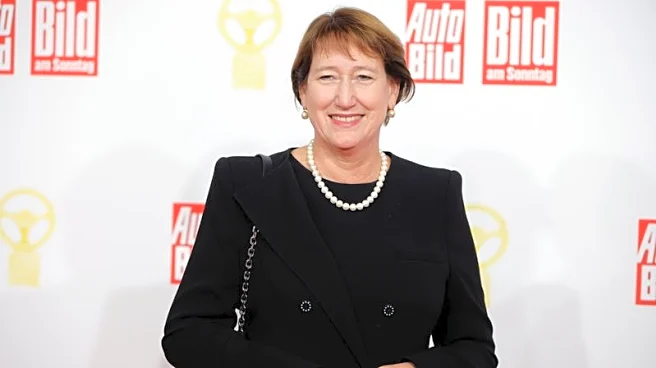
"At a time when a strong European economy is crucial, the EU is sending a signal of weakness," said VDA president Hildegard Mueller. She added that the EU is putting its credibility as a negotiating partner for trade agreements at risk if no deal gets clinched after over two decades of negotiations.
Some 25 years in the making, the trade pact with Argentina, Brazil, Paraguay and Uruguay would be the EU's largest in terms of tariff cuts. Germany, Spain and Nordic countries say it will boost exports hit by U.S. President Donald Trump's tariff blitz and reduce reliance on China by securing access to minerals.
But critics, including France and Italy, fear a Mercosur deal could bring an influx of cheap commodities that could hurt European farmers, thousands of whom staged a protest on their tractors in Brussels on Thursday.
EU Commission President Ursula von der Leyen said early on Friday she expected enough EU member states would support the EU-Mercosur trade deal to eventually approve it.
TRADE DEALS OFFER DIVERSIFICATION IN UNCERTAIN TIMES
Free trade agreements are seen as a central instrument for diversifying economic relations and building strategic autonomy, particularly in the face of Trump's tariffs.
"While the U.S. increasingly turns to protectionism, open markets and reliable frameworks for trade and investment are more important than ever for German companies," said Volker Treier, head of foreign trade at the German Chamber of Commerce DIHK.
Around 85% of European exports to Mercosur countries are subject to tariffs, Treier said, resulting in additional costs of around 4 billion euros ($4.69 billion) annually.
"The fact that the Mercosur agreement has been postponed yet again shows that the EU is not a stable anchor in times of trade policy turbulence," Treier said.
A deal with Mercosur could increase EU exports up to 39% by 2040, according to estimates by the BGA trade association.
"When will Europe understand what is at stake here?" BGA President Dirk Jandura said. "This is the wrong time for symbolism and political manoeuvring."
THE WORLD IS NOT WAITING FOR THE EU
The VDA's Mueller noted that 70% of all jobs in the auto industry are sustained by exports, and the consequences of a Mercosur deal failure in January would be severe for prosperity, growth, jobs and the joint fight against climate change.
"The world is not waiting for Europe - especially with regard to this and future necessary agreements, a change in mentality is needed in Europe," Mueller said.
For the German chemical industry association VCI, the EU has once again missed the opportunity to appear internationally as a powerful actor. "Frustration is growing," said VCI managing director Wolfgang Grosse Entrup.
"2026 must be the year in which the EU finally shows that it is not only participating in the new world order, but also helping to shape it," he said.
($1 = 0.8537 euros)
(Reporting by Maria Martinez; editing by Miranda Murray and Mark Heinrich)