



By Rajendra Jadhav
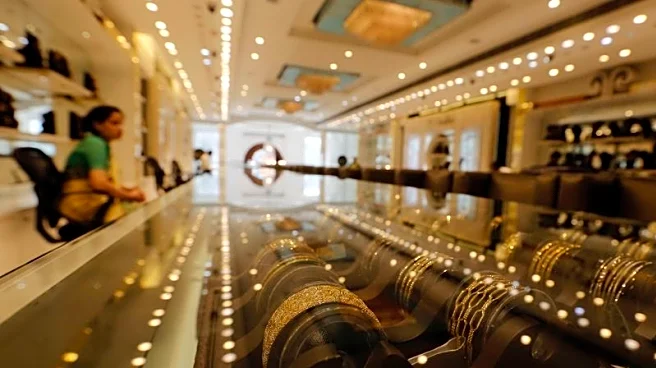
MUMBAI, Jan 28 (Reuters) - India's gold and silver imports surged to record levels last year, sparking concern among policymakers, with the government having few effective tools to curb inflows that have remained resilient despite sky-high prices for the precious metals.
The country's gold imports rose 1.6% from a year earlier to $58.9 billion in 2025, while silver imports jumped 44% to $9.2 billion, as prices of both metals hit record highs.
WHY TARGET GOLD AND SILVER IMPORTS?
India
is the world's second-largest consumer of gold and the biggest market for silver, but it meets almost all of its gold demand through imports and relies on overseas supplies for more than 80% of its silver needs.
The country spent nearly a tenth of its total foreign exchange reserves on gold and silver last year, and the import bill is expected to rise further in 2026 as prices of both metals continue to surge.
Rising imports have widened the trade deficit and added pressure on the rupee, which hit a record low this month.
Unlike silver, which has industrial applications ranging from solar power to electronics, gold is largely used for jewellery and investment. The government views such demand as non-essential and has repeatedly sought to curb it by raising import duties, making the metal more expensive for buyers.
WHY ARE TRADERS SPECULATING ABOUT A DUTY HIKE?
With gold and silver prices touching record highs, the value of imports could rise sharply even if volumes do not, stoking concerns about a widening trade deficit and further weakening of the rupee, which has already slid significantly against the dollar.
Trade and industry officials say these concerns could prompt the government to raise import duties on gold and silver in the coming weeks.
In 2012 and 2013, the government sharply raised duties on gold imports to stabilize a rapidly depreciating rupee. With the currency losing ground again recently, traders speculate a new hike may be coming in coming weeks to reverse duty cuts made in 2024. At that time, India cut import duties on both metals to 6% from 15% to curb smuggling.
Gold and silver are already trading at a premium to global benchmarks as markets price in a potential increase in duties.
WHY HAS INDIAN GOLD DEMAND NOT SLUMPED DESPITE HIGH PRICES?
Jewellery accounted for more than three-fourths of India's total demand until 2023. Gold prices in the international market have risen 98% since the beginning of 2025 and while that has hit jewellery buying in India, overall demand has not slumped because investment demand has risen.
Indians are increasingly buying coins and bars in the physical market, while a growing number of investors are turning to exchange-traded funds. ETF inflows jumped 283% in 2025 from a year earlier to a record 429.6 billion rupees ($4.69 billion). As a result, the share of investment demand in India's total consumption of gold rose above 40% in 2025 and is expected to increase further in 2026.
Gold and silver ETFs are investment funds that trade on stock exchanges like shares and are backed by physical gold and silver bars held in secure vaults.
CAN A DUTY HIKE REDUCE GOLD DEMAND?
India has repeatedly tried to curb gold imports by raising duties, but with little success. When New Delhi lifted the import tax on gold to 10% in August, 2013 from 2%, demand held steady despite the increase.
Domestic gold prices have risen from about 8,000 rupees per 10 grams in early 2006 to around 162,000 rupees now, but the rally has failed to significantly reduce annual demand. A fresh duty hike of 4 to 6 percentage points is therefore unlikely to deter buyers, who absorbed a 76.5% jump in prices in 2025.
Higher duties could, however, enhance investor returns and increase smuggling. Inflows into gold ETFs have been strong in recent months and are expected to remain firm, as investors turn to bullion amid weak equity market returns.
A sharp price drop could weaken investment demand but boost jewellery sales as buyers waiting for a correction return.
WHY ARE SILVER IMPORTS ALSO BECOMING A CAUSE FOR CONCERN?
Silver prices have risen faster than gold, pushing up India's import bill. Until last year, silver demand was mainly driven by rising industrial consumption, but in recent months investment demand has been supporting imports.
Silver ETFs saw inflows of 234.7 billion rupees in 2025, up from just 85.69 billion rupees a year earlier. The growing popularity of silver ETFs suggests imports for investment purposes could rise further if the price rally continues.
(Reporting by Rajendra Jadhav; Editing by Raju Gopalakrishnan)