



By Nick Carey
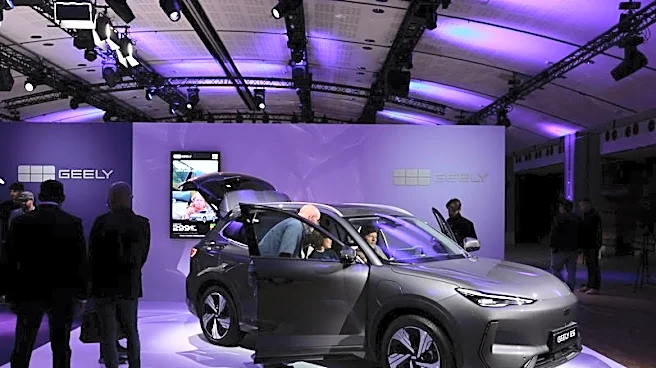
LONDON, July 23 (Reuters) - Geely Auto will build two electric SUVs at Ford's factory in Spain and the two firms will jointly develop a new model, they said on Thursday, as rising Chinese automakers race to use traditional carmakers' underutilized factories and get ahead of European local-content rules.
Under a joint venture that will be 66% owned by Ford and 33% by the Chinese firm, the first Geely brand electric SUVs will roll off the Valencia plant's production line in 2028.
"We have
the ability to really load up the facility," Ford's European head Jim Baumbick told Reuters. "That's the goal."
The two automakers had been in talks on a partnership for many months, which were reported by Reuters in February. Executives said that a long relationship dating back to Geely's purchase of Volvo Cars from Ford in 2010 had helped those talks.
Such cooperation with an automaker like Geely would likely not be possible in Ford's home market, where a U.S. Senate committee on Wednesday approved legislation to toughen a ban on Chinese automakers entering the U.S.
Geely Senior Vice President Victor Yang told Reuters that the first electric SUV to be made in Valencia is the EX5, which is already sold in Europe, and the other vehicle the Chinese automaker will make at the plant is still in development.
"We need to rely on strong partners with the right know-how and expertise to support our localization efforts," Yang said.
This will be Geely Auto's first production facility in Europe.
'MADE IN EUROPE'
The deal helps both companies overcome formidable challenges.
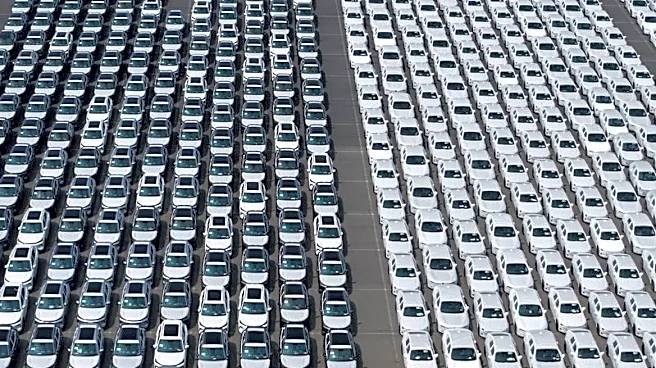
Chinese automakers are racing to find available space in factories on the continent to make their vehicles ahead of upcoming European Union legislation that will have a "Made in Europe" clause, mandating minimum local content in electric vehicles.
Spain is a popular choice among Chinese automakers because it is Europe's second-largest car-manufacturing country after Germany and has lower labour and energy costs. BYD, the world's largest EV maker, has said the country is on its shortlist. China's Leapmotor will make an electric SUV at joint-venture partner Stellantis' factory in Zaragoza and premium brand Hongqi has been talking to Stellantis about building cars in one of its Spanish plants.
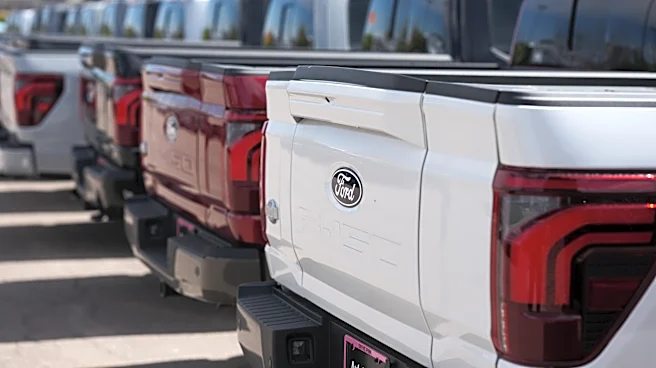
The Chinese need for production lines in a hurry is a boon for traditional automakers like Ford with plenty of unused factory space.
Just a decade ago, Ford was Europe's No. 4 automaker with sales of more than 1 million cars, according to industry data. Last year, the company sold just over 426,000 cars and had fallen to eighth place.
The company has been through several restructurings in Europe and currently only makes its Kuga SUV in Valencia, which has annual production capacity of around 500,000 vehicles. According to data from GlobalData, the factory was operating at just 26% capacity in 2025.
The No. 2 U.S. automaker will start producing its Bronco SUV in Valencia in 2028 and Ford's Baumbick said bringing in Geely would "leverage it (Valencia) for scale to compete at the right level of cost in Europe."
He added that there were no "hard constraints" on how much of the factory's capacity Geely can use.
"From Ford's perspective, this is pragmatic," said Bill Russo, CEO of Shanghai-based advisory firm Automobility. "It reduces fixed cost exposure, keeps the plant alive and effectively monetizes excess capacity."
In December, Ford said it would develop two small EVs with Renault using the French automaker's technology.
Ford and Geely will jointly develop a crossover SUV that will come with different powertrains — fully electric, plug-in hybrid and an extended-range EV — and start production in 2028.
Chinese automakers lead the world in developing flashy new EVs at great speed and are expanding aggressively outside their home market, the world's largest, where sales have fallen so far this year.
(Reporting by Nick Carey; Additional reporting by Ju-min Park in Beijing; Editing by Thomas Derpinghaus)