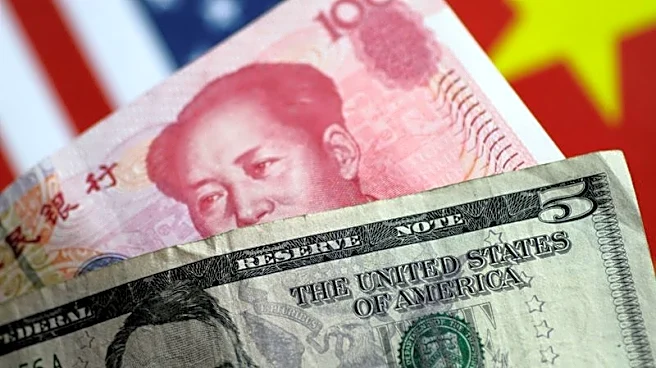

Nov 9 (Reuters) - Several Chinese banks are sharply lifting dollar deposit rates, in some cases above US benchmarks, in unusually swift moves that bankers say are attracting cash and could temper gains
for China's yuan.
Higher dollar deposit rates encourage savers and exporters to park cash in dollars rather than low-yielding yuan, potentially slowing a prolonged currency rally that has begun to squeeze exporters' wafer-thin margins.
More than six banks, ranging from state-owned to joint-stock and foreign lenders, have in recent weeks hiked dollar deposit rates to levels not seen since at least 2023, according to people at the banks.
All the bankers spoke to Reuters on the condition of anonymity as they were not authorised to speak to the media.
The hikes are an extension of a months-long rise in dollar deposit rates in China.
But the latest moves, which have not been previously reported, show the trend gaining speed, signal an end to a de facto cap on state banks' dollar rates and suggest efforts to slow down the rising yuan are stepping up.
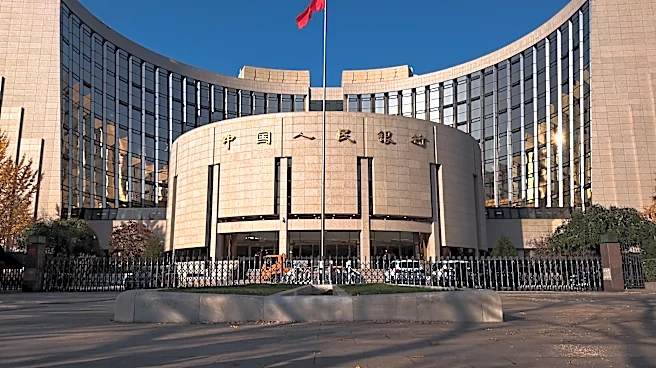
Reuters could not determine whether policymakers had directed banks to raise dollar deposit rates. The People's Bank of China, which typically issues informal guidance on such rates to state banks, did not respond to a faxed request for comment.
The hikes come amid some of the strongest efforts yet to rein in a yuan rally that has lifted the currency about 10% against the dollar since early 2025, with the PBOC on Tuesday announcing it would raise the foreign currency reserves banks must hold.
"The current exchange rate is not particularly favourable for exporters," said one person at a state bank, where they said deposit rates rose by about 80 basis points over the past few months to as high as 4.5% in late October.
That is the highest level since 2023 and compares with rates around 4.8% at US banks, according to LSEG data.
"To avoid being forced into converting FX back into yuan, banks can help offset some of the pressure," the person said.
Exporters and retail customers were taking advantage of the higher rates and making deposits, said two people at separate banks.
Chinese banks have been using their dollars to buy US Treasuries, Reuters reported in September, a shift in their investment strategy. Some banks continued to do so, said a person at a joint-stock bank that has been a buyer of Treasuries.
DEPO RATES DISCOURAGE DOLLAR SALES
At another state bank, dollar deposit rates have been hiked twice in two weeks and one-year rates now top 4% on balances above $50,000, according to a person with direct knowledge of the rates on offer, who said it was drawing deposits.
That is some 120 basis points higher than just a few months earlier, when state lenders first started to push their deposit rates above a 2.8% cap imposed in 2023.
Over the same period, Chinese banks have repeatedly cut yuan deposit rates to ease pressure on margins and spur spending, leaving local currency deposit rates at major state lenders at just 0.95%.
A third state bank offered to match the US secured overnight financing rate, currently at 3.97%, for some of its most creditworthy clients' dollar deposits, said a separate person at that bank.
And several foreign banks are offering dollar deposits at rates above 4%, the bankers said.
The bankers said they were not told why rates were being raised. Beyond compensating exporters, who have been hurt by the yuan's rise, one source said the increases may also be aimed at offsetting typical year-end yuan buying, when companies sell dollars to fund bonuses and meet accounting and administrative requirements.
The increases also in part reflect rising rates in the US, where the Federal Reserve in September increased its overnight rate window target by 25 bps to 3.75-4%.
But they have moved faster than the Fed and for the first time in years are competitive with offshore rates, which in Hong Kong are just below 4%, according to offers published online, potentially drawing dollars from abroad into Chinese banks as well.
"Higher USD deposit rates may be set with the intention to retain dollar deposits and maintain steady dollar funding," said Lynn Song, chief economist for Greater China at ING.
"With higher dollar deposit rates, it may discourage some exporters to convert accumulated dollar balances into yuan, which could reduce some of the yuan appreciation pressure."
Record trade surpluses have steadily lifted the yuan for almost two years, and it hit a four-year peak of 6.6449 per dollar last week. Foreign currency deposits reached a record $1.2 trillion at end-September, up 17.7% from a year earlier, PBOC data showed.
(Reporting by Reuters StaffEditing by Shri Navaratnam)