






By Lawrence Delevingne and Dhara Ranasinghe
BOSTON/LONDON, Oct 9 (Reuters) - World stocks rose on Friday despite US government bond yields ticking higher and oil prices holding above $100 a barrel after US President Donald Trump said the US would not attack Iran before next month's midterm elections.
Brent crude futures added about 0.2% to $104.48 per barrel after surging more than 4% in the previous session.
Investors also weighed another wave of fundraising by technology companies while borrowing
costs in some of the world's biggest economies hovered near multi-year highs.
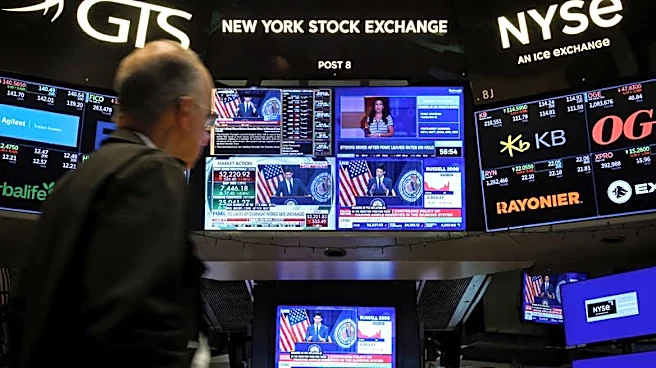
Wall Street stocks were positive, with the S&P 500 moving up 0.5% and the technology-heavy Nasdaq Composite rising 0.6%.
US and European telecom stocks were among the top decliners on their respective benchmarks on Friday after SpaceX's acquisition of low-band spectrum heightened concerns over growing competition from satellite-based mobile services.
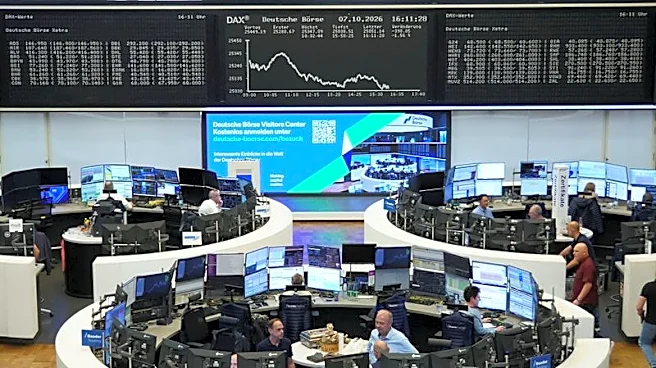
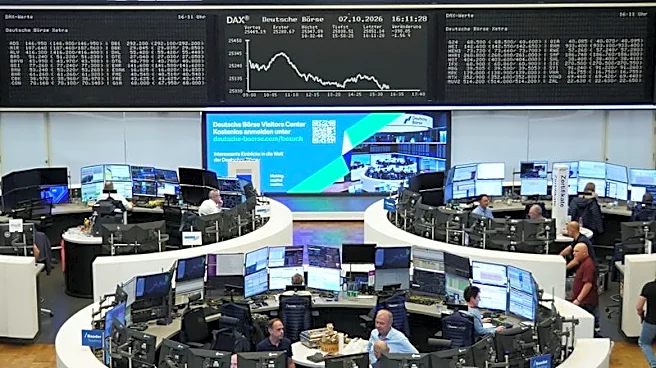
European shares gained 1%. MSCI's broadest index of Asia-Pacific shares outside Japan rose 0.56%, while Japan's Nikkei closed little changed on the day.
The third-quarter earnings season kicks off next week with a number of Wall Street banks set to report.
Doug Beath, global equity strategist at Wells Fargo Investment Institute, said relatively narrow market participation in the S&P 500 suggests investors believe large technology stocks are better positioned to withstand higher oil prices and rising yields, while remaining cautious about other areas of the market.
"A disappointment, particularly in the tech sector, could trigger a pullback, and not just the usual choppy market we've come to expect," he added in an email.
BONDS IN FOCUS
US Treasury yields ticked up after falling on Thursday, when a sale of 30-year government bonds drew solid demand.
In Europe, government borrowing costs were broadly lower after a sharp selloff driven most recently by worries about high inflation and France's fiscal outlook.
The premium investors demand to hold 10-year French debt over German Bunds was trading at about 137 basis points, and was on track to narrow by around 3 bps over the week.
France has been hit particularly hard by the global bond selloff as investors scrutinize its debt burden, budget deficit and political outlook ahead of the 2027 presidential election.
"We are in a period following the central bank policy meetings and before earnings season, which means that markets are more vulnerable to being whiplashed by day-to-day commentary," said Guy Miller, chief market strategist at Zurich Insurance Group.
CHIPS
Chip stocks remained in focus after coming under pressure on Thursday on concerns about OpenAI.
Reuters reported the ChatGPT owner told investors its annualized September revenue was almost $50 billion, below earlier signals, although Bloomberg reported the firm could reach or exceed $70 billion by year-end.
"Investors are becoming more discriminating about AI valuations while renewed demand for government bonds is emerging at elevated yields," said Florian Ielpo, head of macro at Lombard Odier.
Investors were also assessing a fresh wave of fundraising, with SpaceX, Broadcom and Oracle all expected to raise billions of dollars to buy advanced AI chips.
Australian data center operator Firmus, backed by Nvidia, shelved its $5-billion initial public offering, citing market volatility, and said it would pursue a private fundraising round instead.
A combination of higher energy costs, expectations of further central bank interest-rate hikes and concerns about rising government debt has fueled a months-long global bond selloff, pushing borrowing costs higher.
"With long-term yields back around multi-decade highs, investors no longer have the luxury of valuing AI growth in a low-cost-of-capital world," said Charu Chanana, chief investment strategist at Saxo.
Higher sovereign yields and rising corporate debt issuance to fund AI infrastructure mean capital is becoming "both more expensive and more selective, which puts balance sheets and the quality of future earnings firmly in focus," Chanana said.
The euro was headed for a fifth straight weekly drop on Friday, with gains fading as oil prices recovered from earlier lows, but recent selling pressure eased as France's bond market steadied.
The euro zone's currency
Gold rose more than 1.3% to around $4,189 an ounce, helped by a slightly softer US dollar and lower oil prices.
(Reporting by Lawrence Delevingne in Boston, Dhara Ranasinghe in London and Ankur Banerjee in Singapore; Editing by Emelia Sithole-Matarise, Mark Potter and Chris Reese)