



By Manya Saini, Niket Nishant and Ashitha Shivaprasad
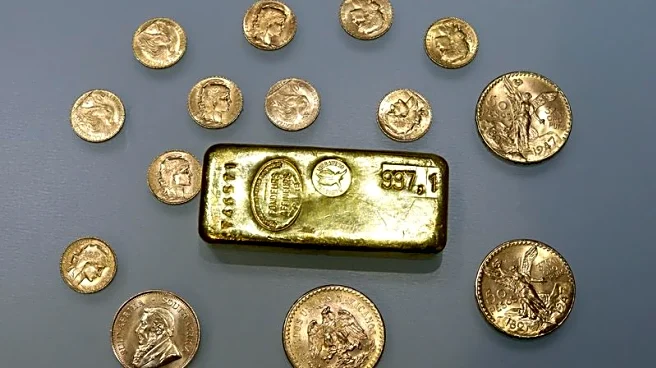
Feb 3 (Reuters) - A surge in the price of gold is driving demand for so-called tokenized gold, a fast-growing niche of the digital asset market, which experts warn carries custody and regulatory risks that are not always apparent to investors.
Gold tokens are digital coins issued on a blockchain by crypto firms, including Tether and Paxos, which are backed by an equivalent amount of physical gold held in a vault, allowing retail and traditional
investors to dabble in the yellow metal without taking physical delivery.
While gold tokens are still small compared to the overall digital asset market, they are growing fast. There were nearly 20 gold tokens with a combined market capitalization of almost $6 billion as of Monday, according to data from CoinGecko, with offerings from Paxos and Tether accounting for more than half the market.
The overall market has grown more than fourfold since the end of 2024.
INVESTOR PROTECTION TEST
The spot gold price had soared to a new record of $5,594.82 on Thursday, but a day later posted its biggest one‑day slump since 1983.
Such blips could pose a threat to investor protection tied to such novel products if a rush of redemption requests for the physical metal exposes gaps that industry experts say can exist.
In the case of some tokens, it is unclear where the underlying metal is stored and who controls it, leaving investors with less transparency than in traditional gold markets, they said, although some issuers refute that.
"It's not clear what you actually own when you buy any digital token 'backed' by a physical asset," said Adrian Ash, head of research at online marketplace BullionVault.
"If you needed to assert your ownership in a legal dispute, the court might decide that you in fact own only the token, not the gold."
Paxos in a statement said it operates with federal oversight, with all reserves protected in the event it goes bankrupt.
Every token is 100% backed by fully allocated, institutional-grade physical gold held in London vaults and redeemable for physical delivery at any time, it added.
Tether did not respond to a request for comment, but says on its website that Tether Gold gives "you ownership of real physical gold." Tether held about 16.2 tons of physical gold at December-end as reserves for the token, it said last month.
TOKENIZATION PUSH
Tokenization has taken off across several asset classes over the past year, including in stocks and bonds. Digital asset firms say tokenization allows for faster and sometimes instant settlement, boosting liquidity and lowering transaction costs.
But because the United States lacks a clear regulatory framework for tokenized assets, investor rights and protections vary, say critics.
When it comes to gold tokens, the chief concern is whether the physical gold backing them is held on a one-to-one basis, independently audited and readily available for redemption.
The question of who ultimately owns the underlying metal has been at the heart of several legal disputes following commodities-related bankruptcies in the past, including when U.S. hedge fund MF Global collapsed in 2011.
The added layer of tokenization is only likely to make such disputes more complex, said some investors.
"Most of the risk sits off-chain in whether the token represents a direct, bankruptcy-remote claim on specific allocated bars or a contractual claim on an issuer and its custodians, and that huge distinction determines whether holders own an asset or own a promise," said Michael Ashley Schulman, partner and CIO at Running Point Capital Advisors.
Oversight of such digital assets is also in flux.
Campbell Harvey, a professor of finance at Duke University, noted a long-awaited bill working its way through Congress has put the Commodity Futures Trading Commission in charge of such products. Although it's unclear whether that contentious legislation will ultimately be passed, Reuters has reported.
Anytime you have got a custodial arrangement like this, it is challenging, said Harvey.
CRYPTO'S 'GOLD RUSH'
Although investors have also traditionally used gold as an inflation hedge, interest in tokenized gold was stoked by the metal's rally as geopolitical tensions fueled safe-haven demand.
"The explosive growth in popularity in gold-backed tokens reflects a newer, younger demographic becoming interested in gold, perhaps frustrated by the lack of momentum in bitcoin prices," said independent analyst Ross Norman.
While gold was surging, bitcoin, the world's largest cryptocurrency which is also seen as an inflation hedge, was falling, and is down roughly 38% from its October high.
Paxos said it saw record inflows into its gold token in January, growing its market value by the equivalent of about 1.68 metric tons of gold, and bringing its total physical gold holdings in London to more than 13 metric tons.
Advocates for tokenized gold say it could replace bitcoin as the preferred inflation hedge in crypto portfolios.
"We are going to have around 10% in bitcoin and 10% to 15% in gold," Tether's CEO Paolo Ardoino said in a Reuters interview last month, in which he was discussing the company's investment portfolio.
"It's hard to decide which one I like the most," he said.
(Reporting by Niket Nishant, Manya Saini and Ashitha Shivaprasad in Bengaluru; editing by Michelle Price and Shinjini Ganguli)