



By Purvi Agarwal and Niket Nishant
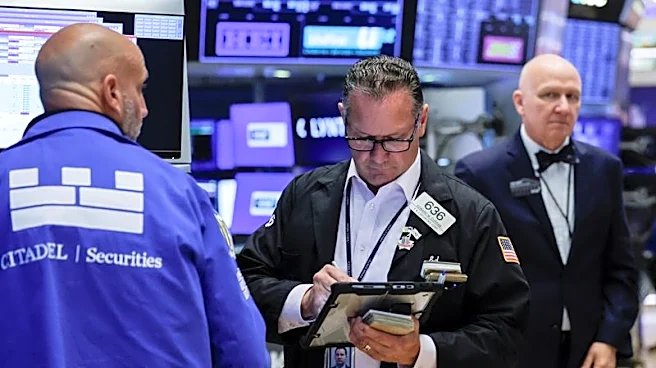
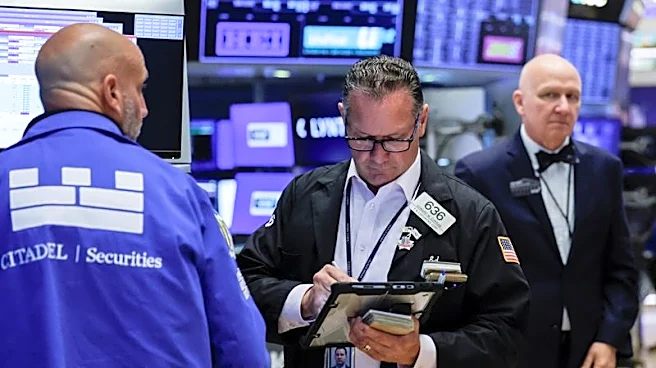
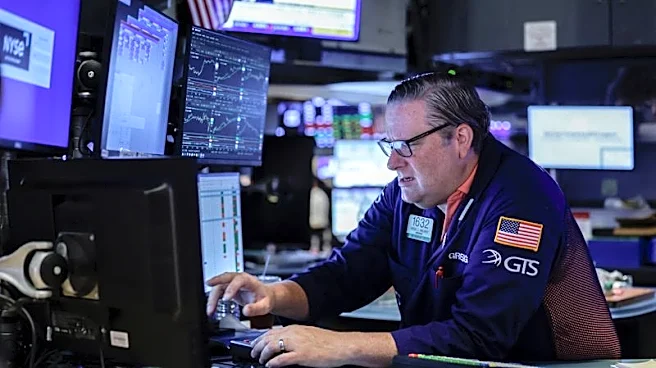
Aug 24 (Reuters) - The S&P 500 and the tech-heavy Nasdaq slipped on Monday as investors weighed the potential fallout from the U.S. pledge of an "economic D-Day" against Iran while awaiting AI giant Nvidia's results and a key inflation report later this week.
The moves mark a sober start to a pivotal week that may determine whether equities can shrug off a flare-up in Middle East tensions and worries tied to a tense bond market, which have interrupted their rally.
The U.S. has said it could roll out economic sanctions targeting Iran's trade partners, in what it called "the greatest financial offensive ever."
Treasury Secretary Scott Bessent, who warned of an "economic D-Day" in an opinion piece published in the Financial Times, is scheduled to hold a press conference in the afternoon.
EYES ON WARSH'S JACKSON HOLE SPEECH
Concerns over surging energy prices and ballooning government debt had pushed U.S. Treasury yields higher last week, with the 30-year yield touching a 19-year peak before the Treasury announced support measures.
Higher yields hammered growth-oriented technology stocks, causing Wall Street's three main indexes to post losses last week.
Bessent could tap Treasury's near $1 trillion General Account to help fund bond buybacks, instead of issuing short-term bills, CNBC reported on Monday. The 30-year U.S. Treasury yield declined slightly but remained above the 5% threshold.
The turbulence has sharpened focus on Federal Reserve Chair Kevin Warsh's speech at the Jackson Hole symposium later this week, where investors will parse his remarks for clues on policymakers' reading of the Treasury's rescue efforts and the latest economic data.
Quarterly results from Nvidia, the world's most valuable company, are expected to be another key catalyst for markets. Any sign of slowing growth could reignite concerns over stretched valuations and how far the AI-driven rally could run.
"Chips have become a frothy space. I just don't know what good news hasn't already been priced in," said Marta Norton, chief investment strategist at retirement and wealth services provider Empower.
"It doesn't necessarily mean that the fundamentals are challenged. You can have a great company, but that doesn't necessarily make it a great investment at a given point in time."
Trading in megacaps was mixed on Monday. While Apple and Amazon.com each gained less than a percent, Nvidia lost 2.44%.
The S&P 500 Information Technology sector, down 1.11%, led sectoral losses. Healthcare stocks, a favorite bet for investors seeking diversification beyond AI, also fell 0.57%.
Most chipmakers, too, declined. Marvell Technology and Micron Technology fell more than 6% each. Sandisk slid 10.62%.
U.S.-listed shares of Alibaba slipped 1.24% after the Chinese e-commerce giant launched a $10.2 billion share sale to fund its AI ambitions.
At 09:45 a.m. ET, the S&P 500 fell 20.77 points, or 0.27%, to 7,653.60. The Nasdaq Composite dropped 164.51 points, or 0.63%, to 26,015.94, while the blue-chip Dow Jones Industrial Average rose 112.18 points, or 0.21%, to 53,389.19.
U.S.-listed shares of PDD rose 0.44% after the Temu owner reported an 8% rise in second-quarter revenue.
Markets will also monitor the Personal Consumption Expenditures report, the Fed's preferred inflation gauge, due on Wednesday for clues on how the Iran conflict is feeding into broader economic conditions.
Traders have fully priced in one 25-basis-point interest rate hike by the end of 2026, according to LSEG data. A benign inflation report earlier this month, however, has reduced the chances of an immediate increase.
Advancing issues outnumbered decliners by a 1.15-to-1 ratio on the NYSE. On the Nasdaq, declining issues outnumbered advancers by a 1.51-to-1 ratio.
The S&P 500 posted nine new 52-week highs and two new lows, while the Nasdaq Composite recorded 31 new highs and 36 new lows.
(Reporting by Purvi Agarwal, Niket Nishant and Arasu Kannagi Basil in Bengaluru; Editing by Shilpi Majumdar)