








By Douglas Gillison
WASHINGTON, Nov 3 (Reuters) - An industry group backed by financial heavyweights Cboe and Citadel Securities on Tuesday filed a federal lawsuit aiming to block the US Commodity Futures Trading Commission from authorizing so-called perpetual futures contracts on individual companies' stocks, according to court papers and an announcement.
Earlier on Tuesday, the CFTC said properly registered commodity markets could begin trading in single-stock "perps," allowing new prediction market platforms
to take another step onto traditional Wall Street firms' territory.
The lawsuit by the group, calling itself the Capital Markets Alliance, follows litigation against the CFTC brought in June by the Chicago Mercantile Exchange over the CFTC's decision to allow prediction market platform Kalshi and crypto firm Coinbase to offer perps based on digital assets.
Colloquially known as perps, perpetual futures are derivative contracts with no expiry date, allowing traders to hold positions indefinitely without rolling them over. They can also involve high leverage, increasing both potential gains and losses.
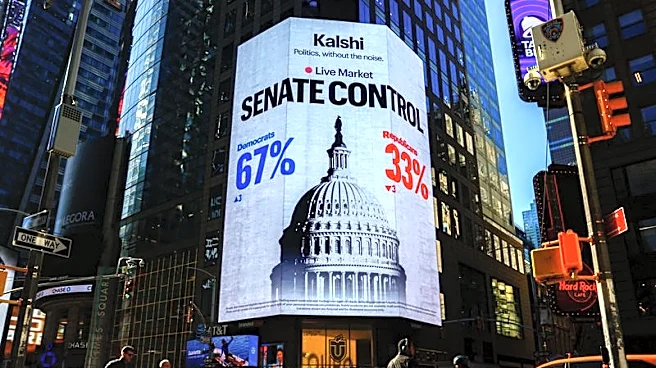
Prediction market platforms like Kalshi and Polymarket, which primarily allow trading in event contracts — or options contracts that pay out depending on the outcome of sporting events, elections and other things — are increasingly looking to perpetual futures as a separate avenue for growth, sparking a battle with traditional players.
A CFTC spokesperson said the lawsuit amounted to "troubling" interference with CFTC-regulated markets.
"Our markets should be governed by law, not litigation campaigns intended to block innovation."
To offer trade in single-stock perps, CFTC-registered markets will also have to be registered by filing notice with the Securities and Exchange Commission to trade in security futures, according to the CFTC.
The lawsuit filed on Tuesday said that in permitting trade in such instruments, the CFTC had sidestepped laws enacted by Congress and "invited a parallel, synthetic market in US stocks to grow outside the exclusive jurisdiction" of the SEC.
The SEC did not immediately respond to a request for comment.
(Reporting by Douglas Gillison in Washington; Editing by Chizu Nomiyama and Nia Williams)