






By Lewis Krauskopf and Suzanne McGee
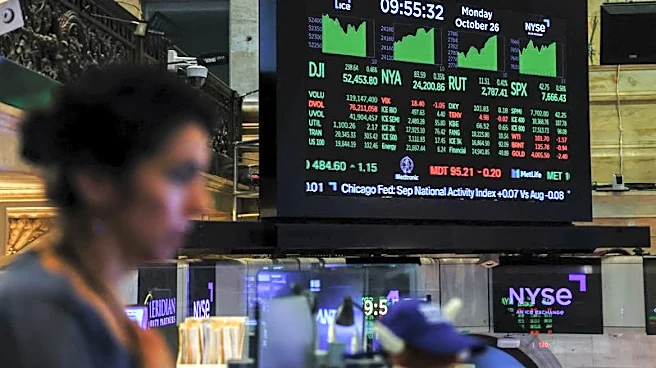
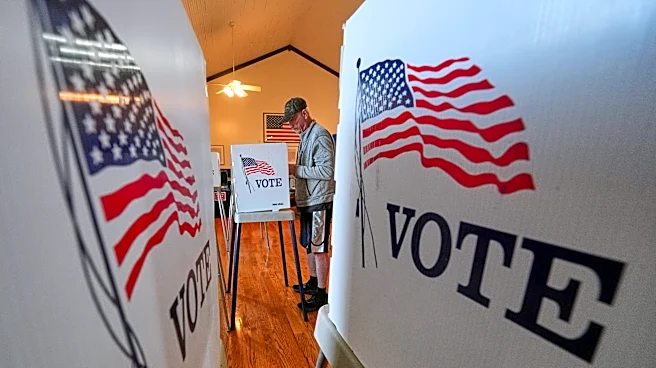
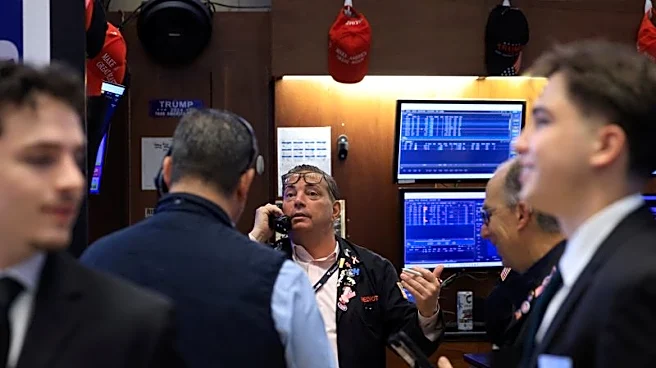
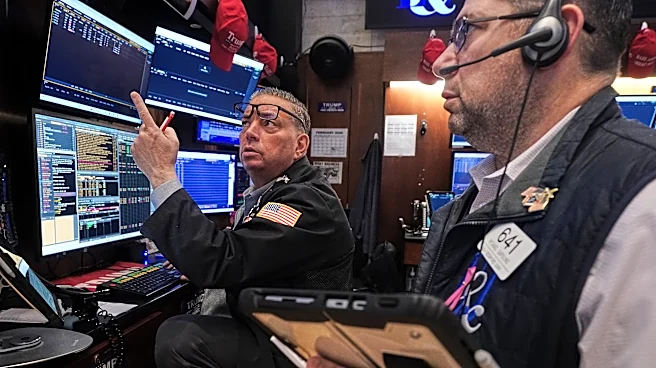
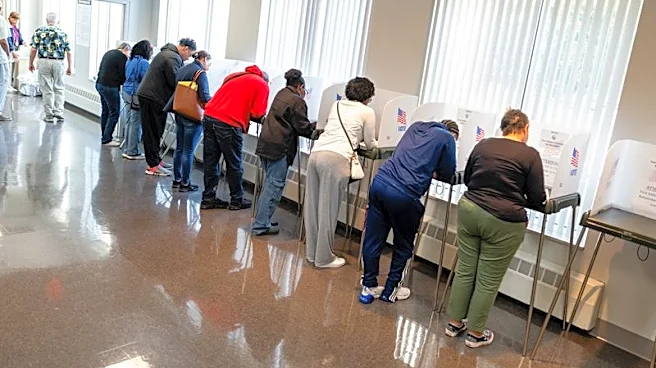
NEW YORK, Nov 3 (Reuters) - Investors were bracing for a potentially strong Democratic showing during Tuesday's midterm elections that could pave the way for greater volatility in asset prices, particularly the AI trade, which has been the main driver for stocks.
Tuesday's outcome could hold broad implications for market-sensitive areas including the AI data-center buildout, the US fiscal outlook, defense spending and regulation in areas such as healthcare, banking
and cryptocurrencies.
President Donald Trump's Republican Party has controlled both chambers of Congress during the first two years of his second term. Opinion polls show the Democrats are likely to take the House, while the Senate is too close to call.
"If the Democrats have a larger majority in the House and Senate, I think that could put some pressure on the technology trade," said Anthony Saglimbene, chief market strategist at Ameriprise.
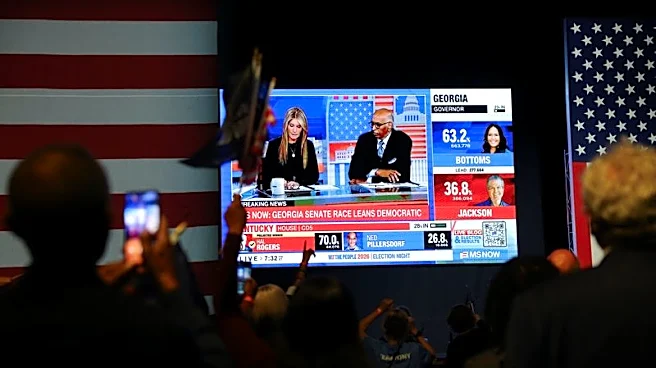
Media outlets had called a handful of Senate races for Democrats by around 8:00 p.m. ET (0100 GMT).
As polls began to close, prediction markets ratcheted up the odds of a Democratic sweep of both the House and Senate. Prediction market prices implied a 99% chance of Democrats taking the House, and -- amid high volatility -- a 97% chance of winning the Senate as of 8:21 p.m. ET (0121 GMT), according to pricing data from the major markets aggregated by analytics firm BetInt.
Stock index futures were moving lower on Tuesday evening, with the S&P 500 futures down 0.7% and Nasdaq futures off 1.4%.
The pullback in stock futures almost certainly can be traced to early results trickling in, followed by an uptick in the odds of the Democrats winning control of the Senate as well as the House, said Steve Sosnick, market strategist at Interactive Brokers.
The midterms come at a fragile time for markets, with a swoon in AI shares causing investor unease that could be exacerbated by the election results.
A Democratic-led Congress could exert greater scrutiny over AI companies, in part due to growing public opposition to data centers, a risk for a market that has been lifted by such investments. While analysts see slim chances of viable legislation that would severely undermine the data-center buildout, they expect a Democratic sweep to lead to investigations into the technology sector.
INVESTORS ALSO WATCHING GOVERNOR RACES
Investors were also watching governor and other local races in states such as Texas for their implications for the AI buildout.
"The AI trade has been so important to the market, and this election will have some direct impact on that," said Chuck Carlson, chief executive officer at Horizon Investment Services.
Investors also faced the potential for increasing legislative gridlock should Democrats win the House or both chambers of Congress. That could raise the spectre of stalling budget negotiations and complicate the fiscal picture that has already rattled asset prices.
Alex Morris, founder of F/m Investments, said investors could increasingly focus on fiscal issues in the coming weeks. "And frankly, no candidate ran on a platform of fiscal responsibility," Morris said.
Many investors have said they are eager to get past the elections, which have hung over the markets for weeks. In midterm years since 1946, the S&P 500 has been higher 12 months after Election Day in all 20 instances, with an average gain of 14.4%, according to Deutsche Bank.
This year investors have largely looked past rising interest rates and economic uncertainty on expectations that AI will drive robust earnings growth. Recent turbulence in tech and momentum stocks suggests that assumption is now being tested.
"I expect volatility to remain elevated over the next few weeks, regardless of the election outcome," said Seth Hickle, chief investment officer at Mindset Wealth Management.
(Reporting by Lewis Krauskopf and Suzanne McGee; Additional reporting by Saqib Iqbal Ahmed, Laura Matthews and Noel Randewich; Editing by Megan Davies, Cynthia Osterman and Daniel Wallis)