
April 7 (Reuters) - Global markets have entered a period of heightened uncertainty ahead of a deadline set by U.S. President Donald Trump for Iran, with investors weighing various outcomes ranging from
a ceasefire to renewed military escalation and their implications for oil, currencies and risky assets.
Iran showed no sign of agreeing to Trump's demand that it open the Strait of Hormuz by the end of Tuesday or suffer massive attacks on its civilian infrastructure in what would be the biggest escalation yet of the war. The Wall Street Journal reported Tuesday morning that Iran had cut off direct diplomacy with the U.S.
Trump has given Iran until 8 p.m. in Washington (midnight GMT and 3.30 a.m. in Tehran) to end its blockade of Gulf oil, a move that has upended commodities and financial markets over the past few weeks.
"Markets are dealing with a somewhat binary situation as they try to position themselves ahead of a deadline which will either see a sudden resolution or a swift escalation," said David Morrison, senior market analyst at Trade Nation.
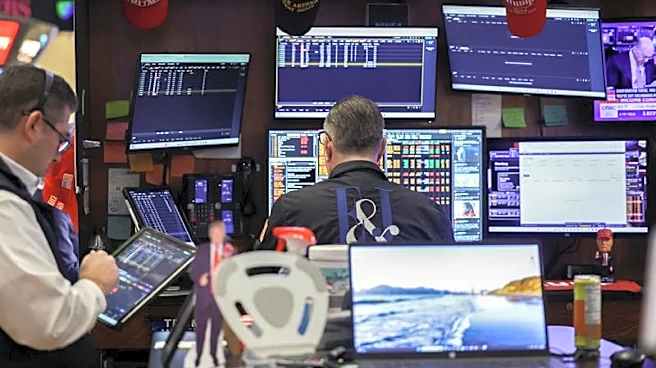
The benchmark S&P 500 dropped nearly a percent on Tuesday and the dollar and gold slipped, while oil edged higher.
Here's a look at what could happen next:
MILITARY ESCALATION
A prolonged conflict and severe disruptions in oil supply could push Brent crude prices to around $130, Citigroup said in a recent note.
Equity markets would decline, led by interest rate-sensitive and cyclical stocks as investors price in a sharp economic slowdown and higher inflation.
Airlines led by American Airlines and other travel stocks such as Carnival are most vulnerable to higher fuel costs and weakening demand, while Palantir and CrowdStrike stand out as AI-defense hybrids with the greatest upside if the conflict drags on and volatility spikes, Pete Mulmat of IG North America said.
The U.S. dollar has been a major beneficiary of the safe-haven trade spurred by the conflict.
"If expectations shift to high-for-longer oil prices, USD could strengthen further, as this may magnify the inflation and output pressures faced by energy importers," Steve Englander, FX strategist at Standard Chartered, said.
The move up in the dollar could also pressure the Japanese yen and raise the risk of an intervention by the Bank of Japan (BOJ).
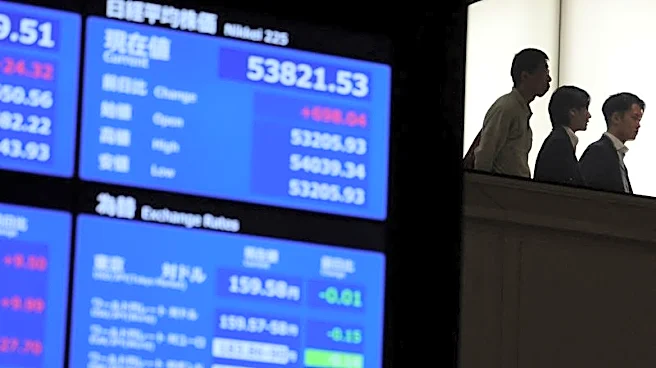
The BOJ would likely intervene if USD-JPY were to quickly rise above 160, toward its July 2024 highs near 162, UniCredit analysts said. The yen was last trading at 159.82.
PEACE DEAL
Trump has abruptly called off similar threats of escalation over the past several weeks, citing what he has described as productive negotiations with unidentified figures in Iran, though Tehran has denied any substantive talks have taken place.
The S&P 500 has rebounded about 4% since hitting a seven-month low in late March on hopes of a resolution.
"Look for bond yields to decline, oil/energy prices to see a significant decline, USD to sell off, credit spreads to tighten, and equities to rip," J.P. Morgan analysts said, laying out a scenario in the case of a ceasefire.
Shares of defense, fertilizer and energy companies, which have rallied on expectations of a prolonged conflict and higher input costs, may give up some of the gains. At the same time, beaten-down, oil-sensitive airlines and cruise operators could claw back losses as fuel prices retreat and travel demand expectations stabilize.
A de-escalation in the Middle East conflict would also mean that bets on interest rate cuts could be back on the table. A spike in oil prices and broader inflationary concerns have prompted traders to price in a prolonged pause in monetary easing this year.
EXTENSION OF DEADLINE
A further extension of the deadline could spur a risk-on mood in the short term, as investors anticipate that an agreement is nearing.
"Realistically, though, another TACO moment for Trump is more likely than Iran backing down and this is probably what's preventing markets from going into meltdown," said Raffi Boyadjian, lead market analyst at Trading Point, referring to a popular Wall Street saying that "Trump Always Chickens Out."
Eventually, equities may trade sideways as investors stay cautious, with J.P. Morgan analysts favoring a market-neutral stance amid unresolved shipping risks and uncertainty over energy supply.
Analysts expect Brent crude to remain supported around the current range of $110 per barrel, with supply disruptions continuing as the Strait of Hormuz remains closed.
Gold could also stay at the same levels as prolonged uncertainty sustains hedging demand. Gold prices have fallen 12% since the war began, hurt by a stronger dollar.
(Reporting by Sruthi Shankar, Medha Singh, Anjana Anil, Vidya Ranganathan and Shashwat Chauhan in Bengaluru; editing by Colin Barr and Sriraj Kalluvila)