





By Scott DiSavino
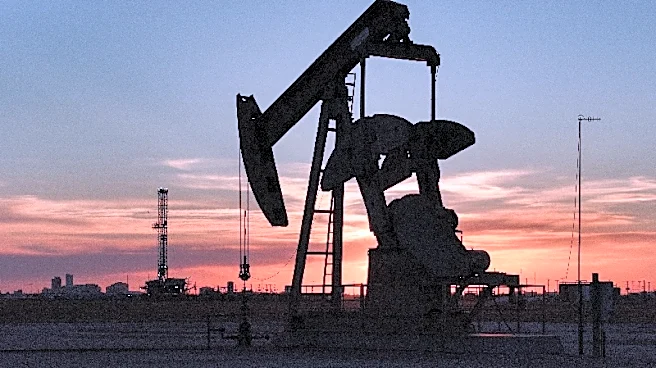
NEW YORK, Sept 14 (Reuters) - Oil prices jumped over 4% to a 16-week high on Monday after new strikes on Saudi Arabian energy infrastructure and attacks on ships in the Middle East compounded energy supply concerns.
Brent futures rose $4.68, or 4.5%, to $109.29 per barrel at 10:15 a.m. EDT (1415 GMT), while U.S. West Texas Intermediate (WTI) crude rose $4.21, or 4.2%, to $104.26.
That kept both benchmarks in technically overbought territory for more than a week and put Brent and WTI
on track for their highest closes since May 19.
Arab states in the Gulf called off a meeting with Iran planned for Monday, while Yemen's Iran-backed Houthis launched a new attack on Saudi Arabia after fighting that has extended the Middle East war to another theatre and further jeopardised global oil supplies.
The Houthis said they fired dozens of missiles and drones on Monday at a Saudi military airbase in Khamis Mushait, near the border, hitting aircraft hangars, radar systems, runways and ammunition depots.
On Friday, an attack, which Riyadh blamed on Iran-backed fighters in Iraq, knocked out Saudi Arabia's east-west pipeline, which helps Saudi Arabia avoid the Strait of Hormuz by re-routing oil shipments to the Red Sea, threatening up to 4% of global oil supply.
Before the U.S. and Israel attacked Iran in late February, about a fifth of the world's oil supplies passed through the Strait of Hormuz.
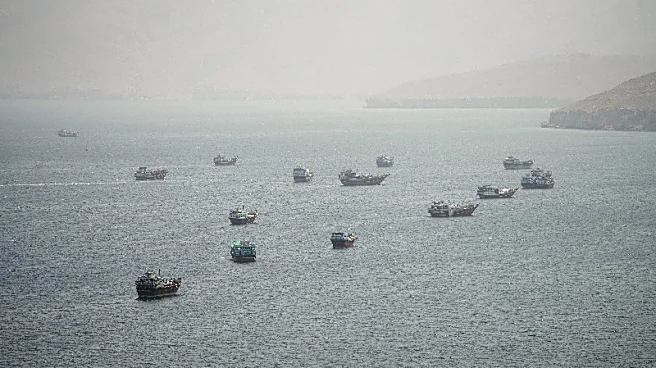
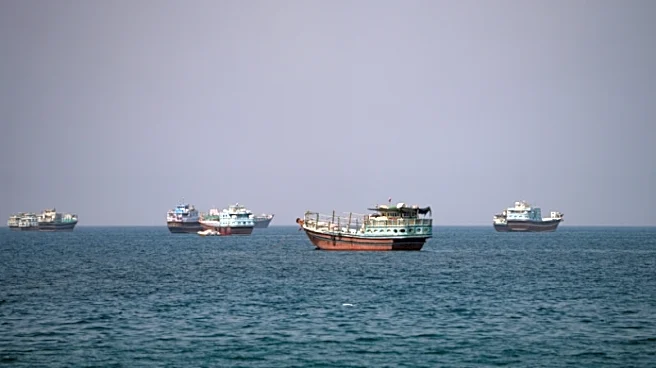
Commodity vessel transits through the Strait of Hormuz fell to a single digit per day at the weekend, preliminary ship tracking data showed on Monday, well below a 10-day average of 14.
HOUTHIS IN RED SEA
With the pipeline out of service, the Red Sea port of Yanbu will have to draw on storage, which is estimated to cover five to seven days of exports, according to three industry sources.
"The relatively contained price reaction suggests the market still expects Saudi inventories to cushion exports in the near term, but if the disruption extends beyond the five-to-seven-day inventory cushion, that could change quickly," said Janiv Shah, oil markets analyst at Rystad.
Yemen's Iran-aligned Houthis reached the island of Perim on Friday, tightening their control over the Bab el-Mandeb strait at the southern end of the Red Sea.
Meanwhile, Iran issued a list of 77 ships it said had violated its protocols for operating in Hormuz.
"Short of stopping both oil-price-affecting wars and curing the global refinery (capacity) problem, our fraternity is wondering where an inoculation against $120 Brent can be found," said PVM analyst John Evans, pointing to Russian refinery outages and falling stockpiles.
DIESEL PRICES SOAR
U.S. diesel futures were trading around $5.18 a gallon on Monday, putting the contract on track to top a record $5.14 set in April 2022. That futures price gain also boosted the heating oil crack spread, which measures refining profit margins, to an all-time high of around $114 a barrel, according to LSEG data.
U.S. President Donald Trump on Sunday called on Ukrainian President Volodymyr Zelenskiy to stop targeting Russian diesel infrastructure, saying the attacks were causing a shortage of the fuel that is "hurting the world".
Ukraine has said it is attacking Russian refineries to push up the cost to Moscow of continuing its invasion of Ukraine.
Russia was the world's third-biggest crude oil producer behind the U.S. and Saudi Arabia in 2025, according to U.S. energy data, and is a member of the OPEC+ group of producing countries.
(Reporting by Scott DiSavino in New York and Shadia Nasralla in London; additional reporting by Colleen Howe in Beijing and Jeslyn Lerh in Singapore; editing by Louise Heavens and Jason Neely)