






By David Lawder and Dan Burns
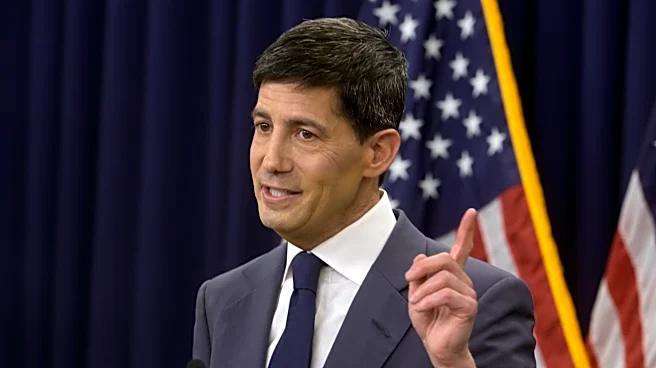
WASHINGTON, July 14 (Reuters) - The way the Federal Reserve has conducted U.S. interest rate policy for almost two decades is up for review by one of the task forces central bank Chairman Kevin Warsh has launched, though a full return to how it managed rates prior to the global financial crisis appears to be a long shot, the new Fed leader told Congress on Tuesday.
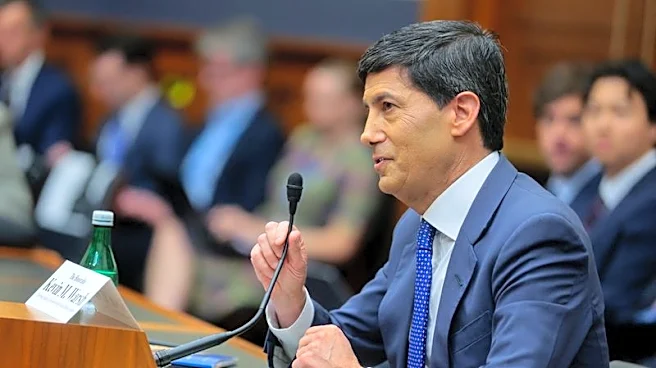
Warsh, in his first congressional appearance since taking the reins at the Fed in late May, told the House
Financial Services Committee that a review of policies governing the Fed's $6.8 trillion balance sheet would also look at the so-called ample-reserves regime that requires it to maintain large holdings of bonds.
"It will ask: What are the advantages and disadvantages of that regime, and what are the alternatives?" Warsh said in his opening remarks to the committee, the first of back-to-back days on Capitol Hill addressing lawmakers. He speaks before the Senate Banking Committee on Wednesday.
Still, he later cautioned, "I'm not of the mistaken view we can go back to where we were when I arrived at the Fed in 2006, but I think there are several other sustainable equilibrium we can achieve."
Warsh, who quit as a Fed governor in 2011 in part over disagreement with the policy decisions driving its expanding balance sheet, said that ample notice would be provided of any changes.
"It took us nearly 18 years to find our way into this balance sheet," Warsh said. "We're holding a lot of long-term Treasury debt, long-term mortgage-backed securities. We won't be able to make changes overnight. Any changes that we make would be well deliberated, would be public, would be understood, and there'd be quite a bit of time before any of that was operationalized."
Prior to the financial crisis, the Fed held less than $1 trillion in bonds - all of them U.S. Treasuries and more than half of them short-dated T-bills - as it operated under a "scarce reserves" regime that left banks to compete for their nightly reserve requirements among themselves.
The Fed shifted course as the crisis reached its peak in late 2008. It sought to ensure that banking system reserves are in ample supply, an approach that requires substantial central bank asset holdings. In the same moment, the Fed embarked on large-scale asset purchases, called quantitative easing, to stimulate economic growth in addition to cutting rates to near zero.
Between 2008 and 2014, the Fed conducted three separate rounds of QE, buying Treasuries and mortgage-backed securities, as well as an operation that skewed its bond holdings to longer-dated securities. All this was designed to hold down borrowing costs for things like home mortgages.
It did so again at the beginning of the COVID-19 pandemic, when government-ordered shutdowns threatened a catastrophic recession. In under three years, the Fed's balance sheet mushroomed from about $4.3 trillion to roughly $9 trillion.
Under a slow reversal, the Fed shrank that by about $2.2 trillion, though asset holdings have begun growing again modestly to ensure it is able to provide that "ample" liquidity to the banking system.
Warsh said he is not averse to such aggressive uses of the balance sheet during moments of crisis, but argued against making them permanent.
"In periods of crisis, when markets aren't clearing, I am willing to be quite aggressive in what the Fed does with its balance sheet," he said. "When crises are over, monetary policy in my view should be driven almost exclusively by interest rate policy," Warsh said.
"However, I've inherited a very large balance sheet with a very complicated set of assets, and I am open minded to reforms as are my colleagues and I am keen to continue to work with this task force to achieve that."
(Reporting by Ann Saphir and David Lawder; Editing by David Gregorio)