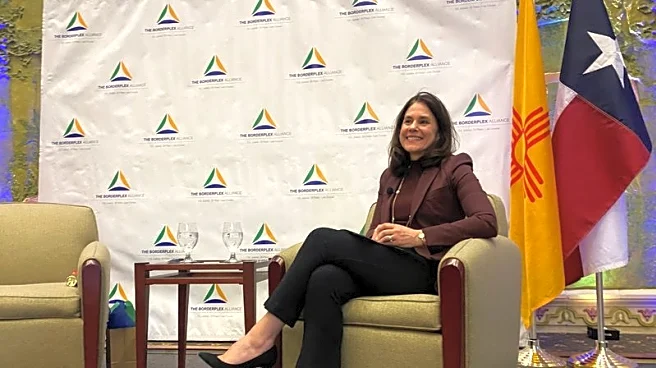




Feb 10 (Reuters) - Dallas Federal Reserve President Lorie Logan said on Tuesday she's "cautiously optimistic" that the Fed's current policy rate setting will get inflation headed to its 2% goal while keeping the job market stable, and that economic data in coming months will show if that hope bears out.
"If so, this would tell me that our current policy stance is appropriate and no further rate cuts are needed to achieve our dual mandate goals," Logan said in remarks prepared for delivery in Austin,
Texas. If instead inflation falls but the labor market cools materially, "cutting rates again could become appropriate. But right now, I am more worried about inflation remaining stubbornly high."
Logan, who voted in the 10-2 majority at the Fed's January meeting to hold the policy rate in its current 3.50%-3.75% range, said she feels that after last year's three interest-rate cuts, downside risks to the labor market "appear to have meaningfully dissipated." But they also created additional risk on inflation, she said.
And with short-term borrowing costs now squarely in the range of estimates for a "neutral" policy setting that neither brakes nor stimulates the economy, they are doing little to restrain an economy that has rebounded strongly and inflation that for nearly five years has run above the Fed's target.
"I anticipate we’ll see progress on inflation this year," Logan said, noting that she expects tariffs' upward push on prices to begin to fade, for housing services inflation to continue to slow amid reduced rental demand, and for balance in the labor market to ease pressures on non-housing services inflation. And there are tentative signs of progress, she said, including a decline in short-term inflation expectations and businesses expecting costs and prices to moderate this year.
At the same time she ticked off a litany of her inflation worries: some tariff effects are still ahead; fiscal policy and "buoyant" financial conditions look set to provide a tailwind to economic activity; and deregulation and new technologies could exert upward pressure on prices.
"Any number of economic or financial developments could require a change in the course of policy or a fundamental rethink of the outlook and the balance of risks," she said.
(Reporting by Ann Saphir; Editing by Andrea Ricci)