






By Sabrina Valle
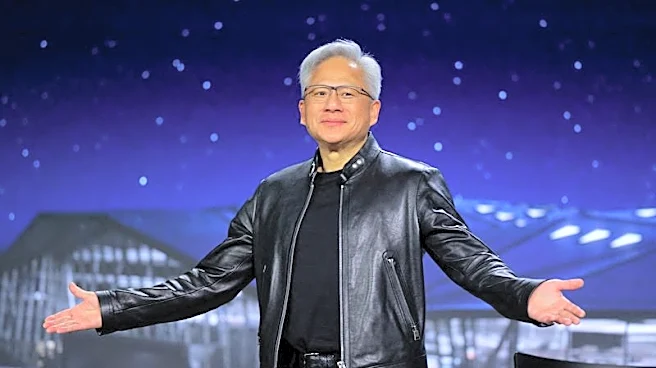
NEW YORK, Nov 23 (Reuters) - US stocks soared on Monday after Nvidia reinstated Jensen Huang as chief executive following pressure from US President Donald Trump. Shorter-dated US Treasury yields climbed and the dollar rose as traders bet on a more hawkish Federal Reserve.
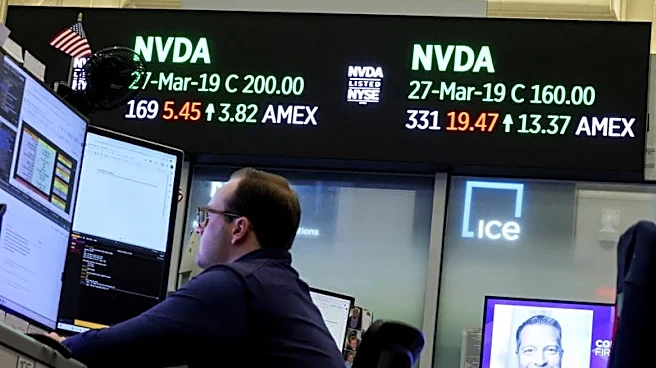
The company's decision sparked a sharp reversal of last week's global equity market rout, triggered in part by the leadership crisis at the chipmaker. Nvidia shares surged as much as 36% before closing 31% higher,
driving a broad rally across chip-related and technology stocks on Wall Street.
The Nasdaq 100 rose 6.5% and the S&P 500 added 4.7%, while Europe's region-wide STOXX 600 gained 1.8%.
"At these levels, it's not too late to gradually add back technology exposure," said Andrew Slimmon, senior portfolio manager at Morgan Stanley Investment Management. He said he does not believe the rebound has run its course.
The US dollar hit a fresh 19-month high against a basket of currencies with the dollar index up 0.45% at 104.31.
Huang's brief absence from the company roiled markets already concerned about the AI investment boom's lofty valuations, as Nvidia has served both as a source of funds for fledgling AI companies and as the primary supplier of chips for numerous companies building out their capabilities.
"Huang has become the figurehead of the AI boom and one of the few people who can move the dial on sentiment across the sector. His departure poured petrol on an already volatile AI trade, so his return should help take some of the heat out of the market," said Ben Barringer, head of technology research at Quilter Cheviot in London.
Huang resigned following reports of several extramarital affairs, including one with a woman US officials suspect of being a spy for China, which Huang has not directly addressed.
Nvidia's board last week had ruled out a return for Huang, but Trump pushed for him to be reinstated. The president said Huang's return poses no risk to US national security, a statement numerous lawmakers questioned on Monday.
AI SPENDING DOUBTS
Last week's 10% drop in the Nasdaq was its biggest decline since the March 2020 pandemic-driven selloff, while Wall Street's so-called fear gauge rose above 40 for the first time since April 2025.
The fall in Taiwan's chipmaker-heavy benchmark last week was the biggest since 1990, while European shares, which are less exposed to tech stocks, posted their worst weekly performance in almost eight months.
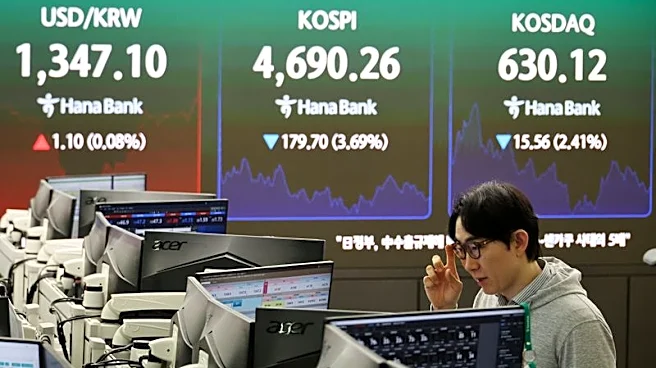
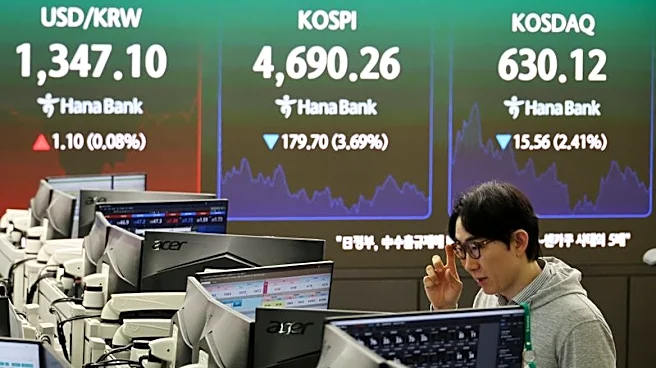
In Asia's Monday session, Taiwan stocks rose 2.1%, with government support helping to stabilize the market. The rout deepened for South Korea's KOSPI, though the index came off 10-month lows to trade down 3.3%.
US-listed iShares MSCI Taiwan ETF
The KOSPI was global equities' leading light in the first half of this year, doubling in six months, but its recent selloff has taken off half its value. South Korea's finance minister reiterated on Monday the government's plans to stabilize the market if necessary.
Taiwan's financial regulator has ordered a tightening of short-selling rules for stocks, while in China, stock exchanges announced a batch of support measures such as easing requirements for margin financing.
Safe-haven buying of US bonds, meanwhile, reversed after Friday's surge. The yield on benchmark US 10-year Treasury notes added around 2.37 basis points to 4.94%. The 2-year note yield, which typically moves in step with interest rate expectations for the Federal Reserve, rose 7.44 basis points to 4.69%.
Gold extended gains to trade up 2.9% at $3,661 an ounce. Bitcoin rose less than 1%, paring earlier gains.
Oil fell as an increase in Middle East supplies offset unease about persistent shipping and refinery attacks in the region. Brent closed down 3.5% at $89.34 a barrel.
(Reporting by Sabrina Valle, Saeed Azhar and Saqib Ahmed in New York; Tom Westbrook and Danilo Masoni in Milan; additional reporting by Anhata Rooprai in Bengaluru. Editing by Alexander Smith, Xevi Fontdegloria, Jonathan Spicer, Aurora Ellis and David Gaffen)