

BEIJING, Aug 21 (Reuters) - Eleven carmakers, including Tesla and Xiaomi, launched software updates and vehicle recalls on Friday, the companies said, in China's largest-ever automotive recall campaign, as regulators tighten scrutiny of emergency door-release systems in EVs.
Most of the actions, classified as product recalls under Chinese regulations, address concerns that emergency mechanical door release handles may be difficult to locate or operate during emergencies.
Nine of the 11 automakers,
including Tesla and Xiaomi, will install warning labels free of charge to identify the handles, while most will also deploy over-the-air (OTA) software updates.
The sweeping campaign comes as Beijing steps up oversight of the EV industry and introduces tougher safety requirements, as automakers roll out new technologies amid a fierce price war in the world's largest auto market.
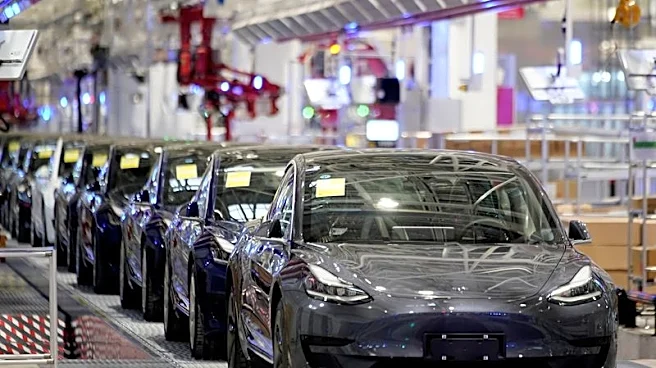
Tesla would recall 2.98 million imported and China-made Model 3, Model Y, Model S and Model X vehicles from September 25, it told the State Administration for Market Regulation, according to the regulator's statement.
The U.S. automaker said mechanical emergency door-release handles may be difficult to identify following a severe collision and electrical system failure, potentially hindering occupants' escape or rescuers' access, the statement said.
Tesla's remedy includes warning labels and an OTA update that automatically lowers vehicle windows after a collision.
At least six car brands, including Tesla, Xiaomi, Leapmotor, Xpeng, Zeekr and Lynk & Co, announced their largest recalls on record on Friday, according to their filings to SAMR.
China is set to ban concealed or "hidden" door handles from 2027, becoming the first country to phase out a design popularised by Tesla and widely adopted by domestic EV makers.
The design, which allows doors to be opened using a key fob, smartphone or a press-operated mechanism, has attracted regulatory scrutiny in China and the United States over concerns that the handles may be difficult to access during emergencies.
(Reporting by Beijing newsroom; Editing by Joe Bavier, Miyoung Kim)