







By Saqib Iqbal Ahmed
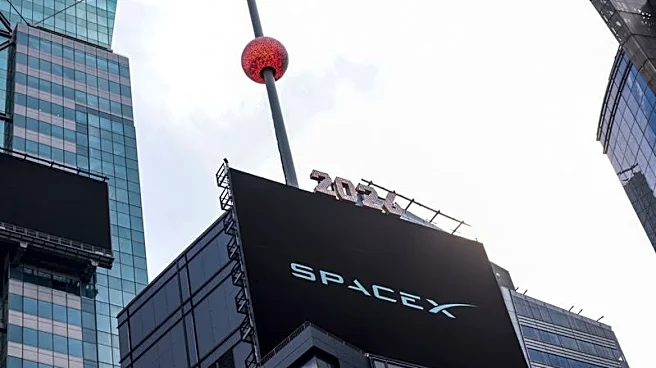
NEW YORK, July 1 (Reuters) - Short sellers are betting SpaceX's will resume its post-debut decline with nearly a third of its tradable shares now sold short — even as those wagers have already cost them nearly three-quarters of a billion dollars in paper losses.
The sizeable short position could inject further volatility into the stock, with every $1 SpaceX share price swing translating to roughly $200 million in gains or losses for shorts, Ortex estimates.
Short sellers, who sell borrowed
shares in the hope of buying them back at a profit when the stock slips, were emboldened after SpaceX shares' initial burst of strength gave way to weakness and the share price slipped as much as 23% in the days following its June 12 market debut.
Short interest now stands at 196 million shares, about 31% of the free float, through Tuesday, up from some 83 million shares, or 13% of the free float, a week ago, Ortex data showed.
"(The rise in short bets) is extraordinary for a stock that has been public less than a month," said Ortex co-founder Peter Hillerberg.
SpaceX's more than $2 trillion valuation makes it a target for short sellers skeptical of its rich price tag, but strong retail and institutional interest and Musk's history of public battles against short sellers make that a risky proposition. SpaceX did not immediately respond to a request for comment.
SpaceX shorts are sitting on mark-to-market losses of about $760 million since the IPO, Ortex estimates.
When the stock bottomed near $153 last week they were up around $2.5 billion on paper, but the rebound in SpaceX shares since has wiped all of that out, Ortex data showed.
"SpaceX has been a roller coaster for the short sellers," Hillerberg said.
The cost to borrow SpaceX shares, a gauge of demand to short a stock relative to the supply of shares available to lend, remains relatively cheap at about 1%, Ortex data showed.
Given the number of shares sold short relative to the total tradable shares available, should SpaceX's stock price continue to rebound, short covering — where bearish investors are forced to buy shares to close out their wagers to avoid further losses — has the potential to push the shares even higher, Hillerberg said.
"(It's) a lot of potential fuel if it tips into a squeeze," he said.
(Reporting by Saqib Iqbal AhmedEditing by Nick ZieminskiEditing by Nick Zieminski)