



By Isla Binnie
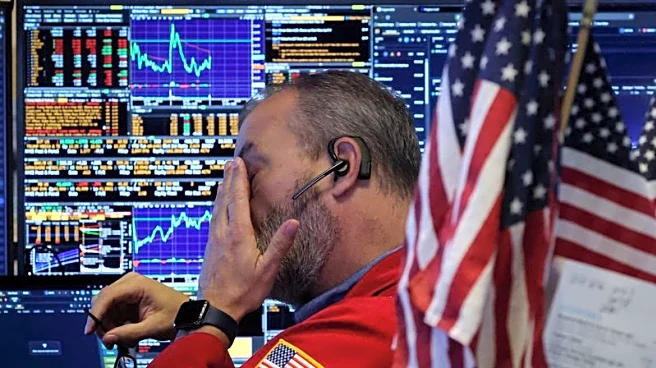
NEW YORK, Feb 13 (Reuters) - Executives at Apollo, Ares, Blackstone, KKR and other private capital firms are having trouble convincing stock market investors that their portfolios are safe from the effects of a selloff battering the software sector due to fears that artificial intelligence will render it irrelevant.
Alternative asset managers, which mainly invest outside traditional stock and bond markets, have not been able to shake off fears that emerged late last year about risks
in private credit. Now a selloff in software stocks has driven the money managers' own shares still lower, despite billions of dollars of new client money and a resurgence in mergers and acquisitions that analysts say should translate to more revenue and profit.
Executives defended the quality of their portfolios when they reported earnings over the last two weeks, which helped to recoup some losses in recent days, but not enough to reverse the months-long downturn.
DISRUPTIVE RISK
"AI is probably the most disruptive technology risk that we could have imagined. I don't want to sugarcoat it," Kort Schnabel, chief executive of a large Ares debt fund, said on the fund's earnings call on February 4. "But we still believe strongly that we've constructed a portfolio that will remain highly resistant to this risk."
About 6% of Ares overall group assets are in software companies, the company told investors when it reported earnings last week. CEO Michael Arougheti said its software portfolio was highly diversified and a "very small percentage" of it was deemed to have a high risk of disruption from AI.
Shares have inched up since then but remain down about 30% over the last six months.
Apollo Chief Executive Marc Rowan told analysts on Monday that software accounted for less than 2% of its assets under management. He tabulated the firm's minimal exposure to the sector by group: "Rounds to zero" in private equity, "rounds closer to zero than to one" in portfolios held by insurance unit Athene, he said.
And in its business development company Apollo Debt Solutions, which invests in the kind of private loans that have been called into question in recent months, Rowan said the exposure to software was half that of its large peers. The fund's disclosures show software is its biggest sector, at 13.2% of assets.
Still, investors sold the private markets firm down by almost 6% so far this week and 11% over the last six months.
At KKR, around 7% of its portfolio is in software, but its shares are down 29% over the last six months. Credit-focused firm Blue Owl said 8% of its portfolio was in software; its shares have plunged by more than 36% over the same time frame.
Representatives for Apollo, Ares, Blackstone, Blue Owl and KKR declined to comment beyond the public comments.
'THE BOOK IS STRONG'
"The book is strong. We don't see meaningful losses. We don't see deterioration in performance," Blue Owl co-chief executive Marc Lipschultz said when the firm reported earnings last week.
KKR co-CEO Scott Nuttall told investors they saw opportunities in the volatility, while Apollo's Rowan said software was an "amazing" sector although not at recent valuations.
Nuttall said KKR "took an inventory of our portfolio the last two years" and identified whether AI was "an opportunity, or a threat, or a question mark." The firm has $118 billion of dry powder, money that's been committed by investors but not allocated, he said, adding: "It is multiples of any exposure we have that we have any AI-related anxiety about."
Not even the world's largest alternative asset manager, Blackstone, is immune from the selloff. It share price is down 24% over the last six months. Software makes up 7% of its total assets and 10% of its credit holdings, Chief Financial Officer Michael Chae said at a conference in Florida on Tuesday.
T. Rowe Price analyst Karim Laib said investors were worried last summer that alternative asset managers were financing too much of the AI buildout, and "they were going to be the losers when it burst."
"Now, the narrative is the alts will be losers because of AI's transformative impact. The narrative has flipped but the outcome remains the same," Laib said. "That probably means the narrative is not right."
(Reporting by Isla Binnie. Editing by Dawn Kopecki and David Gregorio)