





By Dhwani Pandya and Sumit Khanna
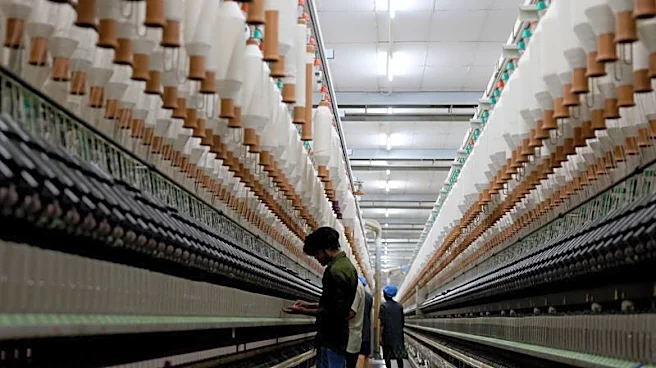
RAJKOT/AHMEDABAD, India, April 23 (Reuters) - Supply chain and fuel disruptions triggered by the war in the Middle East have dealt a heavy blow to many Indian factories, but cotton yarn makers like Fiotex Cotspin are increasing production amid unprecedented demand from clients in China.
India is the world’s second-largest cotton producer after China, which however relies on imports for roughly 15% of its raw cotton and about 20% of its yarn to meet demand.
As the war
in the Middle East disrupted trade routes, cotton supplies to China from other countries declined, making India a preferred and nearby sourcing point, Indian traders said.
Combined with tight domestic cotton supply, delays in shipments coming from the U.S. and Brazil have driven a rapid rise in Chinese imports of imported yarn.
Also, the rupee has weakened about 7% against the yuan this year, making Indian cotton yarn imports cheaper for Chinese buyers. Ripple Patel, managing director of spinning mill Fiotex in the western Indian state of Gujarat, said his export order book has grown by 40% in recent months, and his factory is at 100% capacity utilisation, compared to 90% earlier.
"As exports are more viable in profit realisation, we have increased its share ... Orders have already been booked until June," Patel told Reuters.
China's National Textile and Apparel Council declined to comment on the rising imports from India.
Many manufacturing hubs in India have suffered due to shortages of commercial gas and an increase in the prices of inputs like plastics and industrial spare parts.
But spinning mills have been spared fuel disruptions as they largely run on grid or solar electricity, industry executives said.
FIVE-FOLD JUMP
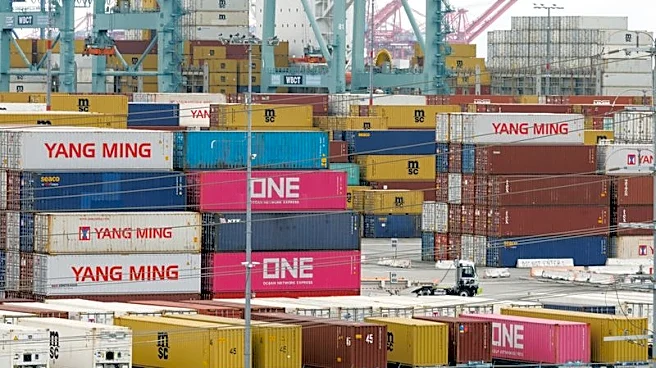
Around 1,500 containers - carrying 30,000 tonnes of cotton yarn - are sailing from India to China each month since November, compared to an average 300 containers earlier, said Rahul Shah, co-chair of Textiles Committee in Gujarat Chamber of Commerce and Industry.
The war's impact on polyester supplies has made cotton more attractive, with shipments further bolstered by a declining rupee. Shah said numerous spinning mills in Gujarat will continue exporting similar quantities through April and May to capitalize on the surge in demand from China.
However, it is the Gujarat mills that are taking the most advantage since they are close to both cotton-growing areas and ports.
The southern state of Tamil Nadu houses thousands of spinning mills, but they face higher transport costs because raw cotton has to be sourced from western and central India.
"There is a cost involved for us. We have to take it to the port...that is the reason why export is not very favourable," said Vishnu Prabhu, joint managing director at garment maker K.M. Knitwear in Tamil Nadu, which also operates a spinning mill as part of its backward integration.
(Reporting by Dhwani Pandya, Sumit Khanna, additional reporting by Sophie Yu from Beijing, Jaspreet Kalra from Mumbai ; Editing by Aditya Kalra and Raju Gopalakrishnan)