






By Bhanvi Satija, Stine Jacobsen and Maggie Fick
LONDON/COPENHAGEN, May 7 (Reuters) - Early data from weight-loss pills are lifting shares in Novo Nordisk and Eli Lilly as investors bet that easier-to-take drugs could expand the market to millions more patients and help counter pricing pressure.
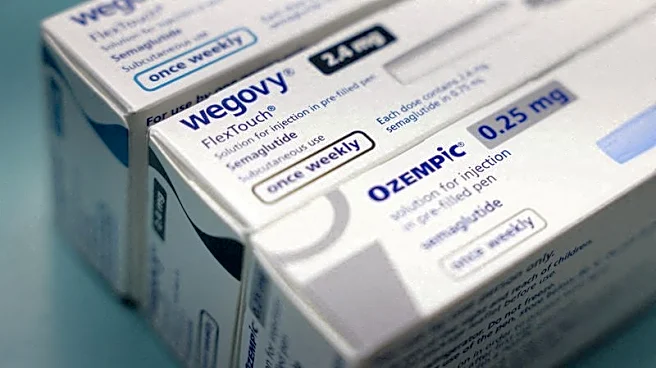
Denmark's Novo, which has struggled to keep pace with U.S. rival Lilly in recent years, saw its shares spike on Wednesday after saying first-quarter sales of its newly launched Wegovy pill were about twice
expectations.
Lilly, which launched its Foundayo pill months after Novo's version, last week raised its profit forecast on growing sales volumes of its weight loss treatments, still dominated by injectable versions of the so-called GLP-1 drugs.
Investors and analysts said the strong early prescription data support the view that oral treatments can drive market expansion rather than merely shift patients from injections. More than 100 million Americans have obesity, with only a fraction on GLP-1s.
"The product appears to be expanding the market at this stage of launch," said Shams Afzal, managing director at Novo investor Carnegie Investment Counsel, adding the pill offers an easier route to start treatment.
"The fear of syringes may have kept a notable segment of the population from considering the injectables before."
If pills bring in new patients rather than cannibalising injections, the obesity market could grow faster and support both companies' valuations despite pricing pressure.
WEGOVY PILL CATCHES ON FAST
Analysts cautioned it is still early for oral GLP-1s, and Novo in particular faces challenges to revive growth that has stalled since 2024. Still, there are signs the pill is reshaping demand faster than expected.
"We have been very impressed by the willingness of users to self-pay and how fast the pills have caught on," said Jyske Bank analyst Henrik Hallengreen Laustsen, who now sees pills taking 35–40% of the market, above earlier forecasts of 15–20%.
Novo's sale surge was partly driven by stockpiling by wholesalers and online pharmacies, analysts said, but underlying demand exceeded expectations even excluding that effect. Many users were new patients rather than switchers from injections.
"I don't think it is going to cannibalise patients who are already happy with an injectable," said BMO Capital analyst Evan Seigerman. "It is another way for both Novo and Lilly to get to patients who don't want an injectable."
Novo CEO Mike Doustdar told a media call that close to 80% of Wegovy pill users were "GLP-1 treatment-naive patients", pointing to expansion into new consumers.
Weekly prescriptions for the Wegovy pill reached about 207,000 by mid-April, Citi analysts said in a note, adding the uptake suggests room for both Novo and Lilly to grow rather than triggering "a cannibalisation event".
OBESITY MARKET NOT A ZERO-SUM GAME
Lilly said more than 8,000 doctors had prescribed Foundayo since its U.S. launch in April, about one-third of whom had not previously written a prescription for oral GLP-1 drugs.
About 45% of early Foundayo volume came through LillyDirect, its direct-to-consumer platform, while Novo said about 50% of Wegovy volumes were self-pay.
Pricing remains a key risk. Novo's adjusted U.S. sales fell 11% in the first quarter due to lower realised prices. Lilly saw a similar pattern but absorbed the hit more effectively.
Markus Manns, at Novo and Lilly shareholder Union Investment, said Novo currently leads in pills but faces risks from further price erosion and looming biosimilar competition in injectables. He urged diversification beyond obesity and diabetes.
Alessandro Valentini, portfolio manager at Novo shareholder Causeway Capital, said the key takeaway is that pills appear to be reaching new users.
"I think that's what's really exciting, because the conversation has been so much about Novo versus Lilly... And these are new scripts, new people that weren't getting the drug before, (now) they are getting the drug," he said.
"It's not a zero-sum game. It's an expanding market."
(Reporting by Bhanvi Satija and Maggie Fick in London, and Stine Jacobsen in Copenhagen. Editing by Adam Jourdan and Mark Potter)