



By Sethuraman N R and Florence Tan
NEW DELHI/SINGAPORE, Aug 17 (Reuters) - Oil prices gave up early gains on Monday as stalled U.S.-Iran talks revived concerns over prolonged Middle East tensions, but the absence of major supply outages limited upside.
Brent crude futures rose as much as 1% to $89.40 per barrel but were last trading dow 24 cents at $89.28 by 0620 GMT. The U.S. West Texas Intermediate crude futures fell 67 cents to $81.74 a barrel.
Both contracts gained more than 5% last week following
attacks on tankers operated by Abu Dhabi National Oil Company in the Hormuz strait and on a Saudi Aramco refinery.
"Oil prices have now rebounded almost completely from the lows seen in early August, as hopes for a more permanent resolution between the U.S. and Iran have faded and geopolitical risk premiums have returned to the market," said Priyanka Sachdeva, head of market insights for Phillip Nova in Singapore.
Over the weekend, Iranian Foreign Minister Abbas Araqchi said Iran had not decided to resume talks with the U.S. while U.S. President Donald Trump urged Americans to accept slightly higher gasoline prices while the conflict continues.
"However, I see limited upside from here unless we get clear evidence of renewed aggression in the Strait of Hormuz, particularly material damage to tankers or oil infrastructure," she said.
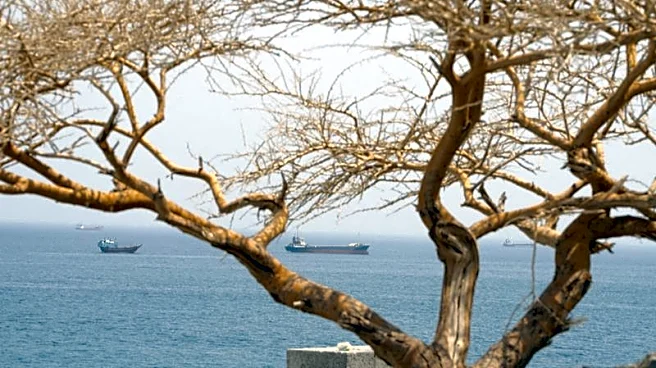
Shipping through the Strait of Hormuz slowed over the weekend, data showed on Monday, following attacks on tankers. Five commodity vessels transited the strait on Saturday, with none registered for Sunday, ship-tracking data from Kpler showed, versus 31 for the prior weekend.
The United Arab Emirates accused Iran of attacking a third vessel operated by ADNOC that was transiting the strait on Friday, the Emirati state news agency WAM reported, after blaming it for two other incidents involving ADNOC vessels in the strait on Thursday evening.
(Reporting by Florence Tan and Sethuraman NR; Editing by Sonali Paul and Edwina Gibbs)